First, choose a tape that suits the bottle’s surface and the cleaning product you use, then check that there’s enough space for all the necessary information to remain easy to read. Only then should you decide whether a keyboard device will do for occasional labels, or whether an app-controlled device with templates would fit your workflow better. Durability depends on the specific tape, surface and cleaning product. If employees handle hazardous substances, a short product name does not automatically meet workplace labelling requirements.
Who labels cleaning bottles?
People using spray bottles that get a lot of use
If you handle or clean bottles frequently, consider the tape and bottle surface together. Brother and DYMO describe different tape materials and properties for specific products; you’ll need to check separately whether a tape is suitable for the cleaning product you use.
People responsible for shared labelling
If several people use the same bottles, the contents and any other required information need to be clearly visible. Where employees work with hazardous substances, the relevant requirements of the Hazardous Substances Ordinance apply. The Federal Institute for Occupational Safety and Health explains how hazardous substances and mixtures must be labelled.
People who label bottles occasionally on site
If you only label a few bottles, you can choose between entering text directly on a keyboard and using an app. Brother describes different ways of operating its P-touch devices, depending on the model, and lists the compatible TZe tapes.
What should you consider when choosing?
First, check what information needs to go on the bottle and which tape material is suitable. Where employees work with hazardous substances, section 8 of the Hazardous Substances Ordinance requires adequate workplace labelling under the conditions set out there; the specific requirement depends on how the substances are used. The Federal Ministry of Justice and the Federal Institute for Occupational Safety and Health highlight these requirements.
| What matters |
What to check before buying |
Who is this important to? |
| Durability on the bottle |
Check the tape material, its stated resistance and how well it adheres to the specific bottle surface. A manufacturer’s claim for a particular tape does not guarantee it will work with every cleaning product. |
If I’m labelling a spray bottle that gets handled often, I want the label to stay readable in everyday use. Around 36% of consumers put durability on the bottle first. |
| Space and readability |
Decide in advance what information you need, then check that the tape width and print will fit on the bottle. Hazardous substances may require additional information about classification, hazards and protective measures. |
If other people need to identify the contents quickly, I need enough clear space for all the required information. Around 29% of consumers prioritise space for details about the contents and, where necessary, hazard information. |
| Ease of use in day-to-day work |
Think about who will create the labels and where, then check whether a keyboard, Bluetooth or USB connection suits the workflow. |
If different people label bottles at different workstations, I want a device that’s practical to use in each location. Around 21% of consumers prioritise ease of use. |
| Compatible supplies |
Check that the device, compatible cassette and required label width all work together. |
If I need to print more labels later, I want to be able to find a suitable, compatible tape. Around 14% of consumers prioritise having the right supplies available. |
Common mistakes when choosing
-
Assuming water-resistant means resistant to the cleaning product you use
A manufacturer’s claim about a particular tape does not automatically mean the adhesive and print will last on every bottle or stand up to every cleaning product.
Check the specific tape against the cleaning product and bottle surface, and test the label under the conditions in which it will actually be used.
-
Comparing only the device, not the tape you plan to use
Device ranges vary in the cassettes, materials and tape widths they support. Choosing a suitable printer alone therefore tells you nothing about whether the label itself is right for the job.
Choose the device, specific cassette and required label size as a complete set.
-
Assuming a narrow name tape is enough to label a hazardous substance
When employees work with hazardous substances, workplace labelling may need to include more than just the substance’s name. A short label will not automatically cover this requirement.
First, find out what information is required for the specific use, then choose the print area and layout.
Brands to consider
Brother
P-touch devices are available for direct entry, as well as app or PC control. The key is choosing a TZe tape that’s right for the device and the job.
- Brother describes its laminated TZe-231S tape as resistant to wiping and chemicals. For the PT-P710BT, the manufacturer lists Bluetooth, USB and support for TZe tapes up to 24 mm wide.
- The tape specifications do not prove that it’s suitable for every cleaning product or bottle surface. An independent test notes limitations with umlauts and display backlighting on the PT-H110.
DYMO
The Rhino industrial devices are an option if you want to enter text directly in the workshop and choose from different tape materials.
- For the Rhino-4200 kit, DYMO lists QWERTZ input and nylon, permanently adhesive polyester and vinyl labels up to 19 mm wide.
- The available materials do not prove that a particular tape will stick to every bottle or resist every cleaning product. Check that the cassette is compatible with the specific device and suitable for its intended use.
Epson
LabelWorks tapes are worth considering if you already have a compatible device, or if you’re choosing the device and supplies together.
- Epson describes the LK-4YBW tape as water-resistant, with extra-strong adhesive, and lists compatible LabelWorks devices.
- The manufacturer’s claim about adhesion does not prove that the tape is resistant to chemicals. Also check that your chosen device appears on the tape’s compatibility list.
Labelling devices at Joybuy
These app- or Bluetooth-controlled devices are options for creating occasional labels and repeating labels. Before choosing, check whether the label material is suitable for the cleaning product and bottle surface.
 No image available
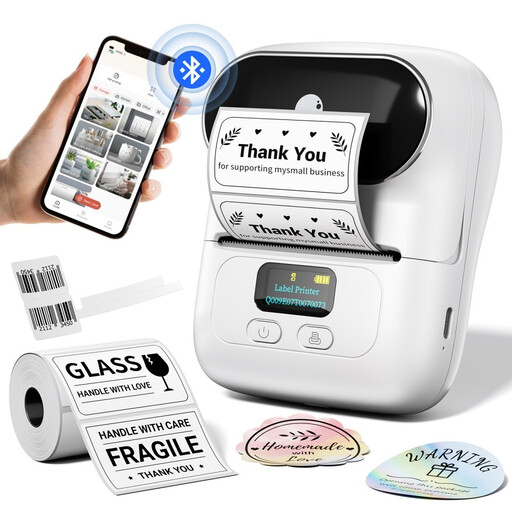
Phomemo M110 label printer
An option if you want to create labels on the go using an app.
The product description lists Bluetooth and the Print Master app. You’ll need a Bluetooth-enabled device to use it.
View at Joybuy
 No image available
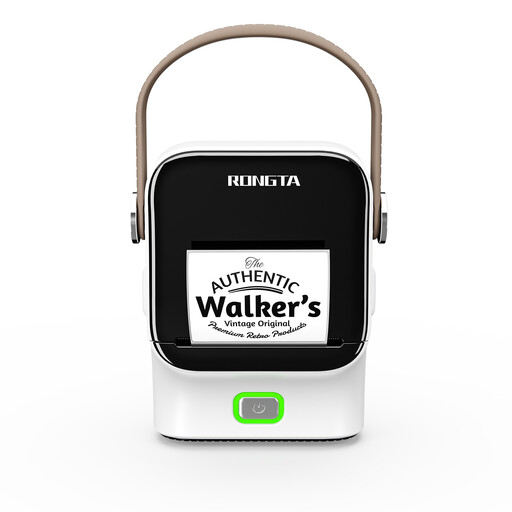
Rongta R22 Bluetooth label printer
An option if you want to design labels in an app and print them on the go.
The product description lists Bluetooth, app templates, roll widths from 16 to 54 mm and a 1500 mAh battery. You’ll need a smartphone or tablet to create labels.
View at Joybuy
 No image available
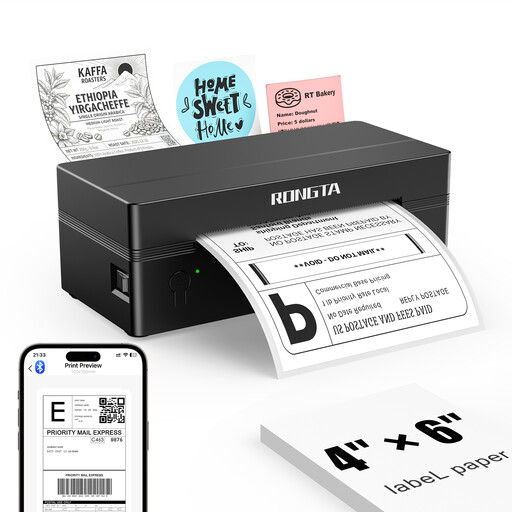
Rongta RP425 4-inch label printer
An option if a thermal printer with app control and the listed label widths suits your needs.
The product description lists label widths from 2 to 4 inches and app control via iOS and Android devices. The RT-ELabel app is designed for mobile printing. Check separately whether the label material is suitable for the cleaning product and bottle surface.
View at Joybuy
Frequently asked questions
Is the product name enough on every cleaning bottle?
No, there’s no blanket answer. If employees work with hazardous substances, section 8(2) of the Hazardous Substances Ordinance requires employers to keep the substances and mixtures they use identifiable, and to label hazardous substances and mixtures within the workplace with sufficient information about their classification, hazards and protective measures. You’ll need to check whether this applies to your specific work area. A labelling device does not automatically create a complete label.
How do I apply a label to a spray bottle?
Choose a tape that’s compatible with your device and suitable for its intended use, then check the specific combination of label, cleaning product and bottle surface. Make sure the text remains readable on the bottle and that the label stays in place during normal use. General manufacturer claims do not automatically apply to every combination.
Can I print a pictogram as small as I like on a strip of tape?
No. If CLP rules require labelling for a product being placed on the market, there are requirements for its design and size. The Federal Institute for Occupational Safety and Health gives an example for a 1-litre container, with pictograms measuring at least 16 × 16 mm. This example cannot be applied to every workplace bottle without checking first; the minimum font size explained there only becomes mandatory in the example from 1 January 2027.


