
Lieferung heute & morgen

Qualitätsgarantie

Willkommens-Angebote freischalten: KOSTENLOSE Lieferung | Bis zu 80 % RABATT | Kostenlose 30-Tage-JoyPlus-Testphase
App herunterladen
Whether you are cleaning car seats, carpets, sofas, patios or bicycles, cleaning equipment for cars and the home varies considerably in terms of pressure, suction power, operation and accessories. A device suitable for washing a car will not necessarily be suitable for delicate upholstery. Conversely, a portable carpet cleaner may be sufficient for removing stains from a sofa, but it is not designed for a large patio.
The following buying guide explains which specifications matter before you buy, which marketing claims should be scrutinised and which type of device is best suited to different usage profiles.
A high pressure rating on a pressure washer may sound convincing at first. However, when washing a vehicle, maximum pressure is not the only factor that matters. An adjustable nozzle, operating pressure, water consumption and distance from the surface are equally important. Excessive pressure or holding the nozzle too close can damage delicate areas of paintwork, seals or loose coatings.
Carpet and upholstery cleaners are often advertised with their suction power in kPa. This figure should be considered alongside tank capacity, spray volume and hose length. A device with high suction power but a small dirty-water tank may require frequent interruptions when cleaning larger areas.
A long list of brushes, nozzles and cleaning-fluid tanks is only useful if the attachments are suitable for the intended material. For car cleaning, for example, an adjustable nozzle, foam lance or soft brush attachment can be useful. Carpets and car seats, on the other hand, require a spray and suction nozzle that draws the liquid back out of the fabric.
A cordless pressure washer gives you greater freedom of movement and can draw water from a bucket. Compared with corded devices, however, runtime, charging time and water flow are particularly important. Before buying, make sure you know whether you are planning only short touch-ups or several vehicles without a break to recharge.
For outdoor surfaces, three pressure-washer specifications are relevant:
According to the product specifications, the Lugia Jet+ High-Pressure Cleaner 1300W operates at up to 90 bar, with an operating pressure of 60 bar. The device has a 5-metre high-pressure hose, a 5-metre power cable, an adjustable spray gun and a soap bottle. Its compact design makes it practical for washing cars, garden furniture, bicycles and smaller patio areas.
For larger or more heavily soiled outdoor surfaces, the Lugia High-Pressure Cleaner (2026) – 135 Bar – 1600W High-Pressure Sprayer specifies an operating pressure of 135 bar and a water flow rate of 430 litres per hour. The accessories supplied include a patio cleaner, rotary brush, turbo nozzle, adjustable nozzle and external foam lance. Always adjust the nozzle setting to suit the surface and level of dirt.
A carpet cleaner or upholstery cleaner should have separate tanks for clean and dirty water. This prevents collected water from being applied to the fabric again. You should also consider:
According to the product description, the OMESER W07 Carpet Cleaner has a 1.5-litre clean-water tank and a 0.8-litre dirty-water tank. Its 3-in-1 system combines spraying, brushing and suction. With 15 kPa suction power, a 4.26-foot hose and a 9.84-foot power cable, it is designed for spot cleaning carpets, sofas, mattresses and car seats.
Before cleaning, check the care label and the manufacturer’s instructions for the material. Not every sofa, car headliner or carpet is suitable for water, steam or strong cleaning products. When using a steam cleaner, you should also bear in mind that heat can affect sensitive plastics, adhesives or coatings.
When cleaning paintwork, start by rinsing off loose dirt, then use a suitable car shampoo. A clay bar should only be used on thoroughly cleaned and sufficiently lubricated paintwork. According to the product description, the MARFLO Professional Car Detailing Clay Bar is intended to remove bonded contaminants from paintwork, glass, chrome and headlights. It must not be used on a dry surface. Before using it for the first time, testing it on a small area is recommended.
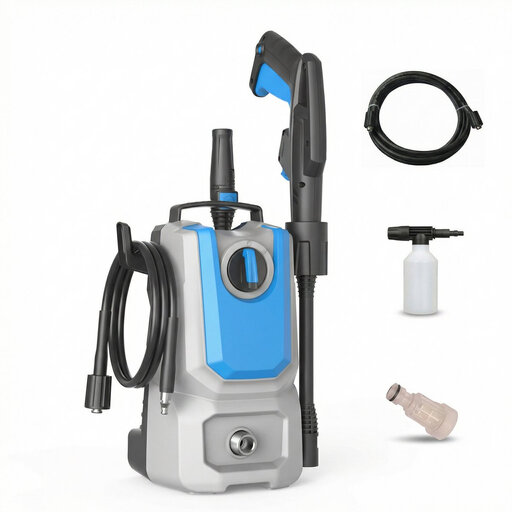
Why this product suits this profile: Its compact, corded design is suitable for regular jobs involving bicycles, cars, garden furniture and smaller outdoor areas.
The specifications state not only the maximum pressure but also an operating pressure of 60 bar, cable lengths and included accessories.
1300 watts, an aluminium pump, Total-Stop system, 5-metre high-pressure hose and adjustable spray gun.
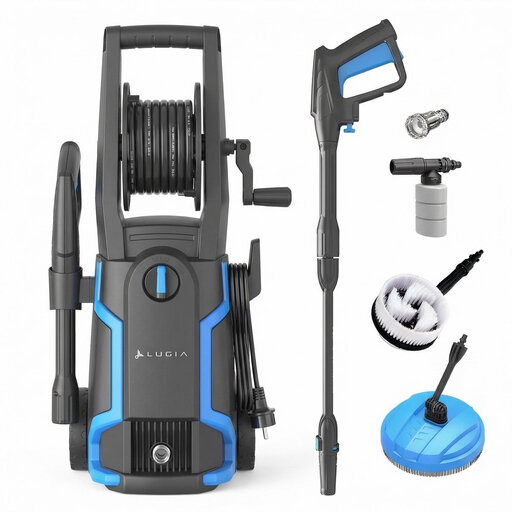
Why this product suits this profile: Its range of equipment is aimed at users who want to clean several outdoor areas with different attachments.
Alongside the pressure rating, the water flow, hose length and specific attachments are stated. This makes it easier to plan how the device will be used.
1600 watts, 430 litres per hour, 135 bar operating pressure, plus patio cleaner, rotary brush and foam lance.
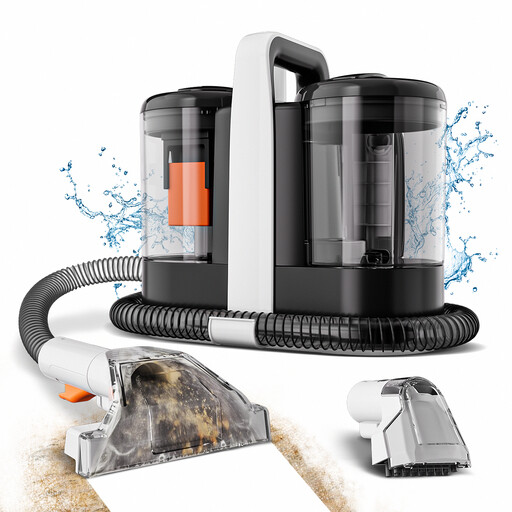
Why this product suits this profile: This portable carpet cleaner is designed for spot-cleaning carpets, upholstery, sofas, mattresses and car seats.
Clean and dirty water are kept separate. The tank capacities, hose and cable specifications make the operating range clear.
3-in-1 function with spraying, brushing and suction, 15 kPa suction power and two brush heads supplied.
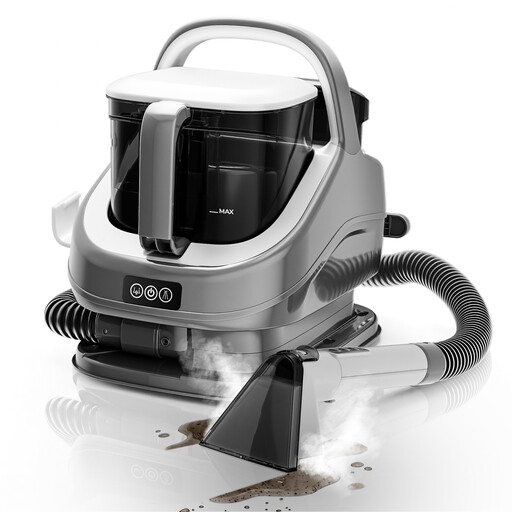
Why this product suits this profile: The cold-water, hot-water and steam modes appeal to users who want to clean a range of water-resistant textiles.
The three cleaning modes are clearly specified. However, you must still check before use whether the material can withstand water and heat.
1300 watts, 13 kPa suction power, 1400-millilitre clean-water tank and 1200-millilitre dirty-water tank.
To keep cleaning equipment working reliably for longer, you should plan a few simple steps after every use:
When detailing a vehicle, a coarse-to-fine approach is recommended: pre-wash, hand wash, drying, interior cleaning and, if required, paintwork decontamination with a clay bar. Do not direct a pressure washer at delicate seals, electrical components or damaged areas of paintwork.
We have put together a complete, regularly updated list of products that fully meet these strict selection criteria and the safety regulations applicable in the EU.
For fabric car seats, an upholstery cleaner with spray and suction functions is generally more suitable than a pressure washer. It applies water and cleaning solution in a controlled way, then draws the liquid back out. The material must be water-resistant according to its care instructions and able to dry thoroughly.
The bar rating is not the only factor that matters; the nozzle, distance and cleaning method are important too. Start with low pressure and a greater distance. Test an inconspicuous area first and avoid directing the jet at seals, films or damaged areas of paintwork.
Running costs depend on electricity consumption, water usage, cleaning products and operating time. With corded devices, the wattage and usage time can provide a rough estimate. Battery-powered devices also involve charging cycles and, where applicable, replacement battery costs. Tank capacity and water flow rate affect how often the device needs to be refilled.