
Lieferung heute & morgen

Qualitätsgarantie

Willkommens-Angebote freischalten: KOSTENLOSE Lieferung | Bis zu 80 % RABATT | Kostenlose 30-Tage-JoyPlus-Testphase
App herunterladen
Whether you’re dealing with crumbs in the car, limescale in the bathroom, blocked drains or moss-covered patios, cleaning equipment for the home and garden can make many jobs easier. There’s plenty to choose from, including cordless handheld vacuum cleaners, electric cleaning brushes and pressure washers with patio cleaners. The key isn’t the longest list of features, but finding the right combination of intended use, performance, ease of use and maintenance.
A high suction power rating in pascals may sound impressive, but on its own it tells you little about how a vacuum performs in everyday use. And with a pressure washer, maximum pressure isn’t the only thing that matters. Water flow rate, hose length, nozzles, cleaning coverage and suitability for delicate surfaces all affect the result.
When choosing a car vacuum cleaner, also look for a crevice tool, brush attachment, filter-cleaning method and battery capacity. With a pressure washer, pressure control and suitable accessories are often more important than the maximum figure on the packaging.
Kärcher accessories are often designed for specific machine ranges. For example, a patio cleaner for the Kärcher K 2 to K 7 series may not connect to machines from other brands. Before buying, check:
A Spin Scrubber with several brush heads is only useful if the heads are suitable for the surfaces you plan to clean. Stiff bristles can damage delicate coatings, grout or plastic surfaces.
An IP rating describes protection against certain conditions under specified circumstances. It doesn’t mean you can fully submerge a machine. When using electric cleaning brushes, bathroom brushes or drain cleaners, follow the instructions and keep charging ports dry.
For corded machines used outdoors, you’ll also need a suitable socket, a working residual current device and a safely positioned cable. Never point a pressure washer jet at people, animals, electrical equipment or damaged surfaces.
Start by matching the job to the right type of machine:
Check which materials the machine is approved for. Wood, WPC, natural stone, painted surfaces and plastic all require different brush types or pressure settings.
With cordless machines, check more than just the battery capacity: look at charging time and whether the battery can be replaced. According to the product information, the itutn M8Pro+ Car Vacuum Cleaner comes with an 8000 mAh battery, a brushless motor, 22,000 Pa suction power, several nozzles and an LED light. Its washable filter can reduce the need to buy replacement filters, but it must be completely dry before you put it back in.
For an electric cleaning brush, it’s also worth considering how easy it is to change the brush head, adjust the handle and clean the machine after use. According to the product description, the Leebein model has eight interchangeable brush heads, two speeds, a telescopic handle extending from 38 to 132 cm and a stated run time of up to 90 minutes.
According to the product details, the Kärcher PCL 6 Patio Cleaner has a maximum pressure of 10 bar, a water flow rate of up to 180 l/h, a working width of 300 mm and a brush speed of 600 to 800 rpm. It’s designed for wood and WPC surfaces. Suitable brush rollers are required for stone patios and are sold separately, according to the product description.
According to the product details, the Kärcher K 3 Power Control Home T 5 delivers up to 120 bar, has a maximum flow rate of 380 l/h and a power consumption of 1,600 W. The set includes a T 5 patio cleaner, patio cleaning detergent and an adjustable spray gun, among other items. For small to medium-sized outdoor areas, a patio cleaner can help contain spray better than a freehand lance with a pinpoint nozzle.
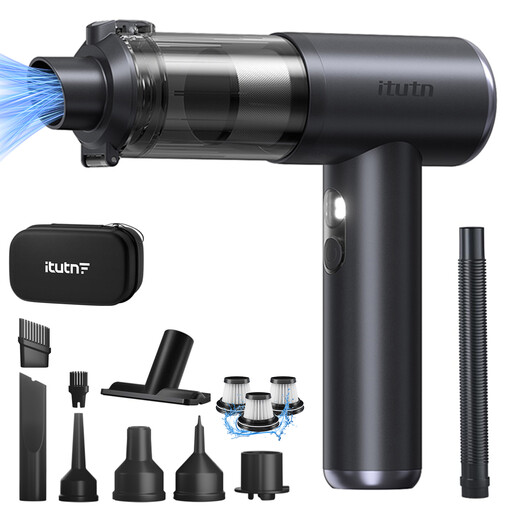
Why it suits this profile: For smaller cleaning jobs in the car, drawers or hard-to-reach places, its cordless design makes it easy to use without a mains connection.
The included selection of nozzles reduces the need to buy extra accessories straight away. The washable filter is designed for regular cleaning.
22,000 Pa according to the product information, an 8,000 mAh battery, an LED light and a brushless motor.
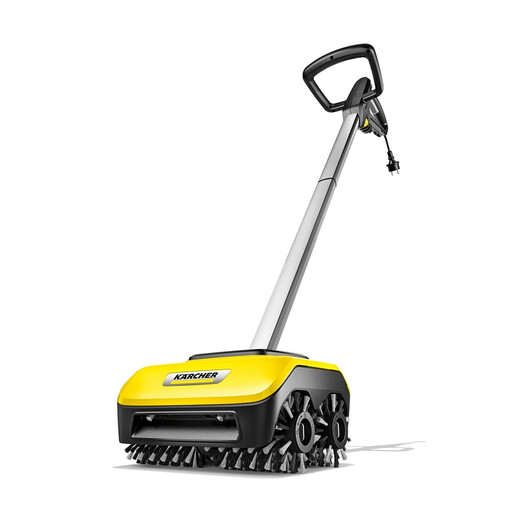
Why it suits this profile: Homeowners with a wood or WPC patio get a machine whose brushes and working width are specifically designed for these materials.
The supplied brushes are clearly specified for particular materials. For stone surfaces, check which rollers are suitable and buy them separately.
A 300 mm working width, four counter-rotating brush rollers and an adjustable water supply.
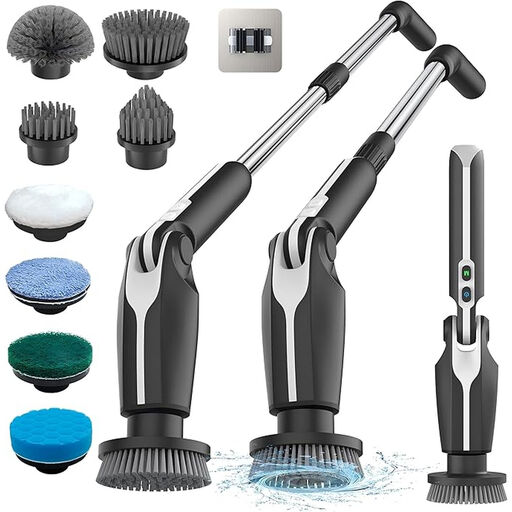
Why it suits this profile: For households with regular cleaning jobs in the bathroom, kitchen, car and outdoors, the system offers a choice of brush types and handle positions.
The eight interchangeable heads make it easier to adapt the brush to different surfaces. Before use, check that it’s suitable for the material and follow the guidance on exposure to water.
A telescopic handle extending from 38 to 132 cm, two speeds and USB-C charging, according to the product description.
We’ve put together a complete, regularly updated list of products that meet these strict selection criteria and fully comply with the safety regulations in force in the EU.
It depends on the material and how dirty the surface is. A patio cleaner with rotating brushes and low water pressure may be suitable for wood and WPC. You can often clean robust stone surfaces with a pressure washer and patio cleaner. Always start with a low setting on an inconspicuous area.
Run time depends on battery capacity, suction setting, filter condition and battery age. Manufacturers’ figures are often based on specific operating conditions. To help the battery last, make sure washable filters are completely dry, clean the machine regularly and store it properly.
For corded machines, power consumption and run time determine how much electricity they use. A 1,600 W machine running continuously for an hour uses 1.6 kWh in theory. Cordless machines also incur charging losses. When considering water consumption, take the flow rate, cleaning time and selected pressure setting into account.