Who these printers may suit

Businesses using spray bottles on site

If you’re labelling individual reused bottles, check that the information remains legible after exposure to moisture and cleaning. For hazardous substances, you should also assess workplace labelling requirements; the German Federal Institute for Occupational Safety and Health (BAuA) sets out procedures in TRGS 201.

Shops selling bottled cleaning products

If you place cleaning products on the market, allow enough space for all the information required in each case. Section 8 of the German Detergents and Cleaning Products Act (WRMG) sets out labelling requirements in German for the detergents and cleaning products it covers. CLP information may also be relevant for mixtures classified as hazardous.

Teams printing labels regularly

If you regularly print labels for several bottles, consider repeatable layouts, suitable media and the space available for the device. Zebra describes several print technology options in its ZD421 series, while Epson’s ColorWorks C4000 series offers four-colour label printing.

What to look for when buying

Laminated lettering tape

Suitable if: You want to label individual bottles with short descriptions. Brother says the PT-D410 supports TZe tapes up to 18 mm wide, and describes the laminated TZe-231S as suitable for smooth, flat surfaces.

Consider: The tape width limits the space available. The manufacturer’s claims about the tape do not guarantee that it will withstand every bottle surface or cleaning product.

Industrial lettering tape

Suitable if: You want to label items on site and choose from different tape materials. DYMO lists vinyl, nylon and permanently adhering polyester for the Rhino 4200.

Consider: According to DYMO, the Rhino 4200 supports tape up to 19 mm wide. The material and adhesive need to suit the bottle and your cleaning routine.

Thermal-transfer labels on rolls

Suitable if: You regularly need larger, consistent text labels and can match the printer, ribbon and label material. Zebra offers the ZD421 series in a thermal-transfer version.

Consider: Not every ZD421 variant uses thermal transfer. The printing technology alone says nothing about how durable the finished label will be.

Colour label printing

Suitable if: You need to produce larger labels with colour content as required. Epson’s ColorWorks C4000 series prints in four colours on a range of media.

Consider: Epson describes the pigment inks as smudge- and water-resistant. This does not prove that every media combination will be durable or that printed labelling information is correct.

Priority What to look for when buying Who it matters most to
Legibility and durability Check the bottle material and shape; test the specific label under the cleaning conditions you expect it to face. Anyone who wipes down reused bottles while they’re wet will want the label to remain legible. Consumers who prioritise durability are estimated to make up around 36%.
Space and label information Confirm how the product will be used and what information is needed; check a sample layout at its actual size on the planned label format. If the label needs to include more than a short product name, available space becomes crucial. Consumers who prioritise label information are estimated to make up around 29%.
Workflow Consider print volume, the need for templates, whether you’ll enter information on the device or a computer, and the space available for the printer. Anyone who regularly creates labels for different bottles will want a repeatable workflow. Consumers whose main priority is frequent printing are estimated to make up around 21%.
Media costs and compatibility Compare compatible tapes or labels and, where needed, ribbons or ink for your chosen format and print volume. If ongoing material costs are a priority, work out which consumables you’ll need for your label size. Consumers who prioritise material costs are estimated to make up around 14%.

Common selection mistakes

  • Assuming ‘water-resistant’ means resistant to every cleaning product

    Manufacturers’ claims relate to specific tapes, inks or materials. Moisture, contact with cleaning products, adhesive and bottle surfaces all present different challenges.

    Test a sample of the label you plan to use on the actual bottle, under the conditions in which it will be used and cleaned.

  • Assuming every bottle only needs a small name label

    Different information may be required for workplace labelling of hazardous substances and for placing products on the market. A product name alone does not tell you what information is needed in a particular case.

    Confirm the intended use and required information before buying, then check a sample layout at its actual size.

  • Assuming every model in a printer range uses the same consumables

    The Zebra ZD421 series includes different print technology options. The Brother QL-800 and PT-D410 use different media systems: the QL-800 uses DK rolls and direct thermal printing, while the PT-D410 uses TZe lettering tapes.

    Before ordering, check the full model variant and the media it’s designed to use.

Brands to consider

Brother

P-touch devices such as the PT-D410 are designed for short lettering-tape labels.

  • Brother lists a keyboard and USB connectivity for the PT-D410. The manufacturer describes the laminated TZe-231S as suitable for smooth, flat surfaces.
  • Tape width limits the space available for longer descriptions. The Brother QL-800 uses DK rolls and direct thermal printing; it is not a TZe tape printer.

DYMO

The Rhino 4200 is designed for portable labelling with industrial lettering tapes.

  • DYMO lists vinyl, nylon and permanently adhering polyester as tape materials for the Rhino 4200.
  • According to DYMO, the maximum tape width is 19 mm. The material and adhesive need to suit the bottle in question.

Zebra

The ZD421 desktop series is an option for regularly printing product labels on rolls.

  • Zebra lists direct thermal, thermal-transfer and ribbon-cartridge variants in the series.
  • The series name alone does not specify the print technology or the durability of a particular label.

Epson

The ColorWorks C4000 series is designed for larger, on-demand, four-colour labels.

  • Epson describes the series’ pigment inks as smudge- and water-resistant, and offers versions with matte or glossy black ink.
  • Claims about ink and media do not guarantee that every media combination is suitable or that hazard symbols are correct.

Joybuy products

The Joybuy products below are designed for mobile or compact label-printing tasks. Check separately whether the print media and adhesive are suitable for cleaning product bottles.
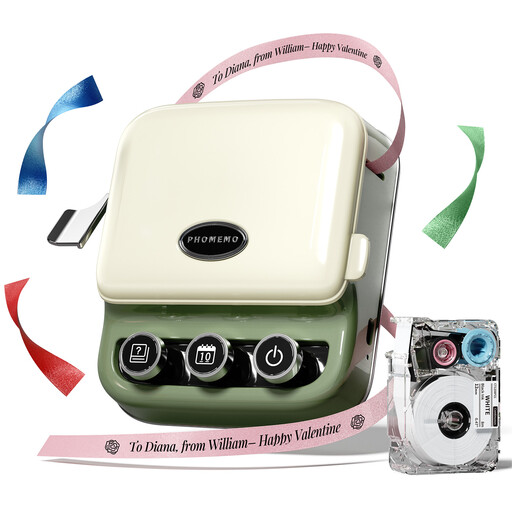
Phomemo P15 2-in-1 Satin Ribbon Printer with label refill

Phomemo P15 2-in-1 Satin Ribbon Printer with 1 unit label refill

Worth considering if you need to create labels on the go and print on satin ribbon as well. The product name mentions Bluetooth and a gift box.

View at Joybuy
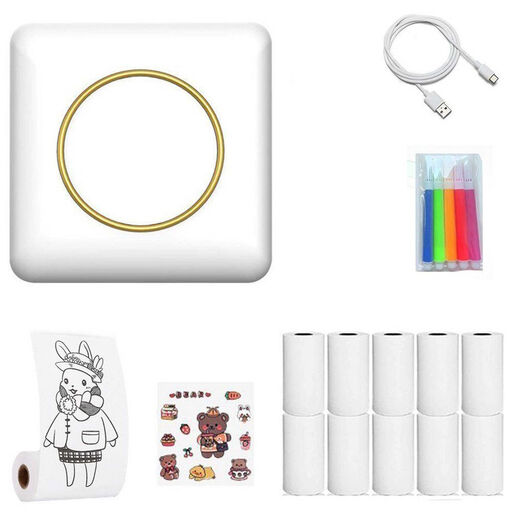
Mini Bluetooth thermal label printer with 10 rolls of thermal paper

Mini Bluetooth thermal label printer with 10 rolls of thermal paper

For mobile label-printing tasks where QR codes are among the content you need. The product name also mentions printing photos, notes and labels.

View at Joybuy
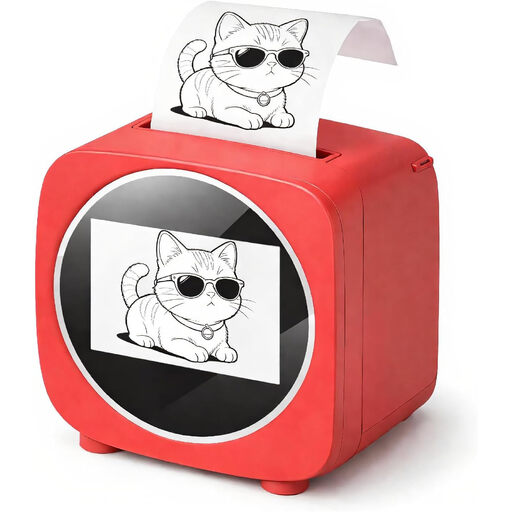
Bluetooth label printer with 2.4-inch colour display

Bluetooth label printer with 2.4-inch colour display

May suit you if you want to create labels on the go and preview designs on a screen before printing. The product name describes it as a thermal printer with Wi-Fi.

View at Joybuy
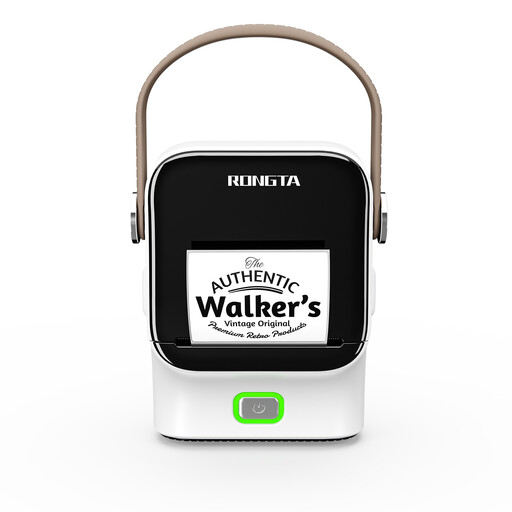
Rongta R22 Wireless Bluetooth Label Printer

Rongta R22 Wireless Bluetooth Label Printer

An option for creating labels on the go using a smartphone or tablet. The product name mentions NFC, a 1500-mAh battery and app control.

View at Joybuy
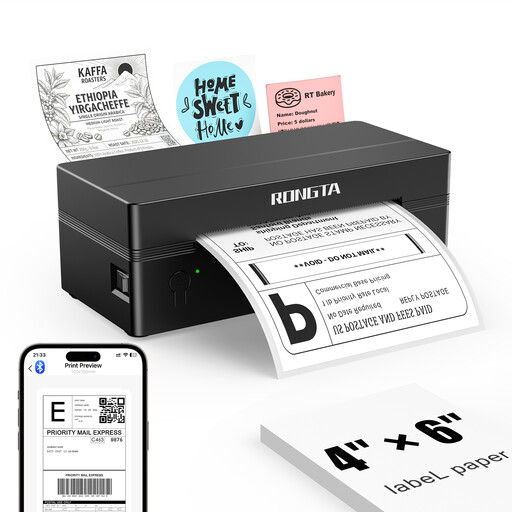
Rongta RP425 portable 4-inch label printer, black

Rongta RP425 portable 4-inch label printer, black

May suit you if you’re looking for a portable label printer in a 4-inch format. The product name mentions support for iOS, Android and tablets, as well as an external roll holder.

View at Joybuy

Frequently asked questions

Can I simply print the product name on a bottle used at work?

Not in every case. When working with hazardous substances, you need to assess their classification and the labelling required for workplace use; the German Federal Institute for Occupational Safety and Health (BAuA) explains this in TRGS 201. First, confirm what’s in the bottle and how it will be used, then decide on the label format.

What labelling should I consider if I sell bottled cleaning products in a shop?

Check the rules that apply to the specific product and sales channel. Section 8 of the German Detergents and Cleaning Products Act (WRMG) requires the specified labelling in German for the detergents and cleaning products it covers. CLP requirements may also apply to mixtures classified as hazardous; for such mixtures, the European Chemicals Agency says that a UFI must appear on the label from 1 January 2025 where the rule applies. A printer won’t determine the information you need.

Is the new EU Detergents Regulation already fully in force?

No. Regulation (EU) 2026/405 entered into force in 2026. The EU Chemicals Platform gives 23 September 2029 as the date when the digital product passport requirement described there will fully apply. So, as of November 2026, this future requirement should not be treated as already fully applicable. The rules currently in force depend on the product and sales channel.

How do I find a label that will stick to my spray bottle?

Choose a material designed for a surface like your bottle’s, then test a sample under the conditions in which you plan to use it. Brother describes the TZe-231S as suitable for smooth, flat surfaces, while DYMO lists applications on curved surfaces for some Rhino tapes. Check adhesion and legibility on the actual bottle.

What should I know about consumables and print technology?

Before buying, check the full printer variant against the compatible tape or label material. The Zebra ZD421 is available with different print technologies. Brother specifies DK rolls and direct thermal printing for the QL-800, while the PT-D410 uses TZe lettering tapes. Also factor in the label size and print volume you actually need.