
Lieferung heute & morgen

Qualitätsgarantie

Willkommens-Angebote freischalten: KOSTENLOSE Lieferung | Bis zu 80 % RABATT | Kostenlose 30-Tage-JoyPlus-Testphase
App herunterladen
Choosing a suitable facial cleanser for blemish-prone skin can be overwhelming. Many products promise rapid results, but not every formula is suitable for daily use or lives up to its claims. An unsuitable product can even worsen skin problems like excess sebum production, clogged pores, and inflammation. This guide will help you identify the crucial features and make an informed decision.
Before deciding on a product, it's helpful to question common marketing promises and product concepts. Often, these are the very things that lead to a poor choice.
To make an informed decision, you should focus on objective criteria. The following three parameters are crucial for the efficacy and tolerability of a cleansing product for oily and acne-prone skin.
Surfactants are responsible for the cleansing action, as they dissolve oil and dirt. Their selection largely determines how gentle a product is on the skin.
For blemish-prone skin, certain active ingredients have proven to be particularly useful. However, their effectiveness depends heavily on the concentration and the pH of the product.
The texture of the cleanser should match your skin condition and application routine.
Here are some recommendations that are aligned with the criteria above and suitable for specific user profiles.
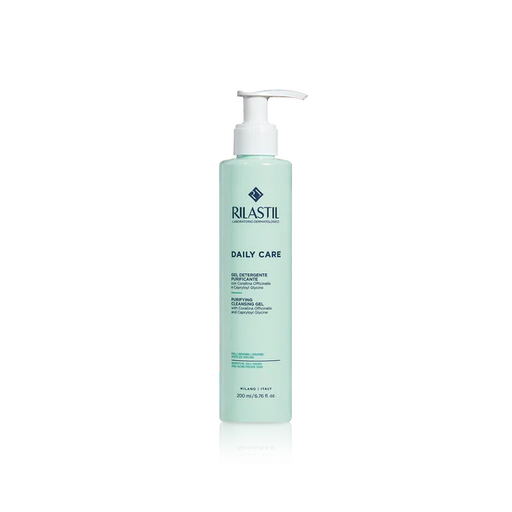
Why This Fits Their Persona: An excellent choice for individuals whose skin is both blemish-prone and sensitive. This gel is specifically designed for the needs of sensitive skin, offering a purifying and balancing effect without causing irritation.
It bypasses the aggressive cleansing trap with a gentle foaming action and a hypoallergenic, clinically tested formula. It cleanses thoroughly without unbalancing or drying out the skin.
Hypoallergenic formula tested for compatibility with sensitive skin. Contains Corallina Officinalis and Capryloyl Glycine for a purifying and balancing effect.
We have compiled a complete, real-time list of products that fully satisfy these strict selection criteria and UK safety regulations.
For most cleansing products formulated for blemish-prone skin, twice-daily use (morning and evening) is recommended. This helps remove sebum that has built up overnight, as well as dirt, pollutants, and makeup from the day. However, pay attention to your skin's reaction. If you notice signs of dryness or irritation, reducing use to once a day (preferably in the evening) may be beneficial.
Yes, active ingredients like salicylic acid (BHA) have an exfoliating effect that renews the top layer of skin. This can make the skin more sensitive to UV radiation. It is therefore essential to use a broad-spectrum sunscreen with an adequate SPF (30 or higher) during the day if you have products with exfoliating acids in your routine.
A thorough and appropriate cleanse is the foundation of any skincare routine for blemish-prone skin, but it is rarely the sole solution. A comprehensive approach often requires additional steps, such as a hydrating, non-comedogenic moisturiser, targeted treatments (e.g., serums or creams with active ingredients like retinoids or benzoyl peroxide), and consistent sun protection. Cleansing optimally prepares the skin for the absorption of subsequent skincare products.