
Lieferung heute & morgen

Qualitätsgarantie

Willkommens-Angebote freischalten: KOSTENLOSE Lieferung | Bis zu 80 % RABATT | Kostenlose 30-Tage-JoyPlus-Testphase
App herunterladen
The search for the right cleansing gel for blemish-prone skin can quickly feel overwhelming. Countless products promise deep pore cleansing and a clear complexion, but not all deliver on their claims. Often, harsh formulas or unsuitable active ingredients can even worsen the skin's condition. As your Joybuy Product Recommendation Officer, I'll help you avoid the common pitfalls and make an informed decision.
Many products on the market rely on marketing promises that, in practice, do more harm than good. Pay special attention to these two points to avoid making the wrong purchase:
Instead of being guided by marketing slogans, you should focus on the objective properties of a product. Two factors are particularly important for a cleansing gel for oily skin.
An effective facial cleanser for pimples doesn't need overly aggressive ingredients. The key is the right combination of active ingredients that specifically target the causes of blemishes.
The basis of any cleansing product is surfactants, which bind to dirt and oil. Look for formulations with mild, often sugar- or coconut-based surfactants (e.g., Coco-Glucoside, Sodium Cocoyl Glutamate). These cleanse thoroughly without attacking the skin barrier. A product that explicitly states a pH of approx. 5.5 supports the skin's natural acid mantle and can promote resistance against bacteria. An antibacterial cleansing gel ideally achieves its effect through smart active ingredients and a correct pH, not through harsh alcohols or soaps.
Based on these objective criteria, we have identified several products that are suitable for different profiles of blemish-prone skin.
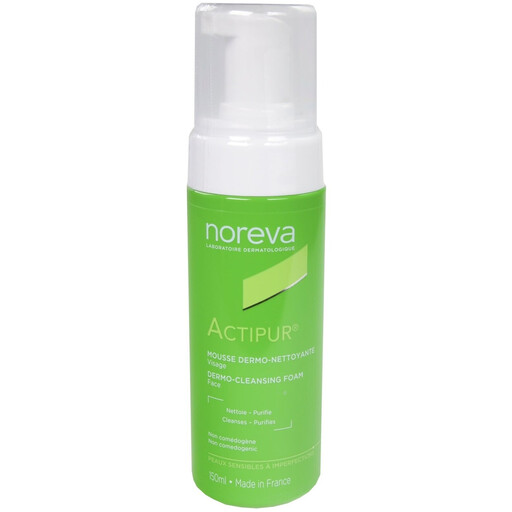
Why this product is a good fit: This cleansing foam was specially developed for sensitive skin with blemishes. It is ideal for individuals whose skin reacts quickly to harsh products with redness and irritation but who still require an effective cleanse.
The soap- and AHA-free formula cleanses gently without compromising the skin barrier. This avoids the "over-drying trap" and keeps the skin in balance.
Contains Zinc Gluconate to regulate sebum production and soothe the skin. Its high tolerance makes it suitable even for already inflamed areas of skin.
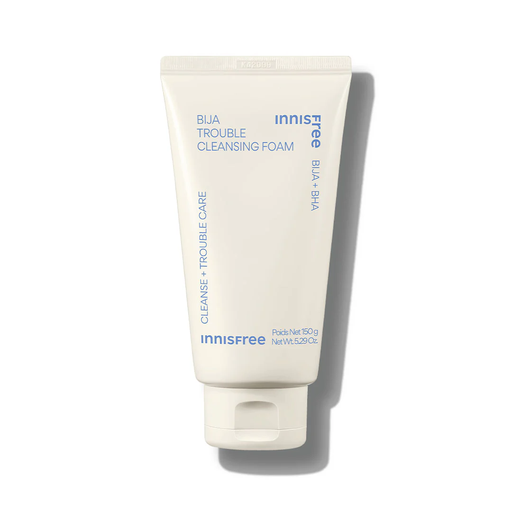
Why this product is a good fit: This cleansing foam is designed for users who want to specifically target clogged pores and excess sebum. It is well-suited for resilient, oily skin types seeking an effective, deep-pore cleanse.
Instead of relying solely on surface-level cleansing, the formula uses salicylic acid (BHA) to work specifically within the pores. This allows for a thorough cleanse without excessive irritation.
According to the manufacturer, the formula contains salicylic acid and willow bark extract to remove dead skin cells and clear clogged pores.
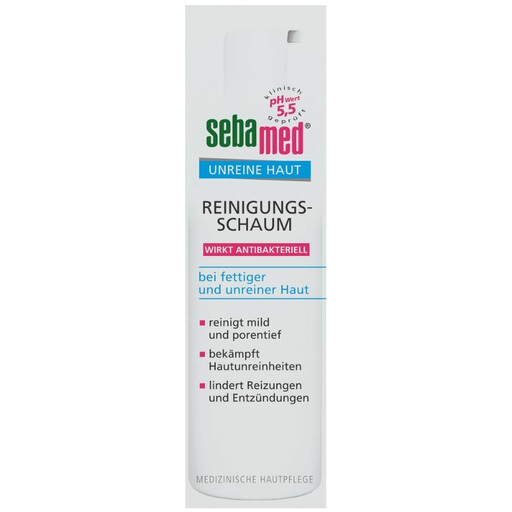
Why this product is a good fit: This cleansing foam is a solid choice for daily use on oily and combination skin. It focuses on stabilising the skin's balance and is suitable for anyone looking for reliable and straightforward basic care.
The product avoids the "pH trap" by being formulated with a pH of 5.5. This helps to maintain the skin's natural acid mantle and strengthen its defensive function.
According to the manufacturer, the active ingredient Montaline C40 combats bacteria on the skin. Panthenol also promotes the regeneration of irritated skin areas.
We have compiled a comprehensive, up-to-date list of products that meet these strict selection criteria and current regulations.
For most people, using it twice a day—morning and evening—is recommended. In the morning, to remove sebum and sweat produced overnight, and in the evening, to eliminate dirt, makeup, and environmental pollutants from the day. For very sensitive skin, a single, thorough cleanse in the evening may be sufficient.
A suitable cleansing gel is a fundamental first step and can significantly reduce the formation of new blemishes. It removes the foundation for bacterial growth—excess sebum and dead skin cells. For stubborn acne, however, it is often part of a more comprehensive skincare routine that may also include targeted serums, creams, or, if necessary, dermatological treatment.
The main difference lies in the texture. A cleansing gel has a gel-like consistency and needs to be lathered with water in your hands. An acne cleansing foam often comes out of a pump dispenser as a ready-to-use, airy foam. Foams are often perceived as particularly gentle because they can reduce friction on the skin. However, both can be formulated for blemish-prone skin; the choice is often a matter of personal preference.