
Lieferung heute & morgen

Qualitätsgarantie

Willkommens-Angebote freischalten: KOSTENLOSE Lieferung | Bis zu 80 % RABATT | Kostenlose 30-Tage-JoyPlus-Testphase
App herunterladen
A clear PVC table protector protects delicate surfaces without completely hiding the wood grain, glass effect or design of your table. But in everyday use, clarity isn’t the only thing that matters. The wrong size, unclear temperature guidance or an unsuitable surface can cause a clear table protector to slip, form bubbles or prove difficult to clean.
This guide explains what households, families with children and people working from home should consider before buying.
A table protector shouldn’t be chosen based simply on an approximate measurement of the tabletop. For a rectangular table, the length, width, shape of the corners and desired overhang all matter. A model that’s too large may slip over the edges, while a PVC table cover that’s too small won’t protect the edges properly.
For rounded or unusually shaped tabletops, a rectangular table protector can be trimmed to size. First, unroll and smooth out the protector before marking the final cutting line.
The term heat-resistant table protector is used in different ways. A PVC protector may be suitable for warm plates or cups without being suitable for contact with a hot pan, casserole dish or item taken straight off the hob. The temperature limits vary according to the product information provided by each brand.
If you regularly use hot kitchenware, check the specific guidance for the product and always use heat-resistant mats.
A clear table cover often sits more securely on matt wood or plastic surfaces. On glass, high-gloss lacquer or polished surfaces, however, air bubbles or a clingy effect may occur. Some product descriptions therefore recommend placing a thin layer of fabric between the tabletop and the protector.
A waterproof table protector won’t automatically prevent scratches underneath. Remove sand, crumbs and small particles of dirt before laying it down.
Compared with thinner protectors, a 2 mm table protector is more self-supporting and can reduce the noise of cutlery on the tabletop. It’s still flexible enough to be delivered rolled up and laid out at home.
PVC has a sealed, easy-to-wipe surface. This makes a wipe-clean table protector suitable for kitchens, dining rooms, desks and craft areas. Claims about food safety or material composition should always be checked against the relevant product description. According to the product information from the manufacturers mentioned here, the protectors are made of PVC; some models are described as suitable for food contact.
Before ordering, measure the tabletop in several places. For larger tabletops, allow for small measurement differences caused by trimming or the material itself. According to WOLTU’s product information, shrinkage of around 1 to 5 mm may occur. Laneetal notes that some models have additional length allowance.
For a rectangular table protector, the following points are also relevant:
A smooth surface makes it easier to remove water, oil, sauces and dust. A textured or non-slip underside can help keep the protector in place on the tabletop. Bevelled edges are a practical option if you often rest your arms on the table or the protector sits at the edge.
The term scratch-resistant table protector shouldn’t be taken to mean it’s completely impervious to damage. Sharp knives, rough ceramics or sand can also damage PVC. The protector provides a layer of protection for everyday use, but it’s no substitute for careful handling.
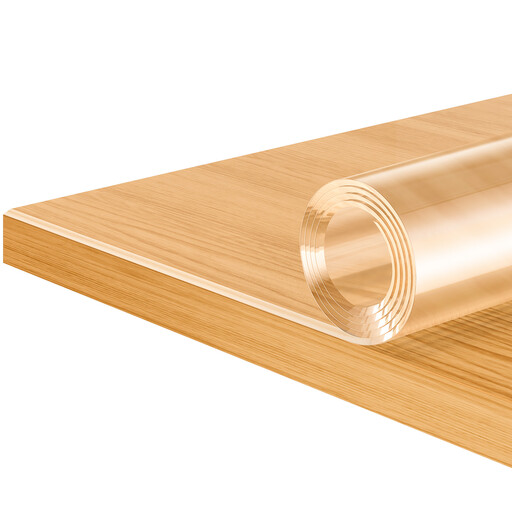
Why this product suits this profile: Its rectangular size is suitable for smaller kitchen and dining tables. According to WOLTU’s product information, the protector is made from 2 mm-thick clear PVC and has a bevelled edge.
The specified size makes it easier to choose than a generic one-size-fits-all option. The bevelled edge helps avoid a sharp-looking edge.
2 mm material thickness, clear appearance, water- and grease-resistant surface according to the product description, and easy cleaning with a damp cloth.
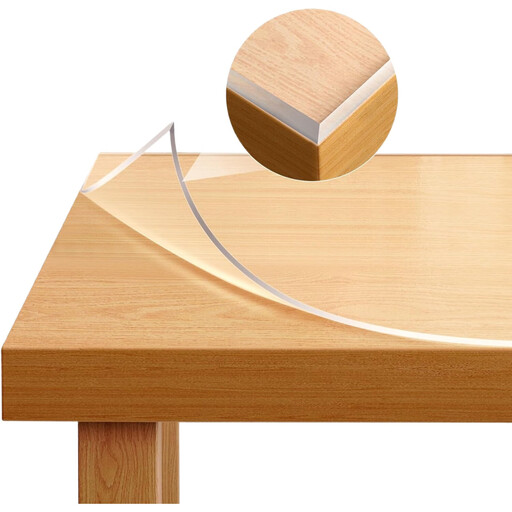
Why this product suits this profile: The longer size is designed for larger dining or work tables. According to WOLTU’s product information, this model has a high-gloss, clear PVC surface and a 45-degree bevelled edge.
The product information gives specific measurements, material thickness and care instructions. This makes it easier to check whether it’s suitable than a description with no technical details.
2 mm-thick PVC, water- and grease-resistant surface according to the product description, cut-to-size rectangular dimensions and bevelled edges.

Why this product suits this profile: This model is designed for regular use in the kitchen, dining room, home office or at a work table. According to Laneetal’s product information, it’s waterproof, wipe-clean and suitable for warm items up to a stated temperature limit.
The product description specifies a temperature limit and warns against direct contact with very hot items. This helps prevent ‘heat-resistant’ from being interpreted too broadly.
2 mm PVC, 80 x 140 cm size, waterproof surface and the option to trim it carefully with suitable tools.
We’ve put together a complete, regularly updated list of products that meet these strict selection criteria and fully comply with the safety regulations in force in the EU.
A clear PVC table protector can usually be cleaned with a soft, damp cloth and mild detergent. Scouring pads, harsh bleaches and concentrated chemicals can dull or damage the surface.
Unroll the protector fully before using it for the first time. Placing weights on the corners can help smooth it out. Don’t put knives, hot pans or naked flames directly on the protector. For glass or high-gloss surfaces, it’s especially important to follow the manufacturer’s instructions.
Its lifespan depends on the material thickness, exposure to sunlight, cleaning and mechanical wear. A 2 mm protector is designed for everyday protection, but sharp objects, high temperatures or constant friction can damage it. Removing crumbs regularly and cleaning it gently can help keep the surface clear for longer.
Many models supplied rolled up can be trimmed carefully. First, lay the protector flat and mark the measurements with a ruler or straight edge. If using a craft knife, work on a stable surface and keep it well away from children. Check the product description to confirm whether the protector can be trimmed.
It depends on the model. Air bubbles can form on glass or high-gloss surfaces. Some manufacturers recommend placing a thin layer of fabric between the table and the protector. Check the guidance on surface compatibility before buying.