
Lieferung heute & morgen

Qualitätsgarantie

Willkommens-Angebote freischalten: KOSTENLOSE Lieferung | Bis zu 80 % RABATT | Kostenlose 30-Tage-JoyPlus-Testphase
App herunterladen
A high-quality table is often the centrepiece of a home. Whether it's made of solid wood, elegant glass, or a modern composite material, you want to protect its surface without hiding its beauty under an opaque tablecloth. A clear table protector seems like the ideal solution. However, the market is flooded with products whose differences in quality are barely noticeable at first glance. This often leads to disappointment and unnecessary expense.
As your Joybuy Product Recommendation Officer, I'll help you identify the typical pitfalls and make an informed decision. We will focus on the objective features that truly matter to protect your tabletop without compromising on aesthetics.
Before you add a protective film for your table to your cart, you should be aware of these three common problems, which often only become apparent after unpacking:
To avoid a bad buy, you should focus on three core technical features. These determine the durability, appearance, and functionality of the protector.
Thickness is perhaps the most important quality indicator. While 1mm films may suffice for rarely used side tables, a 2mm table protector is a significantly more robust option for dining tables or desks.
Most transparent table protectors are made of Polyvinyl Chloride (PVC). However, the crucial factor is the surface finish in relation to your tabletop.
A good washable table protector is a basic property of PVC. Stains from coffee, wine, or sauces can be effortlessly wiped away with a damp cloth.
Two other details make a big difference in daily use:
heat-resistant table film can typically withstand temperatures up to about 60°C, with some manufacturers claiming up to 80°C. This means a warm plate or a cup of tea is no problem. However, pots or pans taken directly from the stove should never be placed on it, as this will cause permanent deformation.Here are some product recommendations tailored to specific use cases that meet the quality criteria mentioned above.
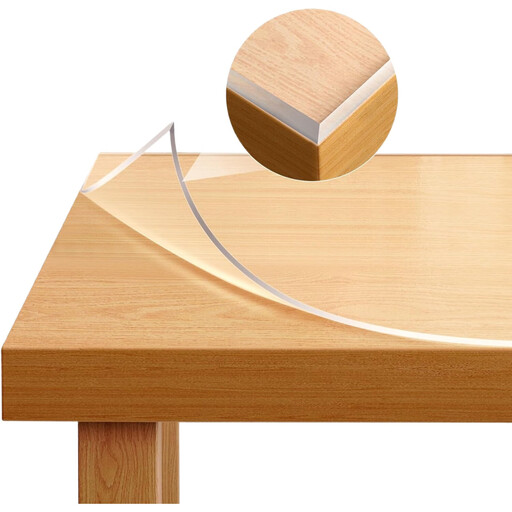
Why this product is a good fit: Perfect for the rigours of family life. The robust thickness withstands impacts, and the bevelled edges minimise the risk of injury for children while increasing comfort for everyone at the table.
The 2mm material thickness prevents the cheap "thin film" effect and provides genuine protection. The bevelled edge bypasses the problem of sharp edges common on simpler films.
The 45° bevelled edge, as stated by the manufacturer, ensures a comfortable feel for your arms and a safer table experience.

Why this product is a good fit: Protects a high-end wooden or matte-finish desk without disrupting its aesthetic. The high transparency and heavy material provide professional and unobtrusive protection.
The heavy-duty 2mm quality ensures it lies flat with a premium feel. According to the manufacturer, the film is often supplied with a slight length tolerance to compensate for potential material shrinkage.
The high transparency keeps the natural beauty of the table surface visible, while the water- and oil-resistant surface makes cleaning effortless.

Why this product is a good fit: A functional and cost-effective solution for protecting standard dining tables or matte-finish work surfaces, where the focus is on basic protection and easy cleaning.
This model is ideal for wood or matte lacquer tables, as the high-gloss surface won't create air bubbles here. It thus bypasses the most common aesthetic pitfall of using the wrong surface combination.
Offers excellent value for money for fundamental protection. According to the manufacturer, it is certified to the Global Recycled Standard and contains at least 50% recycled material.
A `clear table protector` is a practical investment. Explore our full range to find the right size and finish for your table.
1. How do I get the table protector to lie flat after unrolling? The film is delivered rolled and needs some time to flatten out. Unroll it on the table and weigh down the corners and any ripples with heavy books for 24-48 hours. Gently warming it with a hairdryer on a low setting can speed up the process.
2. Can I use a transparent table protector on a high-gloss table? Using a high-gloss film on a high-gloss or glass table is not recommended, as it will lead to trapped air bubbles. For such surfaces, use a film with a matte or slightly textured finish. Alternatively, some users report that placing a very thin, barely visible cotton cloth between the table and the film can work, but this is an improvised solution.
3. How do I cut a table protector to size? If you want to create a custom-cut table protector, lay the film on the table and let it acclimate for 1-2 days first. Mark the desired cutting line with a wipeable marker and use a long ruler or a straight edge as a guide. Carefully cut the film with a sharp utility knife. Plan for a tolerance of 1-2 mm per metre to compensate for any potential future shrinkage.