
Lieferung heute & morgen

Qualitätsgarantie

Willkommens-Angebote freischalten: KOSTENLOSE Lieferung | Bis zu 80 % RABATT | Kostenlose 30-Tage-JoyPlus-Testphase
App herunterladen
A cleaver can save a lot of time when preparing meat, poultry and vegetables. However, Chinese cleavers, kitchen choppers and classic meat knives differ significantly in blade thickness, weight and intended use. If you rely solely on terms like "hand-forged", "extra sharp" or "professional", you may end up buying a knife that is unsuitable for your actual tasks.
A long blade offers more cutting surface, but it is not automatically stronger. For precise slicing and dicing, 170 to 210 mm can be perfectly adequate. When breaking down larger pieces or working with bones, what really matters is blade thickness, weight and balance point.
A carbon steel cleaver can offer high hardness and good edge retention. At the same time, this material is more sensitive to moisture, salt and acidic foods than many stainless steels. After use, the blade should be cleaned immediately and dried thoroughly. Depending on the manufacturer's instructions, a thin, food-safe protective coating may be advisable.
An Asian cleaver designed for vegetables and meat is not automatically a bone cleaver. Poultry bones, thin ribs and large, hard bones all place different demands on a knife. If you regularly want to chop through bones, you should explicitly look for a manufacturer's specification to that effect, and never use the knife on frozen food. For splitting very hard bones, a dedicated bone cleaver or a separate tool may be more appropriate.
For a carbon steel cleaver, details about the steel type, hardness and care are particularly important. Hardness is sometimes given in HRC. A higher value can support a stable, longer-lasting edge, but on its own it says nothing about overall usability. Just as important are the blade geometry, the grind and the quality of the transition to the handle.
Stain-resistant steels, such as the 7Cr17MoV steel used in the COOKER KING, combine corrosion resistance with a hardness of 58 ± 2 HRC, according to the product description. Such information should always be understood as the manufacturer's data and cross-referenced with the specific care instructions for the product in question.
For vegetables, herbs and smaller pieces of meat, a more compact blade is often easier to control. A 170 mm cleaver can therefore be suitable for everyday preparation. 210 mm offers more reach and working surface. With a bone cleaver of 313 mm, the significantly larger dimensions are intended for specific tasks and are not necessarily practical for every kitchen worktop.
A weighted balance point towards the blade can support the chopping motion. However, the weight should not be so high that your wrist and forearm tire quickly. For longer preparation times, balance and handle design are just as important as the raw blade mass.
A full-tang construction extends the tang through the handle and can provide a robust connection. Multiple rivets on the handle offer additional structural stability. Wooden handles feel traditional but require careful drying. According to the COOKER KING product description, Pakkawood is moisture-resistant; nevertheless, this knife should not be left to soak in water for extended periods.
Always use a cleaver on a suitable, stable chopping board. Glass, stone and hard ceramic can damage the edge. For bone work, a dedicated chopping block is recommended. Cutting movements should be controlled; twisting the blade sideways increases the risk of injury.
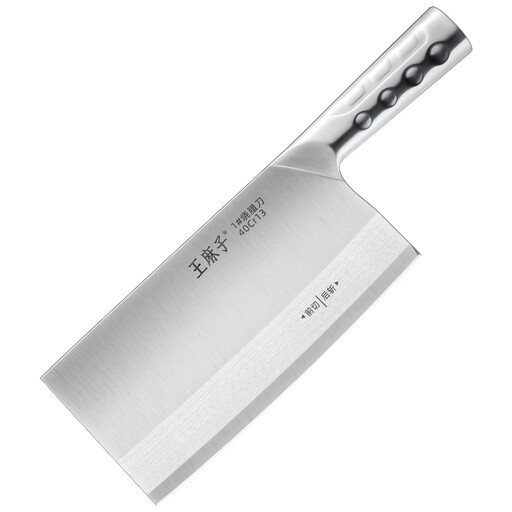
Why this product fits the profile: The 210 mm blade is designed for various preparation tasks, including slicing, chopping and mincing meat, poultry and vegetables. The wooden handle offers a classic construction for the home kitchen.
The specific blade length is stated and the description mentions several areas of use. This makes it easier to match the knife to your own kitchen routine, rather than just evaluating advertising claims about sharpness.
210 mm blade; carbon steel according to product description; wooden handle; versatile for vegetables, meat and poultry.
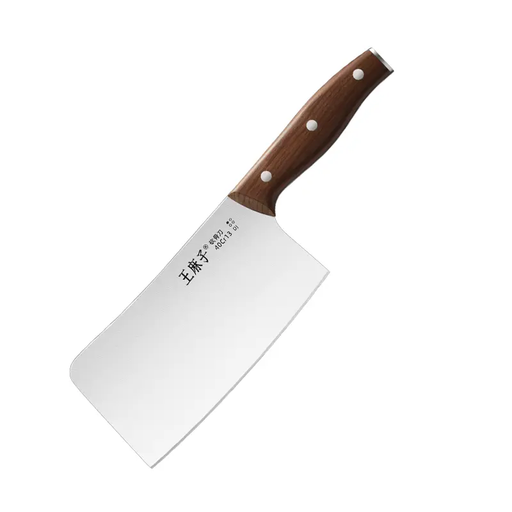
Why this product fits the profile: The product description explicitly mentions thick pork ribs and bones. This makes this kitchen cleaver suitable for users who regularly carry out heavier butchery work.
The intended use for bones and ribs is clearly stated in the description. This reduces the risk of using a purely vegetable cleaver for heavy butchery tasks.
Forged construction according to product description; high-carbon steel; full-tang construction; non-slip handle.
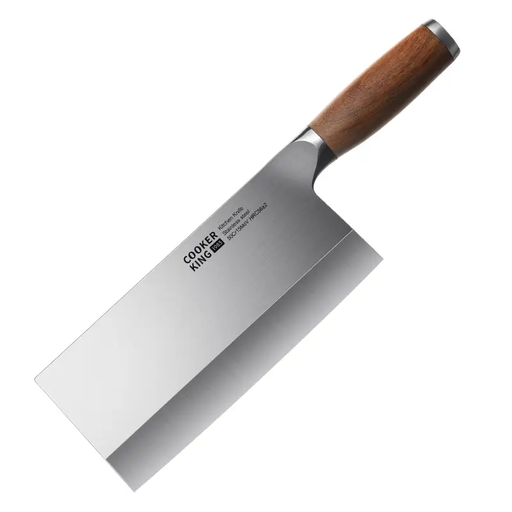
Why this product fits the profile: The stated 7Cr17MoV stainless steel, the 15° double bevel edge and the triple-riveted full-tang handle appeal to buyers who want to combine technical product data with versatile use.
Material, hardness range, edge angle and handle construction are all specifically listed. This makes it easier to carry out an objective assessment compared to vague claims like "professional quality".
7-inch blade; 7Cr17MoV stainless steel; 58 ± 2 HRC according to product data; moisture-resistant Pakkawood handle.
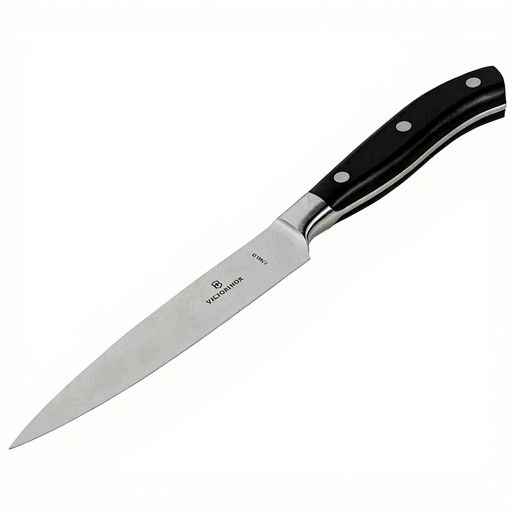
Why this product fits the profile: The 15 cm blade and the stated weight of 198 g make it suitable for users looking for a relatively compact knife for slicing, dicing and chopping meat, fish, fruit and vegetables.
The compact dimensions and weight are specifically stated. The knife is also listed as dishwasher-safe; however, the manufacturer's care instructions remain the definitive guide.
15 cm blade; forged construction according to product data; straight grind; POM handle; 198 g weight.
We have compiled a complete, regularly updated list of products that fully meet these strict selection criteria and the safety regulations in force in the EU.
That depends on the construction and the manufacturer's specification. A cleaver for meat and bones should be explicitly intended for that task. A thin Chinese cleaver for vegetables is not automatically suitable for hard bones. For poultry bones or ribs, models designated for that purpose are appropriate; for very hard bones, a specialist bone cleaver or chopper is more practical.
Use a suitable wooden or plastic chopping board and avoid glass, stone and hard ceramic. Clean and dry the blade immediately after use. A whetstone can re-sharpen the edge depending on the grind and material. With carbon steel, additional protection from moisture is important, otherwise rust can form.
The price depends on factors including the steel, manufacturing method, handle construction, blade length and finish. A hand-forged version or a carbon steel cleaver may have different care requirements than a stainless model. The key is to compare the technical data with your intended use, rather than judging solely on price or individual marketing claims.