
Lieferung heute & morgen

Qualitätsgarantie

Willkommens-Angebote freischalten: KOSTENLOSE Lieferung | Bis zu 80 % RABATT | Kostenlose 30-Tage-JoyPlus-Testphase
App herunterladen
Climbing toys and active play toys should encourage children to move, but you shouldn’t choose one based on eye-catching product photos alone. For families with children aged around 2 to 7, the key considerations are age suitability, stability, space requirements and reliable safety information.
Three common buying pitfalls come up particularly often:
When choosing active play toys for children aged 2 and over, parents should check the product description and safety warnings separately. The roba climbing triangle is described as suitable from 24 months, but also states that it is not suitable for children under 36 months. You should therefore follow the stricter age guidance when deciding whether to buy it.
It’s also important to check:
Even with a product intended for children aged 3 and over, supervision is advisable, depending on their motor skills, height and play environment. Small parts, such as those found in wooden dexterity games or construction toys for children, should be kept out of reach of younger siblings.
Compare the product’s overall dimensions with the space you have available. A climbing tower or ladder may look compact, but swinging or sliding requires extra room to move.
When checking the weight capacity, look for three details:
The roba indoor play frame measures 127.5 × 83 × 110.5 cm and has a stated maximum load of 70 kg. The roba climbing triangle measures 85 × 63.5 × 97.5 cm and is rated for up to 50 kg. Always follow the relevant safety instructions.
Solid wood, plastic and metal all have different care requirements. Clean untreated wood with a dry or slightly damp cloth only. With metal structures, regularly check the connections and look for any damage to the surface.
Also check whether accessories are sold separately. For example, a slide board and gym mat are compatible with the roba climbing triangle, but aren’t automatically included. When buying wooden toys for children, also check the information on paint, edges, small parts and applicable markings on the packaging and instructions. Only mention a particular standard or certification if it is clearly stated for the specific product.
The selection below groups products by available space, age and intended use, rather than ranking them in a one-size-fits-all order.
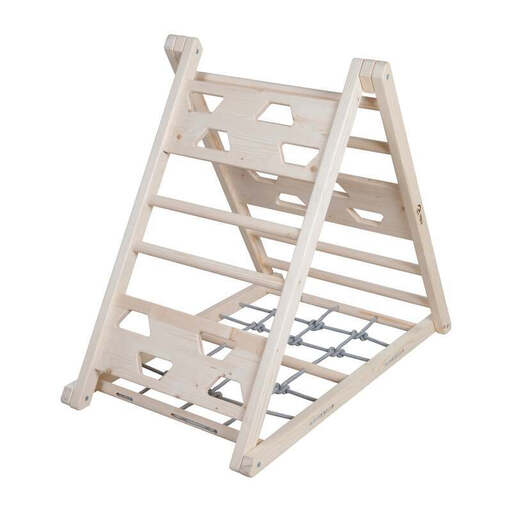
Why it suits this profile: This compact wooden model has three sides with rungs, a climbing rope and grip surfaces. It’s a good choice for families looking for versatile active play that won’t take up too much room.
The product information gives the dimensions, material and maximum load, helping parents check the available space and floor surface in advance. The stricter age warning of 36 months and over should be followed.
Solid wood, three usable sides and a stated load capacity of up to 50 kg; a slide board and gym mat can be added separately.
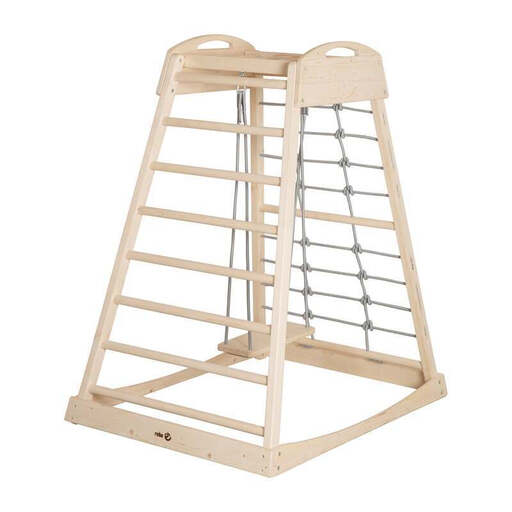
Why it suits this profile: This larger indoor model combines climbing ropes, gym rings and a removable wooden swing. It’s ideal for families who want to bring different types of active play together in one piece of equipment.
The product description gives the overall dimensions, material and load capacity, and says it must be set up on a soft, level surface. Wall anchoring is recommended for indoor use.
127.5 × 83 × 110.5 cm, natural wood, gym rings, climbing ropes and a wooden swing; stated maximum load of 70 kg.
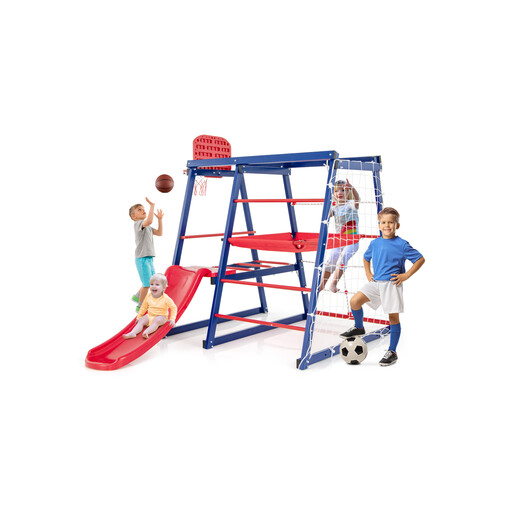
Why it suits this profile: With a slide, climbing nets, ladders, a basketball hoop and two platforms, this set is designed for families with enough indoor or outdoor space for a wide range of activities.
The structure is listed as measuring 150 × 142 × 146 cm, making it easier to assess the space you’ll need than product photos alone.
Seven play features, metal tubes and a stated total load capacity of 120 kg; according to the product information, suitable for children aged 3 to 7.
We’ve put together a complete, regularly updated list of products that fully meet these strict selection criteria and the safety regulations in force in the EU.
For quieter moments, wooden dexterity games and age-appropriate construction toys can complement active play. The Natural Games Wobble Tower contains 60 wooden blocks and, according to the product information, is intended for children aged 6 and over. It isn’t suitable for children under 3 because it contains small parts.
Construction site vehicle toys with a crane, mini vehicles and a play mat are available in sets intended for children aged 3 and over. Before buying, parents should check whether the set contains small parts and whether the toy is suitable for supervised play. A children’s sled, on the other hand, is designed for outdoor use. The Nimbus 1 steering sled is listed as suitable from 3 years, with direct supervision, a helmet and suitable protective equipment also recommended.
As well as the product’s footprint, leave a clear area for climbing on and off, sliding and potential falls. Don’t position the frame next to windows, stairs, radiators or hard furniture. A play mat can provide extra cushioning, but it doesn’t replace supervision.
That depends on the specific age guidance and safety information. If a product page says it’s suitable from 24 months, but the warnings state that it should only be used from 36 months, follow the stricter age limit. You should also consider your child’s development and whether they can use the climbing frame safely.
How long they last depends on the material, construction, level of use and care. Regularly check screws, edges, ropes and connections. Store the toy in a dry place, clean it gently and stop using any damaged parts. A stated load capacity doesn’t guarantee a particular lifespan.