
Lieferung heute & morgen

Qualitätsgarantie

Willkommens-Angebote freischalten: KOSTENLOSE Lieferung | Bis zu 80 % RABATT | Kostenlose 30-Tage-JoyPlus-Testphase
App herunterladen
Cling film is part of the everyday kitchen essentials in many German households. It covers bowls, protects cut vegetables from drying out and helps keep leftovers in the fridge. Hotels, restaurants, catering businesses and commercial kitchens also regularly use rolls of film or ready-made covers.
When buying, however, the stated length is not the only factor to consider. Some products do not stick well, tear when unrolling or, contrary to common expectations, are not suitable for use in the microwave. Three typical buying misconceptions particularly often lead to the wrong choice:
A food-safe cling film should be expressly intended for direct contact with food. The products listed here often specify polyethylene (PE) as the material. PE cling film is flexible and sticks to smooth edges thanks to its material properties.
The specific labelling on the packaging and product page is crucial. Information such as “food-grade PE” or “for direct food contact” provides better guidance than general statements such as “safe” or “keeps food fresh”. The film should also be odourless and tasteless when covering delicate foods such as cheese, fruit or prepared dishes.
Not every cling film is equally suitable for use in the fridge, freezer and microwave. Buyers should check the intended temperature range and usage instructions:
According to the product description, the Quickpack Premiumline Cling Film 7-Layer 30 m is suitable for storage, freezer use and microwaving at temperatures of up to 160 °C. At the same time, the manufacturer states that it must not be used in a conventional oven or directly next to heat sources. These restrictions should form part of your buying decision.
A typical cling film roll is around 30 cm wide, making it suitable for many plates, bowls and food storage containers. With a cling film roll in a tear-off box, ease of use is also important. A serrated edge or integrated cutting mechanism can make portioning easier and reduce unnecessary material waste.
For private households, 30 m or 20 m of cling film is often sufficient. If you frequently prepare meals in advance, package large quantities or run a catering business, you may wish to consider a 75 m cling film roll or a pre-perforated 90 m roll. It is important that the roll fits the dispenser you have available and does not become misshapen through incorrect storage.
The following recommendations categorise products according to everyday situations and verifiable product features. Each product page contains up-to-date information on availability, what is included and usage.
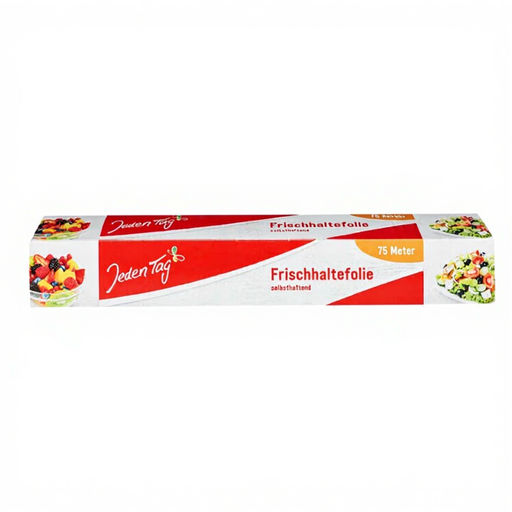
Why this product suits this profile: The 75-metre roll is designed for households with regular requirements, as well as straightforward applications in the kitchen or catering.
The roll length and polyethylene material are clearly stated. However, there are restrictions for microwave and oven use which must be observed before use.
75 m of film, PE material and suitability for covering food and containers.
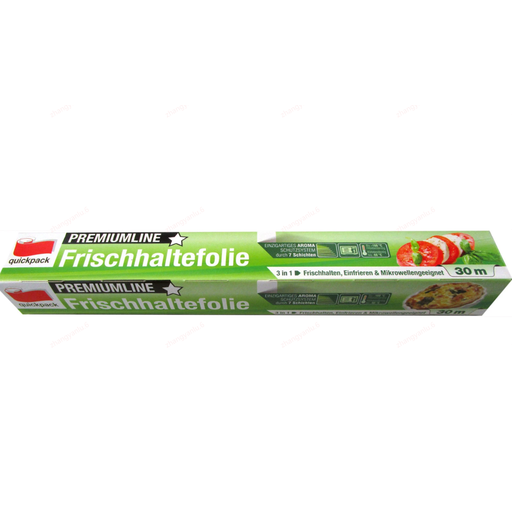
Why this product suits this profile: The multi-layer PE film is aimed at users who want to consider freezer and microwave specifications as well as simply covering food.
The stated temperature range of up to 160 °C for microwave use and down to −60 °C for cold conditions is accompanied by clear usage instructions. Oven use remains excluded.
30 m length, 30 cm width, 7-layer co-extruded PE film and specified use for the fridge, freezer and microwave.
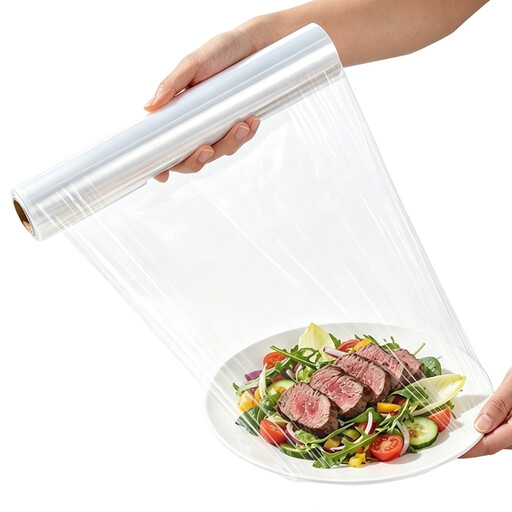
Why this product suits this profile: The pre-perforated 90-metre roll is designed for frequent portioning without scissors and may appeal to households, preparation kitchens and catering businesses.
The perforations reduce the risk of using too much film when tearing it off. The product is not suitable for oven use; in the microwave, steam must be able to escape.
90 m length, 30 cm width, food-safe PE, flexible film and pre-perforated tear-off points.
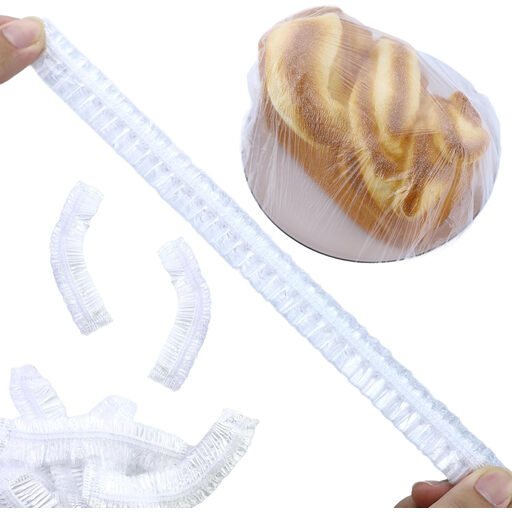
Why this product suits this profile: The elastic disposable covers are designed for bowls, plates and containers in different shapes.
The elastic edge makes it easy to cover items without cutting. The product is designated for single use and is not intended for microwave or oven use.
110 pieces, elastic edge, flexible food-grade plastic film and quick application without scissors.
We have put together a complete, regularly updated list of products that fully meet these strict selection criteria and the safety regulations applicable in the EU.
Aluminium foil is suited to different tasks than PE cling film. It is more rigid and is often used for covering, wrapping and baking. It is not suitable for microwave use. Strongly acidic or salty foods can cause material transfer; follow the relevant information on the packaging.
Cling film sticks better to smooth bowl edges and is practical for cold storage. If you need both options, you can buy a cling film roll and aluminium foil separately. A cling film roll in a tear-off box or a suitable roll dispenser makes everyday portioning easier.
Only if the manufacturer expressly states that it is suitable for microwave use. The film must not be sealed tightly, as steam needs to escape. It should also not come into direct contact with very hot, high-fat or high-sugar foods. Cling film is not intended for use in an oven, under a grill or on a hob.
When stored in a dry, cool place away from light, the roll can be used over an extended period. However, the information on the packaging is decisive. If the film becomes brittle, sticks unevenly or shows visible damage, it should no longer be used with food.
For occasional use, 20 to 30 m is often enough. Households with regular requirements or catering businesses can buy replacements less frequently with 75 m or 90 m rolls. Actual usage depends on the width of the containers and how precisely the film can be torn off.