
Lieferung heute & morgen

Qualitätsgarantie

Willkommens-Angebote freischalten: KOSTENLOSE Lieferung | Bis zu 80 % RABATT | Kostenlose 30-Tage-JoyPlus-Testphase
App herunterladen
If you’re looking to buy cling film, you’ll find plenty of options: classic food cling film, multi-layer clear film, stretch wrap for moving and packaging film for larger items. The differences aren’t just about roll length. Material, cling, temperature ratings and ease of use all affect whether the film is right for the job.
A 20 m roll of cling film may be enough for occasional household use. For families, frequent cooking or catering, a 75 m roll is more practical because you won’t need to replace it as often. However, the metreage alone doesn’t tell you the film’s width, thickness or how much you can use before it tears.
Stretch wrap often clings to itself and is used for bundling, securing and transporting items. It isn’t automatically intended for direct contact with food. So packaging film for furniture, boxes or pallets shouldn’t be used to cover uncovered food or bowls.
Cling film marked as microwave-safe should only be used under the conditions stated. Keep it away from heating elements, grill surfaces and very hot food. Standard PE cling film is not intended for use in the oven. Always follow the instructions on the packaging.
Polyethylene (PE) is commonly used for food cling film. It’s lightweight, flexible and can mould around the rim of a bowl or container. When choosing, also check the following:
According to the product description, multi-layer film may offer additional features such as protection against flavour or odours. Always treat these as product-specific features, not general claims about all clear films.
For everyday use at home, 20 m or 30 m rolls are often a manageable size. If you regularly cover food, prepare meals in advance or work in a catering business, a 75 m roll means you’ll need to top up less often. Check the width as well as the length:
Film may cling to the rim of a bowl, to itself or only when pulled taut. An integrated cutting edge, dispenser box or holder makes it easier to use just the amount you need. If you use cling film often, look for:
A cover sheet with eyelets serves a different purpose. It attaches through the eyelets and can be used to protect garden furniture or materials outdoors, for example. It isn’t intended for food.
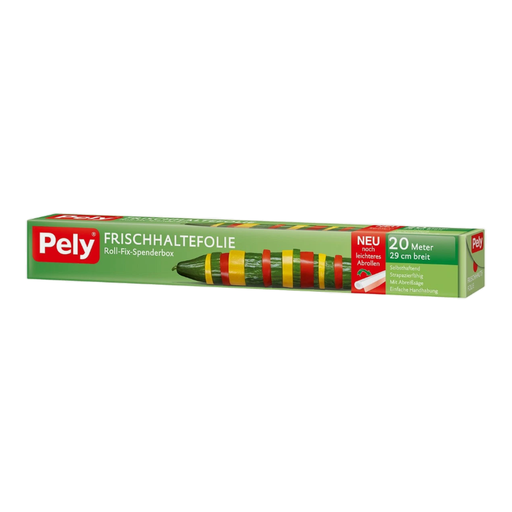
Why this product suits this profile: The 20-metre roll is designed for everyday household tasks. The dispenser box with its Roll-Fix system keeps the end of the film accessible after tearing.
The built-in holder makes it easier to find the start of the film. The product details specify PE and suitability for contact with food; it must not be used in the oven.
20 m roll, PE material and a dispenser box with a cutting edge.
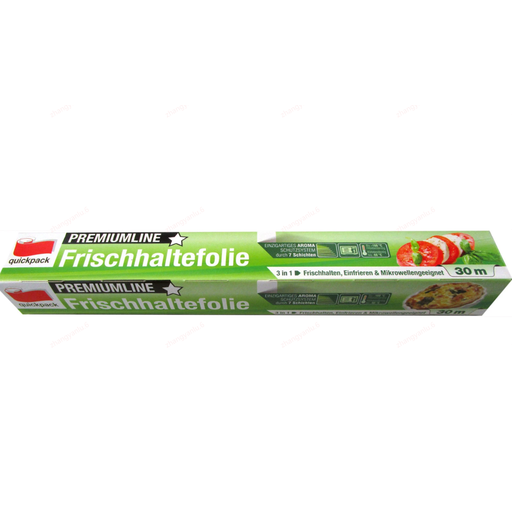
Why this product suits this profile: The 30-metre roll has a seven-layer PE construction. It’s a good option if you want one product description to cover storage, freezer and microwave use.
The product details give specific temperature limits of up to 160 °C and down to −60 °C. When using it in the microwave, leave an opening for steam to escape; it isn’t intended for oven use.
Seven-layer co-extruded PE film, 30 m long, with stated suitability for the freezer and microwave.
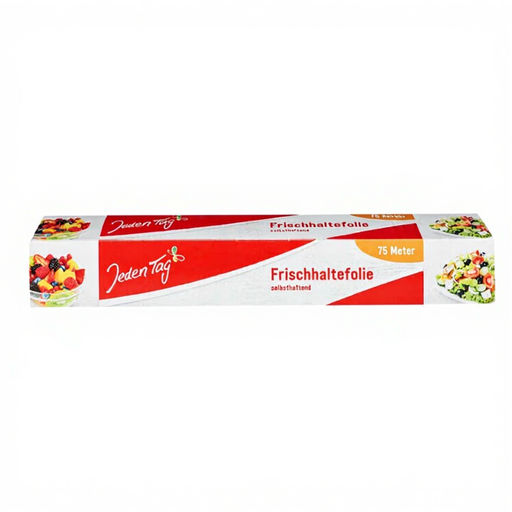
Why this product suits this profile: The 75-metre roll is aimed at households that use cling film regularly, as well as people working in catering and hospitality who prefer a larger roll.
The longer roll means you won’t need to buy replacements as often. The product information also advises against using the film in the oven and says it should only be used in the microwave under the stated conditions.
75 m long, made from PE and intended for covering food and containers.
For boxes, furniture or pallets, separate stretch wrap is a better choice. According to the product description, the TAPEBEAR Mini Clear Stretch Wrap Film comes with a reusable handle, is 20 micrometres thick and each roll is 305 m long. It’s intended for packaging and moving, not for wrapping food. Outdoors, a transparent PE cover sheet with eyelets can be useful, for example to protect garden furniture. This isn’t a substitute for kitchen cling film either.
We’ve put together a complete, regularly updated list of products that meet these strict selection criteria and fully comply with the safety regulations in force in the EU.
Only use film that is explicitly approved for microwave use. Follow the specific temperature and usage instructions. The Quickpack Premiumline is stated to be suitable for temperatures of up to 160 °C; the film should also be left slightly open to let steam escape. It isn’t intended for oven use.
Cling film usually doesn’t have a use-by date like fresh food. Even so, check the packaging for storage instructions, a batch number and, where applicable, a best-before date. Store the roll in a cool, dry place away from direct heat and sunlight to keep it easier to handle.
It depends on the price, the width of the film and how much you use each time. A 75-metre roll can reduce the need to buy replacements and is practical if you use cling film regularly. For occasional use, a 20-metre roll may be enough, without having to store a large roll for a long time. So compare the price per metre, taking width and features into account.