
Lieferung heute & morgen

Qualitätsgarantie

Willkommens-Angebote freischalten: KOSTENLOSE Lieferung | Bis zu 80 % RABATT | Kostenlose 30-Tage-JoyPlus-Testphase
App herunterladen
When a family member has a fever, a reliable clinical thermometer is essential. But the selection is vast and the marketing promises are plentiful. Between infrared technology, multi-function devices, and various measurement methods, it's easy to lose track. This guide will help you distinguish the important features from the non-essential and avoid the common pitfalls of buying.
Many devices on the market promise more than they can deliver in everyday use. Pay attention to these three points to avoid a bad investment:
To find the right device for your needs, you should focus on a few crucial technical parameters.
The choice of technology largely determines the thermometer's handling and application.
A clinical thermometer is a medical product. Always look for the CE marking with a four-digit number of the notified body. This mark signals that the device meets the essential safety and performance requirements of the EU Medical Device Regulation (MDR) and has undergone a conformity assessment. This is a fundamental feature of a reliable medical thermometer.
Modern devices often offer useful extras that simplify daily use:
Instead of presenting an overwhelming list, we have matched a few models to typical user profiles.
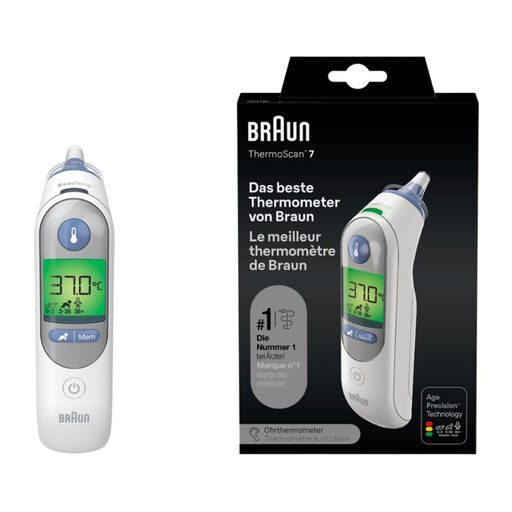
Why This Fits Their Persona: For parents who need fast, accurate, and age-appropriate temperature readings for their babies and toddlers. The age-based fever interpretation removes the guesswork from assessing the temperature.
This device is a specialised ear thermometer, not an imprecise jack-of-all-trades. The pre-warmed tip minimises the cooling effect in the ear, contributing to measurement accuracy.
Age Precision Technology: Colour-coded display for age-dependent interpretation. ExacTemp Positioning Aid: Confirms correct positioning in the ear for a reliable measurement.
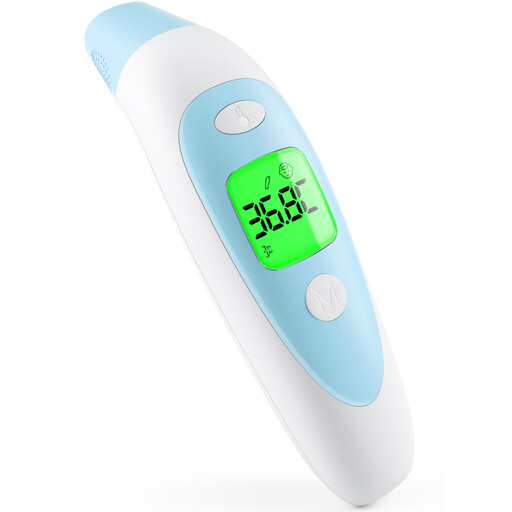
Why This Fits Their Persona: A solid choice for families looking for a functional and certified device without a high initial cost. It combines forehead and ear measurement in one device.
This model does not require disposable probe covers, thus avoiding hidden running costs. The measurement tip can be easily cleaned with a cloth.
3-in-1 Functionality: Measures on the forehead, in the ear, and the temperature of objects. CE Certified: Meets European safety and accuracy standards for medical devices.
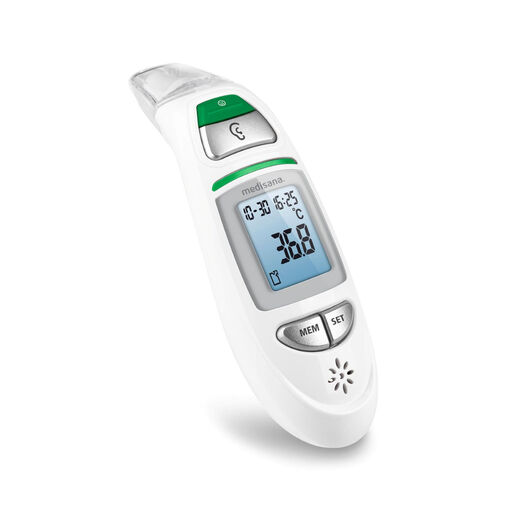
Why This Fits Their Persona: Ideal for users who prefer a single device for various household measurements, from body temperature to the temperature of baby bottles or bath water.
Although it is a multi-function device, it focuses on precise infrared measurement technology for the forehead and ear and is certified as a medical device, which sets it apart from less reliable all-rounders.
6-in-1 Function: Measures body temperature (forehead/ear) as well as surface, liquid, and ambient temperature. Visual Fever Alarm: The display changes colour to indicate an elevated temperature.
We have compiled a complete, up-to-date list of products that fully meet these strict selection criteria and European safety regulations.
For newborns and infants up to 3 months, rectal measurement with a digital thermometer with a flexible tip is considered the most accurate method (the gold standard). For a quick and less invasive measurement, forehead thermometers with age precision or gentle ear thermometers are also a common choice among parents. It is crucial to follow the manufacturer's instructions carefully.
Cleaning is critical for hygiene and measurement accuracy. Never use water to clean the entire device. The probe or sensor should be gently wiped after each use with a soft cloth or cotton swab lightly dampened with medical alcohol (70% isopropyl). Allow the sensor to dry completely before taking the next measurement.
Most digital thermometers display a battery icon when the power is running low. There is no fixed rule, but it is advisable to change the batteries as soon as this symbol appears to avoid inaccurate readings. It is also a good idea to always have a set of replacement batteries (usually AAA or button cell batteries) at home.