
Lieferung heute & morgen

Qualitätsgarantie

Willkommens-Angebote freischalten: KOSTENLOSE Lieferung | Bis zu 80 % RABATT | Kostenlose 30-Tage-JoyPlus-Testphase
App herunterladen
A clip-fit pleated blind without drilling can be a practical solution for rented homes, offices and interiors that need to be changed quickly. It provides privacy, reduces glare and can often be attached to the window frame without a drill. However, not every model is suitable for every window.
As a Joybuy Product Recommendation Officer, I filter the most important product details and explain what you should look out for before buying. Three common mistakes are particularly likely to lead to unnecessary returns: choosing the wrong width, overestimating the blackout effect or selecting a mounting method that is unsuitable for the window frame.
With a pleated blind or pleated roller blind without drilling, the stated width may refer to the overall width, including the brackets. The actual fabric can be a few centimetres narrower. For example, the WOLTU blackout roller blind points out that the fabric width can be approximately 4 cm less than the overall width.
So measure the following first:
For the most complete coverage possible, several models recommend ordering a width of approximately glass width plus 3 to 4 cm. Always check this against the specific product description.
A blackout pleated blind made from an opaque fabric significantly reduces the amount of light entering the room. However, side gaps may remain if the blind is fitted inside the frame. An opaque pleated blind can provide privacy without completely darkening the room.
Pay attention to the following terms:
A pleated blind for clamping is usually attached to the movable window sash. You need a suitable rectangular frame with sufficient thickness. For various WOLTU models, the specified range is, for example, 13 to 23 mm or 16 to 22 mm.
Not every clip-fit roller blind for windows is suitable for:
Adhesive brackets also require a clean, smooth and grease-free surface. Adhesion may be limited on rough or uneven surfaces.
A clip-fit model is a sensible choice if the window sash needs to be opened or tilted and the bracket securely grips the frame. For doors or balcony windows, you should also check whether the blind could catch on the handle or adjacent components when the door is opened.
Clip-on brackets generally leave no drill holes. Nevertheless, do not squash the seals or force the brackets into place during installation. After fitting, check that the blind hangs level and moves smoothly without resistance.
Polyester is widely used among the products listed. It can usually be cleaned with a soft, dry cloth, a soft brush or a slightly damp cloth. Harsh cleaning products and abrasive sponges may damage the coating or the pleated structure.
Operation is particularly important in children’s bedrooms and homes with pets. Models with chains or cords must be fitted and used so that the controls remain out of children’s reach. A cordless roller blind with a handle can offer an alternative design in this respect.
A blackout fabric can be useful in the bedroom. In the living room, office or bathroom, a light-filtering pleated blind is often sufficient, allowing daylight in while improving privacy at the window. For kitchens and bathrooms, you should also check the information regarding moisture: “moisture-resistant” does not automatically mean waterproof or suitable for continuous exposure to water.
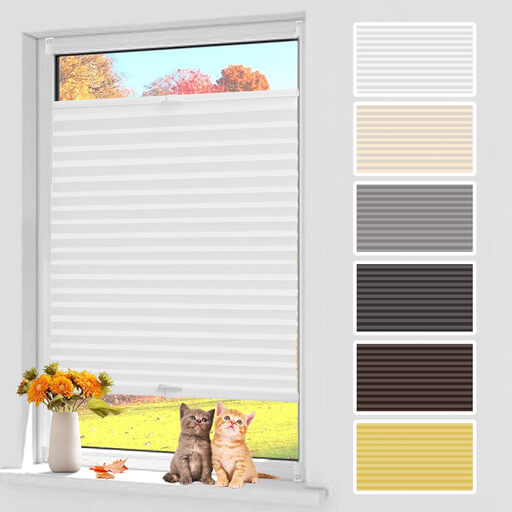
Why this product suits this profile: Measuring 60 × 100 cm and featuring polyester fabric and tool-free clip-on mounting, it is designed for smaller standard windows and straightforward retrofitting.
The product details specify the dimensions, clip-fit mounting and adjustable light and privacy control. You still need to measure the frame before buying.
60 × 100 cm, white polyester fabric, tool-free installation and suitable for windows or doors.

Why this product suits this profile: The honeycomb structure, polyester fabric and metal frame are designed to provide light protection and a rigid fit inside the frame.
The suitable frame thickness of 10–23 mm is clearly stated. This allows you to check in advance whether the clip-on brackets are compatible with your window.
Honeycomb pleated blind, clip-fit mounting for 10–23 mm, top and bottom handles, plus moisture-repellent polyester fabric according to the product description.

Why this product suits this profile: The cordless design with a bottom handle is suitable for rooms where easy operation and reduced operating risk are important.
The suitable frame thickness of 16–22 mm and the note about the narrower fabric width help with accurate planning.
80 × 150 cm, cordless operation, clip-on or screw mounting and a silver-coated rear side according to the product details.
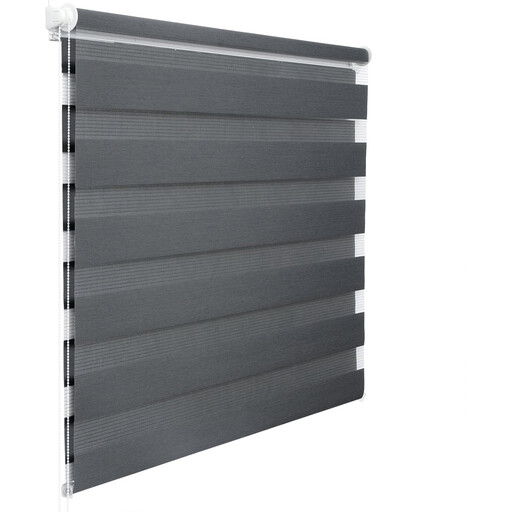
Why this product suits this profile: Alternating transparent and opaque fabric strips allow you to adjust the balance between daylight and privacy in stages.
The mounting system is designed for frame thicknesses of 13–23 mm. The product also distinguishes between fabric width and overall width.
80 × 130 cm, 100% polyester, chain control that can be fitted on the left or right, and suitable for windows or doors.
For a pleated blind for a rented home, clip-on brackets are usually less permanent than screw mounting. Adhesive brackets can still leave residue when removed, depending on the surface, temperature and adhesive. The relevant installation instructions should therefore always be followed.
We have put together a complete, regularly updated list of products that fully meet these strict selection criteria and the safety regulations applicable in the EU.
Measure the glass width and the height of the entire window frame. Then check whether the product width is given as the overall width or the fabric width. A width approximately 3 to 4 cm greater than the glass width is often recommended so that the privacy blind is not too narrow.
Its service life depends, among other things, on the fabric quality, exposure to sunlight, cleaning method and how frequently it is operated. Secure attachment and careful operation reduce the strain on the brackets and pleated fabric. Binding statements about service life are only possible where the supplier provides the relevant information.
Many of the models mentioned are intended for windows and doors according to their product descriptions. However, the decisive factors are the door frame thickness, door movement, handle position and available height. With balcony or patio doors, the roller blind should not catch on the handle and should remain securely attached to the frame when the door is opened.