
Lieferung heute & morgen

Qualitätsgarantie

Willkommens-Angebote freischalten: KOSTENLOSE Lieferung | Bis zu 80 % RABATT | Kostenlose 30-Tage-JoyPlus-Testphase
App herunterladen
A clip-fit roller blind without drilling can quickly provide privacy or sun protection in rented homes, owned properties and offices, without permanently altering walls or window frames. However, not every model is suitable for every window. Inaccurate measurements, unsuitable fittings or incorrect expectations about light transmission and blackout performance often lead to disappointing purchases.
For many roller blinds, the stated width covers the entire product, including the brackets. The actual fabric may be several centimetres narrower. If you only measure the window pane and fail to check the product specifications, you may end up with strips of light showing at the sides.
For a duo or zebra roller blind, a product width around 4 cm wider than the glass width is also often recommended. The specific recommendation for the product in question remains decisive.
A light-filtering roller blind, a double roller blind and a blackout roller blind serve different purposes. Alternating transparent and opaque stripes regulate the amount of light entering the room, but do not necessarily block it out completely. For bedrooms where you want to minimise outside light, a coated blackout roller blind or a thermal roller blind with an opaque backing is more suitable.
A roller blind with clip brackets requires a suitable section of the frame. With some models, for example, the required frame thickness is between 13 and 23 mm, while with others it is between 16 and 22 mm or 10 and 23 mm. Depending on the model, roof windows, timber windows, sliding windows or fixed-glazing units may not be suitable. Check these details against your installation situation before buying.
For an internal roller blind, first measure:
The fabric must not obstruct the handle. For balcony or patio doors, also check that the blind leaves enough clearance around the door handle when the door is opened and closed. For a roller blind for windows and doors, the manufacturer’s guidance on width and operating side is particularly important.
The operating mechanism also matters. A side-chain roller blind allows continuous adjustment, while a cordless model with a handle has fewer freely hanging operating elements. Chains and cords should always be installed out of children’s reach.
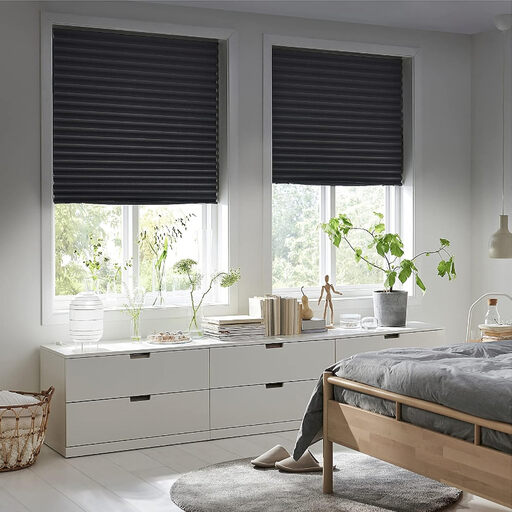
Why this product suits this profile: This compact pleated blind is designed for smaller windows and doors and can be installed without drilling using adhesive or clip-on fittings. Its light-filtering design is suitable for living rooms, bedrooms or offices where you want to combine daylight with privacy.
The product description states that it is suitable for smooth, dry surfaces and points out that rough or uneven substrates are unsuitable. This lets you assess whether the fitting method is realistic before buying.
Light-filtering polyester fabric, 65 × 100 cm size and drill-free installation for windows or doors.
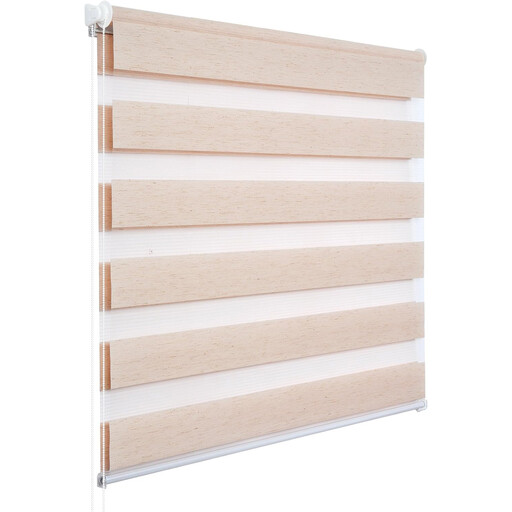
Why this product suits this profile: This zebra roller blind combines a wood-effect finish with two layers of polyester fabric. The chain can be fitted on the left or right, allowing you to adjust the blind between a more transparent and a more opaque position.
The frame thickness of 13–23 mm and the recommended measurement of glass width plus approximately 4 cm are clearly specified. This reduces the risk of ordering a blind that looks suitable but is technically incompatible.
100% polyester, wipe-clean with a damp cloth and designed for multiple operating sides as well as clip-on or screw fitting.
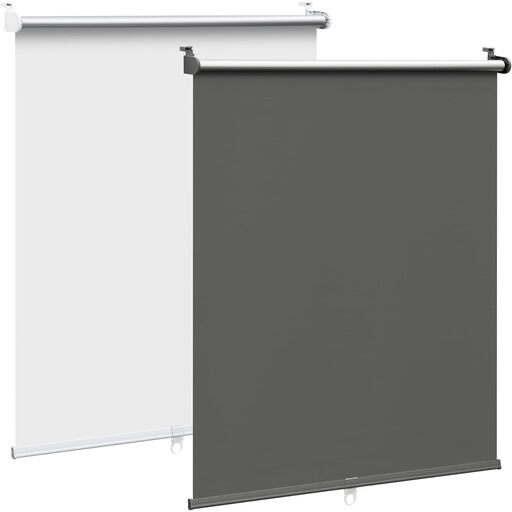
Why this product suits this profile: Cordless operation with a handle is suitable for bedrooms, children’s rooms, offices and rooms that are used frequently. The product description specifies a coated backing, opaque polyester fabric and clip-on fitting for frames measuring 16–22 mm.
This version has no side chain and expressly makes checking the frame a prerequisite. It also points out that the fabric width is approximately 4 cm narrower than the overall width.
Cordless handle operation, 85 × 150 cm, coated polyester fabric and installation with clip brackets or screws.
We have put together a complete, regularly updated list of products that fully meet these strict selection criteria and the safety regulations applicable in the EU.
Before installation, the clip surfaces must be clean and dry. Clip brackets are placed on the window sash and then secured according to the instructions. Adhesive installation requires a smooth, stable substrate. After installation, check that the window closes fully and that the handle remains free to move.
Polyester fabrics can usually be cleaned with a soft cloth or soft brush. Abrasive products, harsh cleaners and machine washing can damage coatings or fabrics. With chain-operated models, the chain and chain holder should be secured and kept out of children’s reach. A clip-fit roller blind is designed for indoor use; roof windows and timber frames may only be used if the product description expressly permits this.
Depending on the model, it is attached to the window frame using clip brackets, adhesive pads or a combination of clip-on and adhesive elements. The key factors are the specified frame thickness, a suitable substrate and correct alignment. Some products also offer screw fitting as an alternative.
Its service life depends on the material, mechanism, installation and operation. Choosing the correct frame thickness, ensuring the brackets are properly seated and opening and closing the blind carefully will reduce strain. With adhesive models, the substrate, humidity and temperature can affect adhesion.
A thermal roller blind does not require electricity to operate. A coated or honeycomb structure can affect heat entering and escaping the room. The extent to which this affects room temperature or heating costs depends, among other things, on the window size, glazing, sunlight and ventilation habits. Verified savings figures should only be relied upon where they can be clearly substantiated for the specific product.