
Lieferung heute & morgen

Qualitätsgarantie

Willkommens-Angebote freischalten: KOSTENLOSE Lieferung | Bis zu 80 % RABATT | Kostenlose 30-Tage-JoyPlus-Testphase
App herunterladen
A clip-on day and night blind with no drilling is a good choice for rented homes, renovated rooms and windows where you don’t want permanent holes. Alternating sheer and opaque fabric stripes let you adjust the amount of light coming in. This makes a day and night blind an appealing option for bedrooms, living rooms, kitchens, bathrooms, home offices and balconies.
But colour and price aren’t the only things to consider before you buy. Three common pitfalls can mean your blind doesn’t fit properly or work as you’d hoped.
For many clip-on blinds, the stated width is the overall width, including the brackets. According to product specifications, the fabric itself is often around 4 to 5 cm narrower. If you measure only the glass and order a blind based on that width, you may end up with insufficient coverage.
For good coverage at the sides, several WOLTU models recommend the following as a guide: ordered width = glass width plus around 4 cm. Make sure the window handle isn’t obstructed.
“No drilling” doesn’t mean that every window is automatically suitable. The permitted frame thickness varies by model, for example 13 to 23 mm, 16 to 22 mm or 1 to 2 cm. Seals, protruding handles and particularly deep frames can also affect installation.
So only buy a clip-on blind for windows or doors if the stated frame thickness matches your window. Several models explicitly exclude roof windows, wooden windows, sliding windows and fixed glazed panels.
A light-filtering blind softens daylight, while an opaque blind offers greater privacy when its stripes are closed. A classic day and night blind with alternating fabric panels lets you adjust the light from more transparent to more fully screened. However, it isn’t the same as every fully blackout blind.
For bedrooms or rooms exposed to direct sunlight, check whether you need a privacy blind, a sunshade blind or a model specifically described as a blackout blind.
A clip-on day and night blind is usually attached to the top of the window frame. The brackets are fitted over the frame, then the blind is hung in place. Some suitable models can also be installed with screws.
Before you buy, check:
Drill-free installation is particularly handy in rented homes, but you should still check that the brackets are firmly fitted.
According to the product specifications, the WOLTU blinds featured here are made from 100% polyester. Several versions have thermally cut edges, which are designed to reduce fraying. Depending on the model, care instructions recommend using a soft cloth, a soft brush or a vacuum cleaner on a low setting.
Most versions aren’t suitable for machine washing. Harsh cleaning products can damage the coatings and colours. A wipe-clean model is a practical choice for kitchens and bathrooms, but the fabric shouldn’t be exposed to direct water or high heat for long periods.
The chain-operated blind moves the sheer and opaque stripes against each other. This gives you different levels of light: more light can pass through, the room can be partially screened, or the blind can be made largely opaque. On many versions, the chain can be fitted on either the left or right.
Keep chains and pull mechanisms out of the reach of young children. Fit any supplied chain safety device according to the installation instructions.
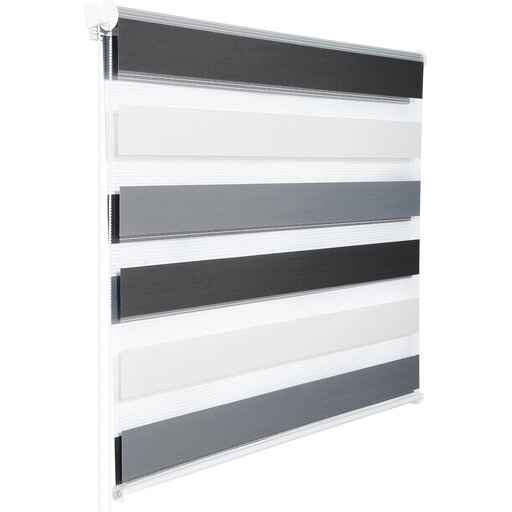
Why it suits this buyer: Its three-colour design and combination of light-filtering and opaque stripes make it a straightforward choice for anyone looking for a simple solution for a window or door.
The overall width of 100 cm is different from the fabric width. Before ordering, check the glass width and allow for extra coverage at the sides.
Clip-on or adhesive installation according to the product specifications, polyester fabric and a chain mechanism for adjusting the light.

Why it suits this buyer: This model is designed for anyone who wants more light-blocking fabric and cordless operation in a bedroom, living room or home office.
Check that your frame thickness is between 16 and 22 mm before buying. The product specifications also recommend choosing a width greater than the glass width for better coverage.
Cordless operation using the bottom grip rail, 200-g/m² polyester according to the product specifications, and two installation options.
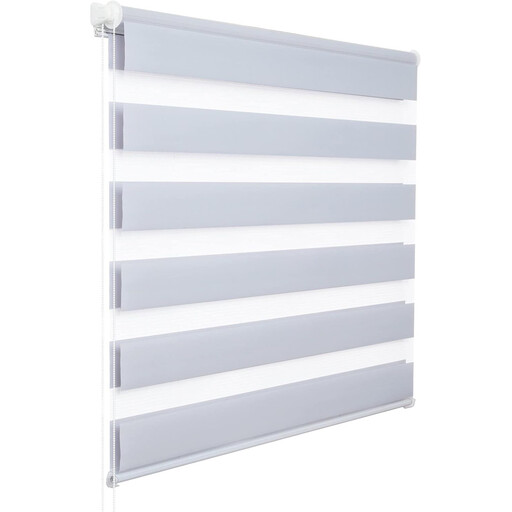
Why it suits this buyer: The extra height makes it a good option for doors, balcony doors and tall windows. According to the product specifications, the fabric is suitable for humid rooms.
Before installation, check that it’s suitable for window frames measuring 13 to 23 mm, and that your window isn’t a wooden or roof window.
Chain can be fitted on the left or right, wipe-clean polyester fabric, and optional screw installation according to the product description.
We’ve put together a complete, regularly updated list of products that meet these strict selection criteria and fully comply with the safety regulations in force in the EU.
A made-to-measure blind is a good choice if standard widths don’t suit your window. For typical side-hung or tilt-and-turn windows, standard clip-on sizes may be all you need. For doors, pay particular attention to the overall height, door handle and clearance for movement.
Fit the brackets over the top of the window frame, then hang the blind in place. The frame thickness and design must match the product specifications. Depending on the model, screw installation may also be an option.
A day and night blind with sheer and opaque stripes adjusts the light and provides privacy. For greater light blocking, choose a model with suitable blackout fabric or a blackout coating. The results also depend on gaps at the sides and the width of the blind.
Its lifespan depends on how it’s installed and operated, as well as sunlight exposure and care. Don’t pull the chain forcefully, take care at the end points and check the brackets regularly. Choosing the right size and securing the blind firmly helps reduce wear during everyday use.