
Lieferung heute & morgen

Qualitätsgarantie

Willkommens-Angebote freischalten: KOSTENLOSE Lieferung | Bis zu 80 % RABATT | Kostenlose 30-Tage-JoyPlus-Testphase
App herunterladen
A clip-on double roller blind without drilling can quickly add privacy and sun protection to windows and doors in rented homes. However, easy installation doesn’t guarantee a perfect fit. Problems often arise from measuring the width incorrectly, unsuitable window frames or unrealistic expectations about how much light the blind will block.
This buying guide explains which details really matter when choosing a double roller blind for windows, a Duo blind or a Zebra blind, and which styles suit different homes.
For many clip-on roller blinds, the stated width is the overall width, including the brackets. Depending on the model, the fabric is around 4 to 5 cm narrower, according to the product details. If you measure only the glass and order a blind that’s too narrow, visible gaps at the sides may let in light.
For effective privacy, first measure the width of the glass, then the full height of the window frame. The blind must not obstruct the window handle.
A day and night blind with alternating sheer and opaque stripes lets you adjust the amount of light coming in. Depending on the position of the stripes, the blind can be sheer, partly opaque or almost fully closed. However, light may still come through at the sides.
If you want to keep a bedroom as dark as possible, look for an opaque fabric with extra width rather than a sheer blackout blind. A Zebra blind with adjustable light control may be more practical for a kitchen, living room or home office.
Clip-on brackets only fit frames within a specific thickness range. Several WOLTU double roller blinds are suitable for frames 13 to 23 mm thick, according to their product descriptions, while some versions are designed for frames around 13 to 20 mm thick. Depending on the model, wooden windows, roof windows, certain sliding windows and fixed glazing may not be suitable.
Before buying, check the frame thickness, seal, opening direction and position of the window handle. A blind that doesn’t require drilling won’t fit every type of window.
A clip-on roller blind for windows and doors attaches directly to the window sash. This protects the walls and frame, making it particularly suitable for rented homes. Some models also come with screws for permanent installation on a wall, ceiling or window.
Check the following:
As a practical guide, several models recommend ordering a width of glass width plus around 4 cm. This isn’t a universal measurement rule, so check it against the product description for the model you’re considering. For doors, it may also be worth checking that the blind won’t obstruct the doorway.
The order height often corresponds to the full height of the window frame. The fabric shouldn’t catch on the window handle or any protruding fittings.
A Duo blind has two layers of fabric with horizontal stripes. Using the chain-operated blind, you can move the sheer and opaque sections against each other. On several WOLTU models, the chain can be fitted on either the left or right.
If you have children at home, pay particular attention to the chain. It must be secured out of their reach. Some models include a chain holder or safety device. A cordless version may be a suitable alternative for certain rooms.
The double roller blinds featured here are mostly made from 100% polyester. According to the product details, heat-cut edges can help reduce fraying. Clean the fabric with a soft cloth or brush. Avoid harsh cleaning products, vigorous rubbing and washing the fabric unless the instructions say otherwise.
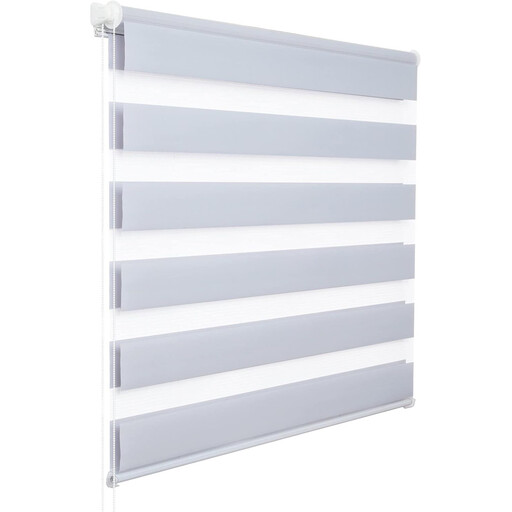
Why it suits this type of shopper: This version combines clip-on installation and chain operation with extra length to suit many standard windows.
The product details specify a suitable frame thickness of 13–23 mm and point out that the fabric is narrower than the overall width.
100% polyester fabric, a chain that can be fitted on the left or right, and cleaning with a cloth or soft brush.

Why it suits this type of shopper: The cordless operation using the bottom rail and the opaque construction described make this blind suitable for rooms where you need extra privacy and light control.
The frame thickness for clip-on installation is stated as 16–22 mm. The product details also explicitly say that it isn’t suitable for installation on roof windows.
200 g/m² polyester according to the product details, aluminium rails, a wipe-clean surface and cordless operation.
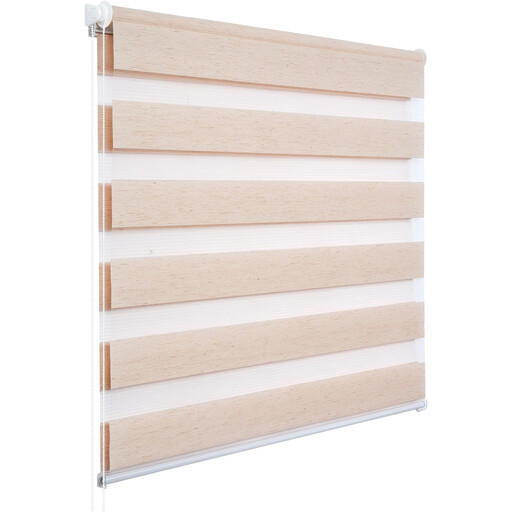
Why it suits this type of shopper: The wood-effect finish works well in living rooms, offices and on doors when you want to combine practical features with a warmer look.
The instructions specify a frame thickness of 1.3–2 cm and recommend dry cleaning rather than washing the fabric, which isn’t advised.
Chain operation, three described light settings from sheer to opaque, and heat-cut fabric edges.
We’ve put together a complete, regularly updated list of products that meet these strict selection criteria and fully comply with the safety regulations in force in the EU.
That depends on the frame thickness, brackets, weight of the blind and how well it’s installed. For doors that are used frequently, check in particular that the clamps are secure and don’t interfere with the seal or handle. Screw mounting may be an alternative for permanent use, but it isn’t always suitable for rented homes.
A Zebra blind with alternating fabric stripes lets you adjust the light, but often leaves gaps at the sides. For the darkest result, opaque fabric and extra width are a better choice. Check that the product description clearly distinguishes between ‘light-filtering’, ‘room-darkening’ and ‘opaque’.
A manually operated double roller blind doesn’t use electricity, so there are no running costs for power. Ongoing costs are mainly limited to cleaning and, if needed, replacing brackets or operating components. To help the blind last, make sure it’s installed correctly, operate the chain carefully and follow the manufacturer’s care instructions.