
Lieferung heute & morgen

Qualitätsgarantie

Willkommens-Angebote freischalten: KOSTENLOSE Lieferung | Bis zu 80 % RABATT | Kostenlose 30-Tage-JoyPlus-Testphase
App herunterladen
A clip-on double roller blind without drilling can be a practical way to control privacy and sunlight in rented homes, offices or renovated rooms. It attaches to the window frame, with no wall plugs or drilled holes. However, not every blind is suitable for every window. Inaccurate measurements, unsuitable frames and unclear descriptions of light-blocking performance are common causes of disappointing purchases.
For many day and night blinds, the stated width is the overall width, including the brackets. This means the fabric itself is narrower. According to the product details, the fabric on several WOLTU models is about 4 to 5 cm narrower than the width you order. If you only allow for the visible fabric area, you may not get enough privacy at the sides.
A clip-on blind needs a frame of a suitable thickness. Depending on the model, it may be designed for frames of 13 to 23 mm or 1.3 to 2 cm, for example. If the frame is too narrow or too wide, the brackets may not fit securely. Some models are expressly unsuitable for wooden windows, roof windows and certain fixed-glazed windows.
A zebra blind or day and night blind controls the light using alternating transparent and opaque stripes. It can adjust privacy and the amount of light entering the room, but its design doesn’t automatically make it a blackout blind. For bedrooms where you want to keep light to a minimum, a separate thermal blind or one with an opaque coating may be a better choice.
First measure the glass width, then the height of the entire window frame. For several WOLTU double roller blinds, the recommended order width is the glass width plus around 4 cm, provided the handle and any nearby fittings aren’t in the way. The order height is often based on the height of the entire window frame.
For example, if the glass is 46 cm wide, an order width of around 50 cm may be suitable. Also check that the blind won’t obstruct the window handle when you open or tilt the window.
A day and night blind has two layers of fabric with alternating light-filtering and opaque stripes. You can shift the stripes using the chain control. Depending on their position, the blind can provide a clear view, partial privacy or full privacy. This is what sets a double roller blind apart from a traditional roller blind, which usually just rolls up or down.
For bathrooms and kitchens, polyester fabric that can be wiped clean with a damp cloth is a practical choice. For bedrooms and children’s rooms, also consider the chain mechanism and child safety. The operating chain must be secured out of the reach of young children.
Clip-on fittings are particularly suitable for rented homes, as there’s no need to drill into window frames or walls. Before you buy, check:
Make sure the brackets are fully secured before operating the blind. A loose clamp bracket could make the blind unstable or cause it to fall.
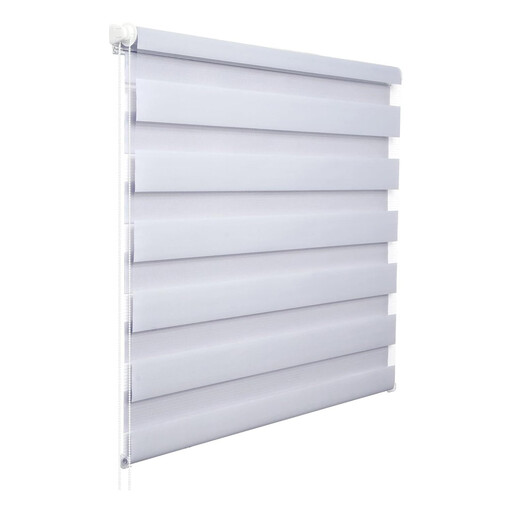
Why this product suits this user: According to WOLTU’s product details, this day and night blind is designed for frames measuring 13 to 23 mm thick and can be fitted without tools. The chain control can be fitted on the left or right.
The specified frame range reduces the risk of choosing unsuitable clamp brackets. Details of the narrower fabric width also help you plan your measurements.
100% polyester, wipe-clean with a damp cloth, stepless light control and optional screw fitting.
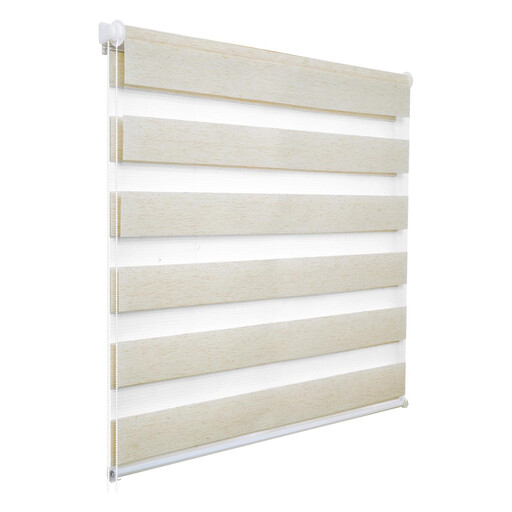
Why this product suits this user: According to WOLTU’s product details, this model combines a wood-effect finish with two layers of fabric and a side chain control. It’s suitable for indoor windows and doors.
The product details state that the clip-on fittings are suitable for frame depths of 1.3 to 2 cm. This makes it easy to check compatibility before ordering.
100% polyester, opaque stripes around 7.5 cm wide and a surface that can be wiped clean with a damp cloth.

Why this product suits this user: According to WOLTU’s product details, the blind has a silver-coated backing, clamp fittings for frames measuring 16 to 22 mm thick and a bottom rail for operation, with no chain.
The product description specifies the frame thicknesses it suits and states that it isn’t suitable for roof windows. This makes it easier to check the fitting surface before buying.
Chain-free operation, 200 g/m² polyester fabric and two fitting options for windows and doors.
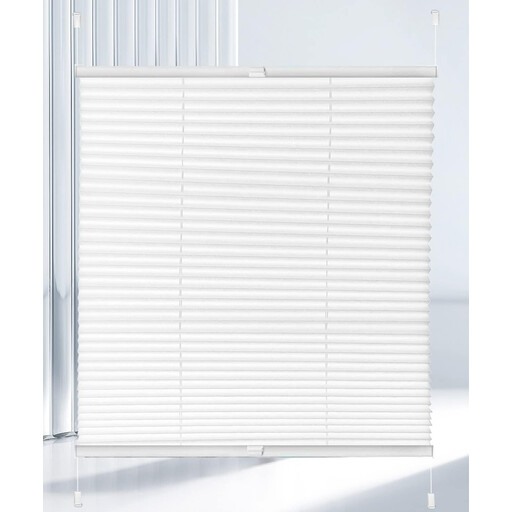
Why this product suits this user: According to Dream-Seeker’s product details, this light-filtering pleated blind is fitted using clamp brackets. It’s suitable for windows and doors where you want to balance daylight with privacy.
The product details specify that it needs a smooth, suitable fitting surface and that the clamps must be securely attached. This helps you avoid choosing it for rough or uneven surfaces.
Light-filtering polyester fabric, 80 x 200 cm and easy fitting without drilling.
We’ve put together a complete, regularly updated list of products that meet these strict selection criteria and fully comply with the safety regulations in force in the EU.
Polyester fabrics can often be cleaned with a soft cloth or brush. Harsh cleaning products, vigorous rubbing and machine washing may damage the surface or coating. Operate a chain control smoothly, without jerking, and secure the chain using the child safety device provided. Check that the clamp brackets are secure after fitting and regularly during frequent use.
The clamp brackets are attached to the top of the window frame and then connected to the blind. The frame must be within the thickness range specified by the manufacturer. Before fitting, make sure the frame is clean and free of obstructions. Follow the instructions supplied and check that the blind is secure before using it for the first time.
Its lifespan depends on the fabric quality, fitting, exposure to sunlight and how it’s used. Securely fitted clamp brackets, careful use of the chain and regular cleaning can help reduce wear. It’s not possible to give a reliable general lifespan, as window positions and daily use vary.
A manual day and night blind with a chain control doesn’t need electricity, so it has no running costs. The material and coating of a thermal blind can affect the amount of light and heat entering a room; however, any specific savings depend on the window, its orientation, ventilation and heating habits.