
Lieferung heute & morgen

Qualitätsgarantie

Willkommens-Angebote freischalten: KOSTENLOSE Lieferung | Bis zu 80 % RABATT | Kostenlose 30-Tage-JoyPlus-Testphase
App herunterladen
A clip-on double roller blind that requires no drilling can be a practical way to control light and maintain privacy in rented homes, bedrooms, living rooms or offices. However, disappointing purchases are often caused not by the design, but by incorrect measurements, an unsuitable clip-on bracket or unrealistic expectations about how much light the blind will block.
Before buying, check these three common pitfalls:
First measure the visible width of the glass, then the height of the entire window sash. For many double roller blinds, the recommended order width is the glass width plus around 4 cm. This allows the opaque stripes to extend slightly beyond the glass.
Important: the overall width of the blind may include the brackets, while the fabric itself is narrower. The clip-on roller blind must not obstruct the window handle. For balcony or patio doors, also check that the blind has enough clearance from the handle and door reveal when the door is opened.
A single blind may not be the best choice for particularly wide windows or doors. In this case, two narrower blinds may be more practical, as long as splitting the coverage is acceptable in terms of appearance and function.
A no-drill roller blind is usually clipped directly onto the window sash. The permitted frame thickness varies by model. Examples from our selection include:
Several models are explicitly not suitable for wooden frames, roof windows, sliding windows or fixed glazing. Don’t overlook these details: an incorrectly fitted bracket can make the blind unstable or difficult to operate.
A duo roller blind, also known as a zebra blind, is made of alternating transparent and opaque fabric stripes. A side chain moves the stripes against one another, giving you different levels of daylight, reduced visibility from outside and increased privacy.
This flexible light control is often a good choice for living rooms, kitchens and offices. If you want to keep as much light out as possible in the bedroom, consider a blackout bedroom blind with a continuous coated backing instead. The product description for the WOLTU Blackout Roller Blind mentions a silver-coated backing and a blackout function. According to WOLTU’s product description, the model is made from 200 g/m² polyester and can be operated using a grip on the bottom aluminium rail.
A thermal blind may also have a coated backing. However, its actual performance depends on the distance from the window, the size of the glazed area, the amount of sunlight and room ventilation. It’s best to avoid general claims about a specific level of energy saving.
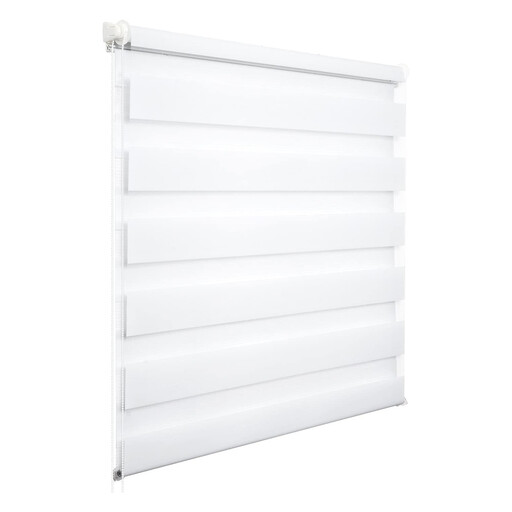
Why this product is a good fit: Its compact size and clip-on fitting make it a good choice for smaller windows in rented homes, home offices or living rooms. According to the product description, the side chain can be fitted on either the left or the right.
The specifications give both the frame thickness range of 13–23 mm and the narrower fabric width. This makes it easier to check whether the blind will suit your glazed area before you buy.
Alternating transparent and opaque stripes, wipe-clean polyester fabric, and both clip-on and screw-fix installation options.

Why this product is a good fit: This model is for anyone who wants more light protection in the bedroom or office and prefers an operating mechanism without a loose-hanging pull cord.
Rather than a light-filtering zebra pattern, the product description specifies a blind with a coated backing and grip operation. This makes the difference between light control and blackout clearer.
200 g/m² polyester according to the product description, a silver-coated backing, aluminium rails and a fitting range of 16–22 mm.
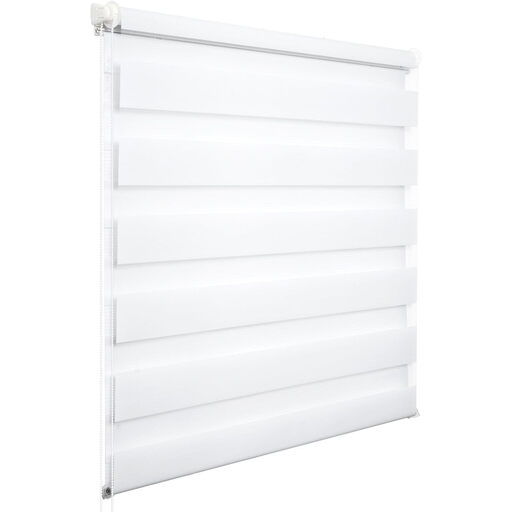
Why this product is a good fit: For frequently used windows in the kitchen, bathroom, children’s bedroom or office, this model offers a wipe-clean polyester surface and stepless light control with a side chain.
The product details specify the suitable frame range of 13–23 mm, the approximate fabric width and a reminder not to cover the window handle.
Clip-on or screw-fix installation, a side chain that can be fitted on the left or right, heat-cut fabric edges, and cleaning with a soft brush or damp cloth.
We’ve put together a complete, regularly updated list of products that meet these strict selection criteria and fully comply with the safety regulations in force in the EU.
Before installation, make sure the window sash is clean and free of obstructions. Check that the clip-on brackets sit fully on the frame and are firmly secured. If you have a roller blind with a side chain, position the chain so it does not hang loose within reach of young children. If you have children or pets, fit the child-safety device as instructed.
For many models, a soft cloth, soft brush or gentle dusting is all that’s needed. Harsh cleaning products, scrubbing and washing the fabric can damage its surface. Avoid forcing a double roller blind beyond its intended operating range.
No. It depends on the window style, frame thickness, handle position and the manufacturer’s specifications. Several of the models mentioned are not designed for roof windows, wooden windows, sliding windows or fixed glazing. Check these details against the fitting instructions before ordering.
There’s no reliable way to give a fixed lifespan for every model. It depends on how often it is used, how much sunlight it gets, how it is cleaned and how securely it is fitted. Operating the side chain gently, dusting regularly and avoiding strain can help reduce wear and tear.
No. A manual double roller blind, duo roller blind or blackout blind is operated using a grip or side chain and does not need to be connected to the mains. Any change in room temperature depends on the fabric, backing, window size, distance from the window and sunlight, so there’s no single saving figure that applies to every home.