
Lieferung heute & morgen

Qualitätsgarantie

Willkommens-Angebote freischalten: KOSTENLOSE Lieferung | Bis zu 80 % RABATT | Kostenlose 30-Tage-JoyPlus-Testphase
App herunterladen
A good clip-on lamp promises flexible lighting exactly where you need it—whether as a bedside reading lamp, a supplemental light source at your desk, or a portable work light in the workshop. However, the market is saturated with models of widely varying quality. Many buyers only discover after a few weeks that the lamp doesn't live up to its promises. Before you make a decision, it's crucial to understand the typical weak points often hidden behind appealing marketing.
This guide will walk you through the three most common pitfalls when buying a clip-on lamp and explain which technical features to look for to make an informed and durable choice.
Many products look robust and functional at first glance. The problems often only surface during daily use. Pay close attention to these three points to avoid disappointment:
To avoid the aforementioned problems, you should focus on objective, technical parameters. These three features are critical for the functionality and longevity of your lamp.
The reliability of a clip-on lamp lives and dies by its mounting. Pay attention to the following details:
For a cordless desk lamp or a portable book light, the battery's performance is key.
The quality of the light has a direct impact on visual comfort and concentration.
Based on the criteria above, we have identified some models that are well-suited for specific use cases.
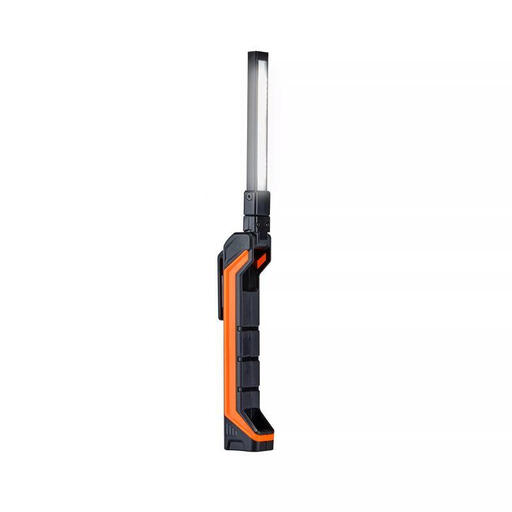
Why This Fits Their Persona: Ideal for use in the workshop, garage, or for car repairs. Instead of a clamp, it features a strong magnet and a flexible, rotating, and swivelling light body for hands-free work and precise illumination.
Bypasses the weak clamp pitfall with a robust magnet and a shock-resistant housing (IK07) designed for harsh environments.
High flexibility thanks to a 180° pivot and 360° rotation mechanism. Three light functions (up to 200 lm) for different requirements.
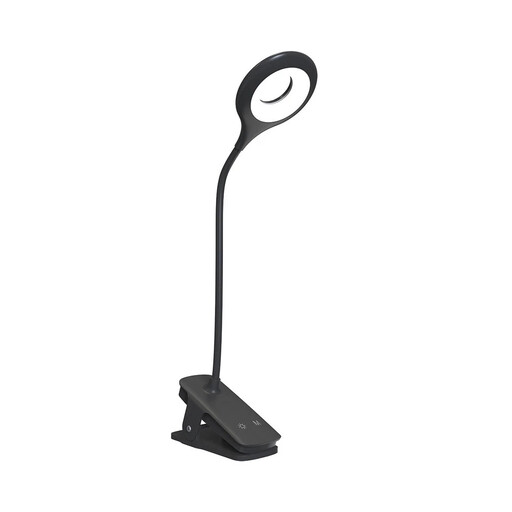
Why This Fits Their Persona: Perfect as a flexible bedside reading lamp or a cordless desk lamp. The adjustable brightness and colour temperature allow for optimal customisation for any activity, whether it's relaxed reading or focused work.
Avoids the poor light quality trap by offering 5 brightness levels and 5 colour temperature modes (3000-6500 K). The battery (1800 mAh) delivers a realistic, long runtime of up to 32 hours.
High Colour Rendering Index (CRI > 80) for eye-friendly light. Features a convenient memory function and recharges via a modern USB-C port.

Why This Fits Their Persona: A classic book light for anyone looking for a simple, lightweight, and affordable solution. At just 37 grams, it's extremely portable, can be clipped directly onto a book, and even doubles as a bookmark when folded.
Focuses on the essentials: It provides a warm white colour temperature (3000 K) optimised for reading and a sufficient battery life of up to 8 hours for several evenings of reading.
Extremely lightweight and portable (37 g). The integrated battery is USB-rechargeable and offers two brightness levels for different ambient light conditions.
We have compiled a complete, up-to-date list of products that fully meet these strict selection criteria and all applicable safety regulations.
The required brightness depends on the intended use. As a guide:
Yes, this is possible if the clamp is poorly designed. Look for models with a sufficiently wide and well-padded clamp (e.g., with silicone or rubber inserts). These distribute the pressure evenly and prevent scratches or dents on delicate surfaces like wood or lacquered furniture.
The light colour has a significant impact on atmosphere and your eyes. Warm white light (below 3300 Kelvin) has a yellowish hue that is perceived as cosy and relaxing. It is ideal for evening reading as it is less disruptive to the production of the sleep hormone melatonin. Cool white or neutral white light (above 3300 Kelvin) has a higher blue component, which has a stimulating effect and promotes concentration. It is therefore better suited for work environments or studying.