What should you look for when buying?
First decide whether your napkins can dry in an airy, unheated space. Only then choose a heated design and size that suit the space you have.
The table groups consumers considering a heated clothes airer for reusable cloth napkins after a wet commute by their main concern.
| Concern |
What to check when buying |
Who it matters most to |
| Separate drying spaces |
The number and layout of the rails, and whether you can hang several napkins with space between them. |
If several napkins are damp after my commute, I want to be able to hang them separately; around 33% of consumers say separate drying spaces are their main concern. |
| Floor space and storage |
The space available while the airer is in use and somewhere to store it; for wall-mounted models, also check the intended installation location. |
If space is limited, I need a design that fits where I plan to dry and store it; around 25% of consumers prioritise floor space. |
| Electricity use |
Check whether air-drying will do; if not, compare the rated power and estimated running time. A higher rated power alone does not prove that drying will be quicker. |
If I only have a few cloths to dry, I don’t want to use electricity if air-drying is enough; around 25% of consumers say electricity use is their main buying concern. |
| Textile hygiene and indoor air |
Check the care label, whether washing is needed, and whether there is an airy drying space and a way to ventilate the room. |
With used napkins, I don’t want to confuse cleaning with heating, and I want to keep an eye on moisture in the room; around 17% of consumers prioritise textile hygiene and indoor air. |
Joybuy products
The following Joybuy products range from foldable heated clothes airers to electric towel radiators. If you’re considering a towel radiator, check carefully that its mounting type and hanging space will suit your cloth napkins.
 No image available
Heated clothes airer, 45–55 °C, foldable, 144 × 53 × 96 cm
Could be a good fit if you want to hang several small items on a foldable heated drying rack.
Listed in the product title: temperature range 45–55 °C; dimensions 144 × 53 × 96 cm. Before buying, check that you have enough space for it when fully open.
Joybuy
 No image available
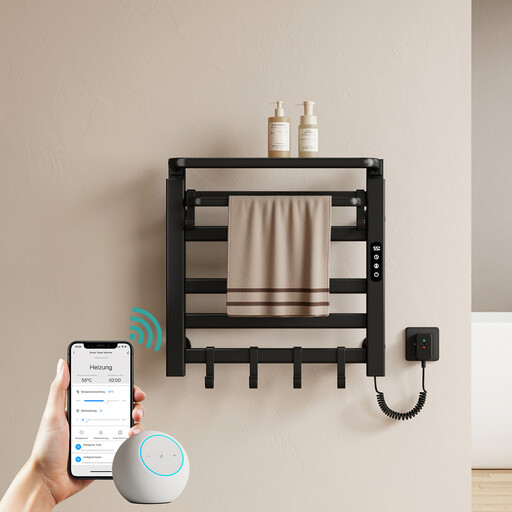
EMKE Electric Towel Radiator, 50 × 50 cm, 140 W, Wi-Fi, IPX5, Black
This is more of a towel radiator than a traditional clothes airer; check that its hanging space and intended mounting method suit your napkins.
Listed in the product title: 140 W, 50 × 50 cm, Wi-Fi, foldable shelf, six hooks and IPX5. Before choosing, check the installation and electrical instructions for the specific location.
Joybuy
 No image available
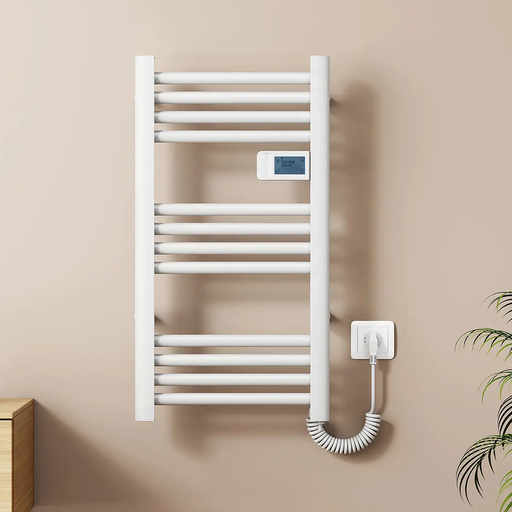
EMKE Electric Towel Radiator, 180 W, 750 × 400 mm, White
Worth considering if you’re looking for a heated towel rail rather than a freestanding clothes airer.
Listed in the product title: 180 W and 750 × 400 mm. Before buying, check that the installation and electrical requirements for the intended location are met.
Joybuy
 No image available
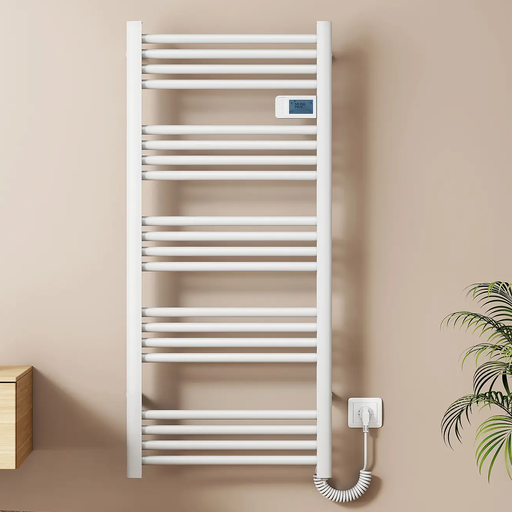
EMKE Electric Towel Radiator, 600 W, 1200 × 540 mm, White
A towel radiator option for consumers considering this design instead of a clothes airer; the dimensions need to suit the installation location.
Listed in the product title: 600 W and 1200 × 540 mm. Check the installation and electrical instructions for the intended location.
Joybuy
 No image available
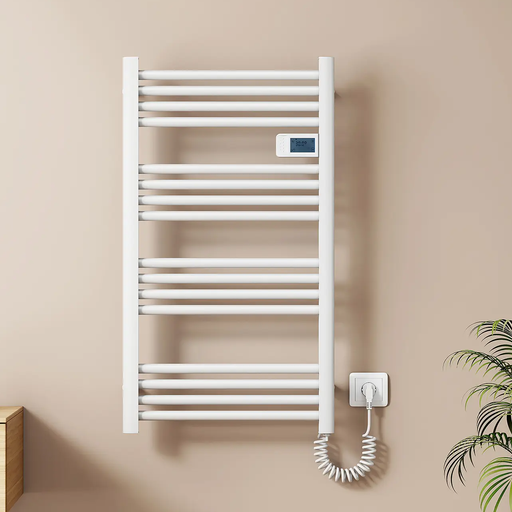
EMKE Electric Towel Radiator, 500 W, 960 × 540 mm, White
Could suit you if you’re looking for an electric towel rail in the right size rather than a traditional clothes airer.
Listed in the product title: 500 W and 960 × 540 mm. Before buying, check the installation location and the electrical instructions for this specific model.
Joybuy
Frequently asked questions
Do damp cloth napkins need washing after a commute?
It depends on whether they’re dirty; drying is not a substitute for cleaning. For tea towels, the German consumer advice centre recommends drying them thoroughly after use, changing them at least once a week and washing them at a minimum of 60 °C. For cloth napkins, follow the care label and wash them as needed.
Can a heated clothes airer replace ventilation when drying indoors?
No. The German Environment Agency advises paying particular attention to regular ventilation when drying damp laundry in living spaces; the heating function does not automatically remove the moisture released into the room.
How can I estimate the electricity use of a heated airer?
Multiply the rated power in kilowatts by the running time in hours. This gives you a calculated energy figure in kilowatt-hours, not necessarily the appliance’s measured consumption; actual use depends, among other things, on how long the heater is switched on.
What should I consider when choosing a wall-mounted towel rail?
Check the instructions for the specific model and make sure the intended installation location is suitable. DOMO lists both freestanding and wall-mounted options for the DO7117DR; that does not mean it is approved for every possible location.
Is the CE marking an independent safety test?
No. Electrical equipment covered by the EU Low Voltage Directive must meet the relevant EU requirements, including the applicable CE marking. The European Commission explains that the manufacturer uses the marking to declare conformity with the applicable EU product rules; it is not an independent quality mark.


