Households with a full week’s washing
If you want to hang cotton T-shirts alongside other laundry on an airer, having enough usable drying space is what matters most.


For cotton T-shirts alongside a mixed week’s washing, an unheated clothes airer with plenty of drying space is the energy-saving place to start. The German Environment Agency describes drying on an airer or washing line as particularly energy-efficient. Heated rails may be worth considering if you’d like to use extra warmth and have the space, electricity supply and ventilation to suit; the rated power doesn’t guarantee a particular drying time. For a mains-powered model, you should also check the requirements and markings for the exact version on offer. A CE mark is not an independent quality mark.
If you want to hang cotton T-shirts alongside other laundry on an airer, having enough usable drying space is what matters most.
If you’re considering extra warmth, remember to factor in electricity use and air circulation in the room.
Check whether there’s room for an airer when it’s open, or whether a mounted design could work in a suitable location.
First compare the drying space with your full load, then consider the benefits of extra warmth and how much room the airer needs when in use or stored away.
| What matters | What to check before buying | Who might prioritise it? |
|---|---|---|
| Space for the whole load | Compare the drying length or rail layout, and the dimensions when fully open, with a typical week’s washing. | If I want to hang T-shirts alongside other laundry, I need enough space and room between items. Around 30% of consumers put capacity first when choosing. |
| Optional heating | Check the rail layout, dimensions in use and details for the specific electrical model. | If laundry dries slowly indoors, extra warmth could be useful to me; electricity use and ventilation are still part of the decision. Around 30% of consumers prioritise warmth. |
| Floor space and storage | Check the space needed in use separately from the storage space. For mounted appliances, also consider the fixing location and power supply. | If floor space is limited, I want to know whether an open airer will fit or if a mounted option is possible. Around 20% of consumers prioritise the space available. |
| Electricity use and room conditions | For heated models, compare the rated power and expected running time with your electricity tariff, and plan for ventilation. | If I want to limit electricity use and take indoor humidity into account, I’m looking for a way to use the appliance without unnecessary heating time. Around 20% of consumers put costs and room conditions first. |
The number of heated rails and the drying length in metres describe different features. Neither figure alone tells you whether there’s enough room for a particular week’s washing, with space between items.
Compare a typical load with the rail layout, and also check the dimensions when set up and the stated drying length.
Damp laundry releases moisture into the room, even when the rails or air are being heated. The German Environment Agency recommends particularly thorough ventilation when drying damp laundry indoors.
Plan for suitable air circulation and consider whether you really need the heating function for your usual laundry.
The extra electricity used depends on the appliance’s rated power and actual running time. The cost also depends on your electricity tariff.
Open wings and hanging clothes need space that isn’t reflected in the dimensions of the folded airer.
Measure the space needed for the airer when fully open and for storing it separately.
Foldable electric freestanding models with heated rails.
The BAHAMAS heated wing airer is another freestanding design.
The Foxydry Pro is a mounted alternative with room-air and warm-air ventilation.
Unheated freestanding airers are an option if drying space and avoiding electricity use are priorities.
Extendable, unheated airers offer flexible drying space.
The products below include freestanding, foldable and mounted drying solutions, including a heated model. Before buying an electrical appliance, check the requirements and markings for the specific version.
 No image available
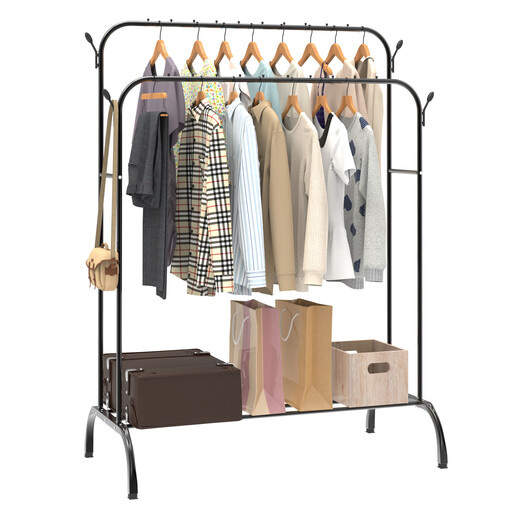
This freestanding design could suit households looking for a drying solution for the bedroom or balcony.
The product title specifies two rails and a shelf at the bottom.
 No image available
The heating function could appeal if you’d like to use extra warmth and are also looking for a foldable airer.
The product title specifies 45–55 °C and dimensions of 144 × 53 × 96 cm. Check the markings and compliance of the specific electrical version before buying.
 No image available
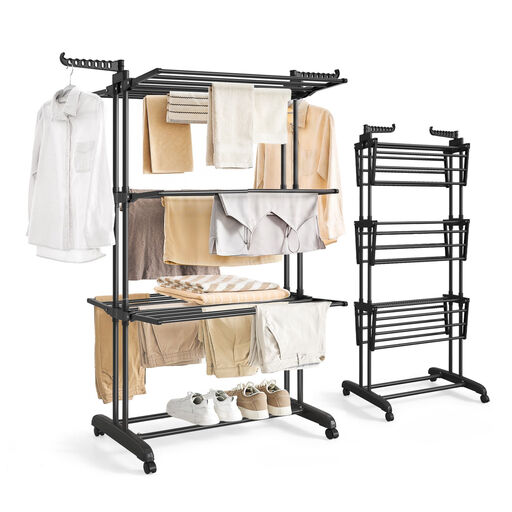
This multi-tier design could work if you want to spread several items of laundry across a freestanding airer.
The product title specifies four tiers and dimensions of 64.2 × 126.6 × 169.2 cm when open.
 No image available
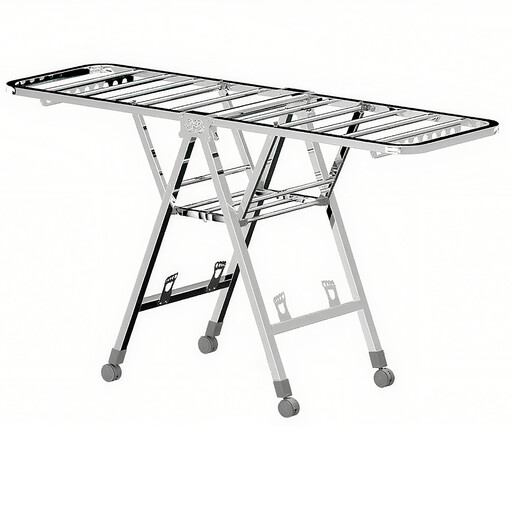
A foldable wing airer could suit you if you’re looking for a freestanding drying solution for the floor, bathroom or balcony.
The product title specifies stainless steel and a foldable wing design.
 No image available
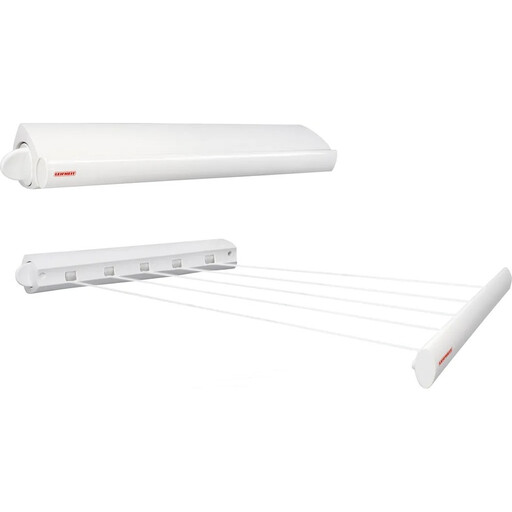
This wall-mounted design could appeal if you want to keep your floor space clear.
Make sure the wall fixing is secure before use, and check that the intended location is suitable.
No. Follow the care symbols on each garment. GINETEX distinguishes, among other things, between line drying, drying flat and drying in the shade. The word “cotton” alone doesn’t mean that all items in a mixed load have the same care instructions.
No. The German Environment Agency recommends particularly thorough ventilation when drying damp laundry indoors, as a heating function doesn’t remove moisture from the room.
For a freestanding airer, you’ll need space for the frame when fully open and for the hanging laundry, not just the folded dimensions. The manufacturer describes the Foxydry Pro as suitable for ceiling or wall mounting; first check that the installation location and power supply are suitable.
Multiply the rated power in kilowatts by the actual running time in hours and your price per kilowatt-hour. Adler lists a rated power of 220 W for the AD 7821. At this power, one hour of continuous use works out to 0.22 kWh; this isn’t a measured figure for drying a load of washing.
Mains-powered appliances covered by the EU Low Voltage Directive 2014/35/EU must meet the relevant requirements and display the required markings. Your Europe explains that CE marking is a declaration by the manufacturer, not an independent test certificate; check the specific version on offer.