People with long or delicate summer dresses
If a dress needs to be dried flat or in the shade, follow the care label when choosing how to dry it. GINETEX GERMANY lists different natural drying methods, including hanging and laying flat.


Start by checking the care label and the length of your dress: a hem that hangs freely or a suitable flat drying surface may matter more than heated bars. Extra warmth may be worth considering if you regularly dry clothes indoors, but it uses electricity and is no substitute for ventilation.
If a dress needs to be dried flat or in the shade, follow the care label when choosing how to dry it. GINETEX GERMANY lists different natural drying methods, including hanging and laying flat.
If you often dry clothes at home, weigh the benefit of extra warmth against the electricity used, and choose a spot that’s easy to ventilate. The German Environment Agency recommends airing the room more when drying laundry indoors.
It’s not just about how compactly an airer folds away. You also need to consider how much space it takes up when open and whether it can dry a dress in the position you need.
A good choice if: you regularly dry clothes indoors and want extra warmth.
The trade-off: Heated bars don’t guarantee a particular drying time or remove moisture from the room.
A good choice if: you want long dresses to hang freely and don’t need active heat.
The trade-off: There’s no electricity use for a heating function, but this type of airer doesn’t provide extra warmth.
A good choice if: the care label says your dress should be dried flat.
The trade-off: Check that the surface fits the frame and allows you to dry the dress in the recommended position.
GINETEX GERMANY distinguishes between natural drying methods such as hanging and laying flat; the German Environment Agency recommends airing the room more when drying laundry indoors. The percentages in the table indicate typical buying priorities for this particular use.
| Buying criterion | What to check | Who is this important to? |
|---|---|---|
| Care and drying position | Read the care label. For hanging, check the height available down to the hem; for flat drying, check that there’s a suitable surface. | If I want to dry long or delicate dresses in line with the care label, the right position matters more than a heating function. Around 29 % of consumers put garment care first. |
| Extra warmth | Check which usable bars are heated; don’t take the manufacturer’s temperature figures as a guaranteed drying time. | If you regularly dry clothes indoors and want extra warmth, check that your clothes will fit sensibly on the airer. Around 23 % of consumers prioritise extra warmth. |
| Floor space and hanging length | Compare where you plan to put the airer with its measurements when open. Consider the distance from the hanger to the hem in the space you intend to use. | If I’m short on space and want to hang long dresses, both the footprint and usable height need to work. Around 18 % of consumers put this space consideration first. |
| Moisture in the home | Choose a spot that’s easy to ventilate; increase ventilation when drying clothes indoors. | If I dry clothes indoors and want to clear moisture from the air, I shouldn’t confuse heat from the airer with ventilation. Around 18 % of consumers prioritise room humidity. |
| Electricity use | Use the rated power, planned running time and your electricity tariff as the basis for the same calculation. | If I want to limit electricity use, I compare heated airers with an unheated alternative. Around 12 % of consumers put electricity use first. |
The number of bars doesn’t tell you how much clear hanging space there is, or whether a suitable flat drying surface is available.
First check the care label, then check the usable height or support surface of the specific design.
If a dress needs to be dried flat, you may need a suitable surface or an additional suitable frame.
Wet laundry releases moisture into the room; an airer’s heating function doesn’t remove it from the home.
Choose a drying spot that’s easy to ventilate, and air the room more when drying clothes indoors.
The power rating alone doesn’t tell you the cost of a drying cycle. The running time and your electricity tariff also matter, and you can’t use the rating to work out exactly how long your dress will take to dry.
Use the rated power, planned running time and your price per kilowatt-hour in the same calculation, and compare unheated alternatives too.
The electricity used while the airer is running also depends on the running time and your tariff.
The HOMCOM model listed on Joybuy has the model number 850-355V00SR and is an unheated airer. The heated model researched has the number 850-048.
Before buying, compare the full model number and key features rather than relying on the brand name or a similar product name.
Model 850-048 is a folding, two-tier heated airer.
The 300 W heated model reviewed has three tiers and is aimed at households that want to spread out several items of laundry.
The heated clothes airer with product number 7080400 is another design to consider when comparing heated models.
The Pegasus Family Maxx 18m is an unheated example of a tall, winged airer.
This selection includes heated and unheated airers for drying clothes naturally, including folding and multi-tier designs.
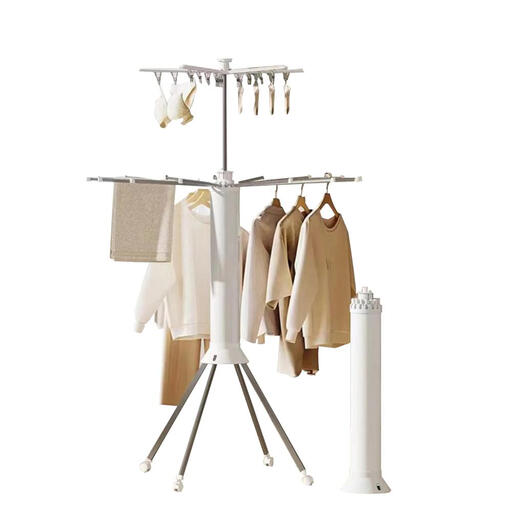 No image available
A folding design with multiple drying bars and hook positions may suit you if you have several items to dry and limited storage space.
The description lists universal castors, 360-degree rotation and 16 extendable drying bars, each with three hook positions.
 No image available
The heating function may be useful if you regularly dry clothes indoors, provided the garment’s care instructions are compatible with the intended drying position.
The product title gives a temperature range of 45–55 °C and describes a folding design. This temperature isn’t a guaranteed drying time for summer dresses.
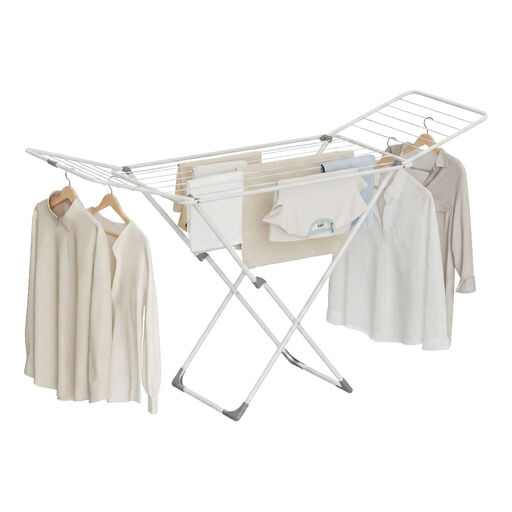 No image available
An unheated, folding airer may be a good choice if you don’t need active heat and want plenty of drying space across several bars.
The description lists 18 m of drying space across 17 bars and a maximum evenly distributed load of 15 kg. The airer folds flat for storage.
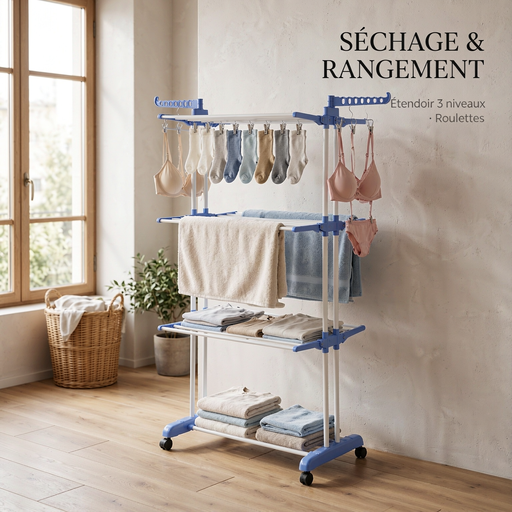 No image available
The top hanging rail and side wings offer different hanging options. Before buying, check whether a long dress will have enough room to hang freely.
The description lists 43 cm of space between the tiers, four castors and two lockable castors.
No. A warning not to tumble dry doesn’t confirm that contact heat from a heated bar is suitable for your particular dress. Follow the natural drying method and position shown on the care label.
Set up the airer securely as instructed, stay within the model’s permitted load and ventilate the room more. The German Environment Agency recommends increased ventilation when drying laundry indoors; heat from the airer won’t remove the moisture from the room by itself.
For a rough estimate, multiply the rated power in kilowatts by the running time and your price per kilowatt-hour. For the model Todeco rates at 300 W, one hour of use based on the rated power works out at 0.3 kWh. This isn’t a measurement of actual consumption or an indication of drying time.
If an item is faulty, your statutory rights generally apply against the seller; a voluntary guarantee is separate. Many online purchases also usually come with a 14-day right to cancel, starting when you receive the goods. The Verbraucherzentrale explains these rights; check the terms and any possible exceptions that apply to your purchase.
Electrical equipment within the scope of the EU Low Voltage Directive must meet conformity requirements, including CE marking. The directive text consolidated by EUR-Lex on 30 May 2026 covers equipment with a rated voltage of 50 to 1,000 V AC. The Bundesnetzagentur also lists identifiable manufacturer details and German-language instructions with the necessary warnings as checks to make; a product image is no substitute for checking the actual appliance.
Not every retailer is obliged to accept returns in every situation. Stiftung ear explains that retailers subject to the stated take-back obligations must accept an old appliance that is essentially equivalent free of charge when you buy a new one. Ask the seller how to return yours.