
Lieferung heute & morgen

Qualitätsgarantie

Willkommens-Angebote freischalten: KOSTENLOSE Lieferung | Bis zu 80 % RABATT | Kostenlose 30-Tage-JoyPlus-Testphase
App herunterladen
Drying laundry in apartments or houses presents a challenge for many: where do you put wet clothes when space is limited or there's no drying room? A well-chosen clothes drying rack is a practical and energy-efficient solution. It flexibly adapts to the available space and ensures your laundry air-dries gently.
This guide is designed to help you make an informed decision. We'll introduce various models and explain which features are relevant for different needs—from single-person households to large families.
The right model depends on your laundry volume, available space, and desired features. Three criteria are particularly crucial.
Available space is often the most important factor. A space-saving drying rack is essential for most households.
A drying rack with wheels offers a high degree of flexibility. You can easily move your laundry from the washing machine to the sunniest spot in your home or onto the balcony without carrying heavy loads. Look for lockable casters to ensure the rack stays securely in place, even when fully loaded. This is especially relevant for a rolling garment rack, which is often also used for clothes storage.
Stability determines how durable and safe your drying rack is. Models made of powder-coated steel or stainless steel are rust-resistant and robust. For heavy items like bedding, towels, or winter jackets, a heavy-duty model with a high load capacity is essential. The maximum load capacity specified by the manufacturer should serve as a guide and should not be exceeded to ensure even weight distribution.
Based on functionality, material, and user feedback, we have compiled a selection of models that meet various requirements.
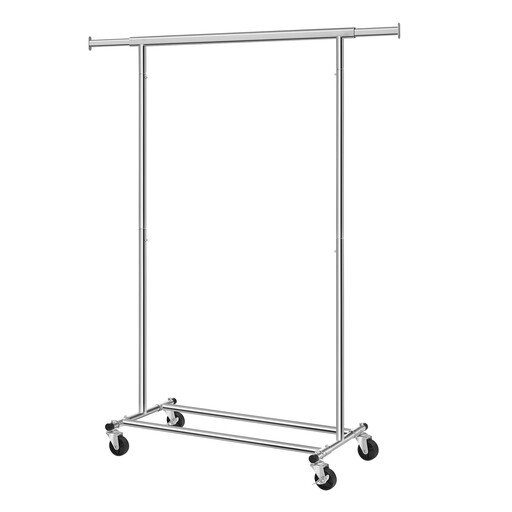
Why it stands out: This model combines the function of a drying rack with that of a sturdy garment rack. With a stated load capacity of up to 100 kg and an extendable rod, it is an extremely versatile solution.
Advantages:
Who is it for? Ideal for those looking for a heavy-duty and mobile solution to dry large amounts of laundry or organize seasonal clothing. It also serves as an open wardrobe in a bedroom or dressing room.
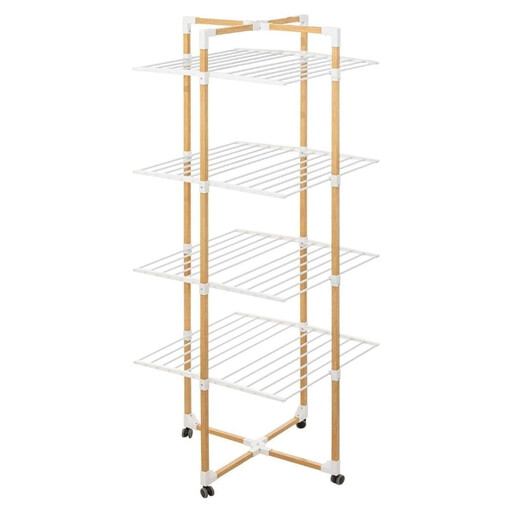
Why it stands out: This tower airer maximises drying capacity on a minimal footprint. With an impressive line length of 40 metres and an attractive wood-effect finish, it combines functionality with design.
Advantages:
Who is it for? Perfect for families or shared households with a high volume of laundry who need a space-saving yet high-capacity drying solution.
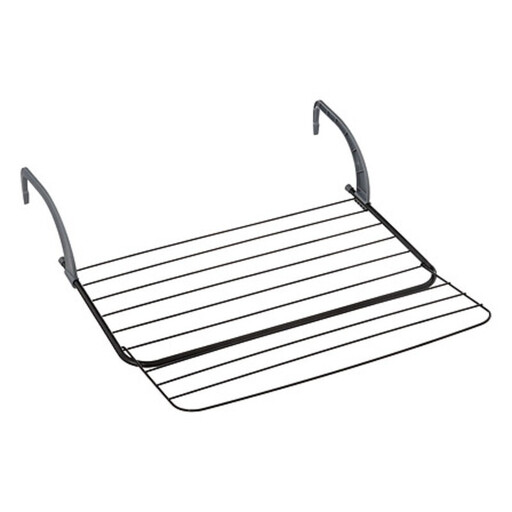
Why it stands out: This compact and extendable drying rack is a master of adaptability. With its adjustable arms, it can be attached to doors, windowsills, radiators, or balcony railings.
Advantages:
Who is it for? An excellent choice for single-person households, as a secondary rack, or for anyone looking for a quick and easy drying option for the balcony or small rooms.
If you prefer a permanently installed and virtually invisible alternative, a retractable clothesline might be the right choice for you. These wall-mounted systems offer plenty of drying space when needed and retract discreetly into their housing after use. Discover more models here.
The load capacity varies greatly depending on the model and material. Simple, folding models often support between 10 and 20 kg. Robust, heavy-duty steel racks, like the Ochama model featured, can hold up to 100 kg. Always refer to the manufacturer's specifications and distribute wet laundry evenly to ensure stability.
For households with limited space, tower airers are the top choice. They make optimal use of vertical space. Alternatively, flexible hanging models or a collapsible gullwing airer that can be stored flat after use are also very suitable.
Whether a drying rack can be left outside permanently depends on its material. Models made of stainless steel, aluminium, or powder-coated steel are weather-resistant and rust-proof. However, plastic parts can become brittle over time due to UV radiation. It is recommended to store the rack in a sheltered place when not in use to extend its lifespan.