
Lieferung heute & morgen

Qualitätsgarantie

Willkommens-Angebote freischalten: KOSTENLOSE Lieferung | Bis zu 80 % RABATT | Kostenlose 30-Tage-JoyPlus-Testphase
App herunterladen
Drying laundry in apartments or houses without a tumble dryer presents a challenge for many: where can you put wet clothes without them getting in the way or causing humidity levels to spike? A well-chosen clothes airer is a practical and cost-effective solution. This article serves as a guide to make your selection easier. We will introduce different types and highlight the features relevant to your specific living situation and needs.
The decision for a particular model depends on several factors, including the available space, the amount of laundry to be dried, and the desired flexibility.
The two most common models are the tower airer and the winged airer.
The material affects not only the appearance but also the stability and durability of the clothes airer.
Additional features can significantly enhance user convenience.
Based on the criteria mentioned above, we have compiled a selection of models that cater to various requirements.
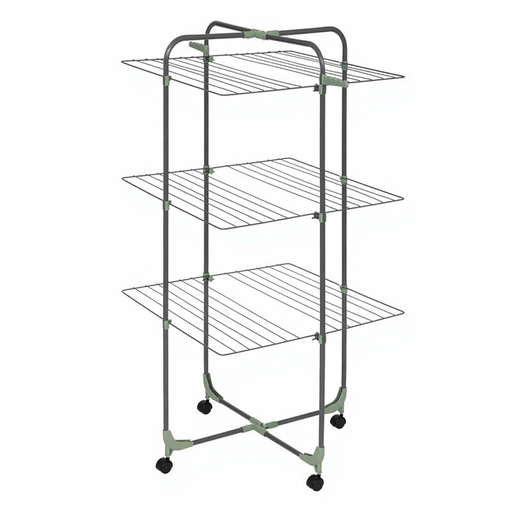
Why this model stands out This tower airer combines a large capacity with a very small footprint. Its special feature is the ability to open only one side, allowing it to fit directly against a wall or in a narrow niche.
Advantages
Who is it for? Ideal for households with limited space that need to dry a lot of laundry. Especially practical for city apartment dwellers looking for a solution for the shower or narrow balconies.
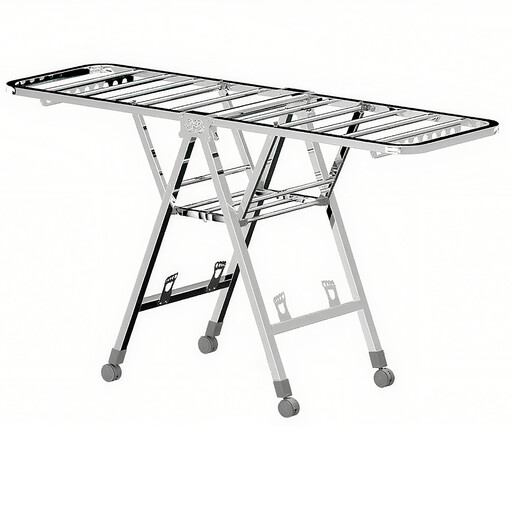
Why this model stands out This winged airer is made entirely of stainless steel, making it particularly resistant to weathering. Its design is well-suited for drying large and heavy textiles.
Advantages
Who is it for? Perfect for those who regularly dry large textiles like bed linen and need a robust, weatherproof airer for their balcony or terrace.
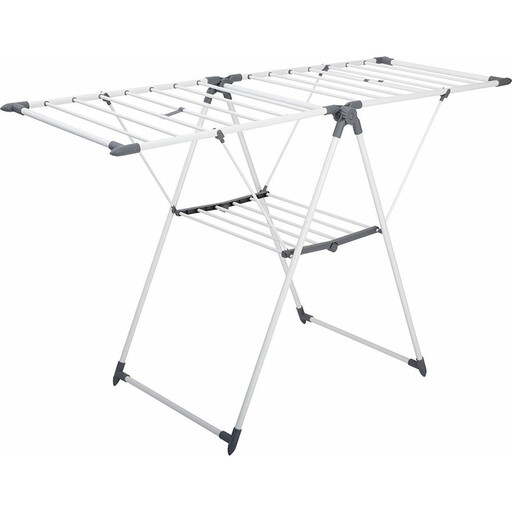
Why this model stands out This model is distinguished by its thick drying rods, which are designed to reduce unsightly marks and creases in laundry. A locking mechanism provides extra stability when unfolded.
Advantages
Who is it for? A great choice for medium-sized households looking for a stable and practical solution for indoor use, who also value drying delicate laundry with as few creases as possible.
The selection presented here covers common use cases. If you haven't found the right model for your specific needs, there are numerous other variations to explore. From extendable wall-mounted airers to special radiator hangers – the possibilities are diverse.
Discover our full range of rust-resistant clothes airers for more models and materials.
1. How much laundry fits on a clothes airer? The capacity is indicated by the "drying length" in metres. A clothes airer with 15–20 metres of drying length typically holds one to two washing machine loads. Models with 25 metres or more are suitable for larger families or for drying bed linen. Also, pay attention to the maximum load capacity specified in kilograms.
2. Which clothes airer will not rust? Models made of stainless steel or aluminium are naturally rust-resistant and are therefore best suited for outdoor use or in damp environments. Clothes airers made of coated steel are also protected from rust as long as the coating remains undamaged.
3. How can I store a clothes airer to save space? Almost all modern clothes airers are foldable. Winged airers can be folded very flat and fit behind cupboards or under beds. While tower airers remain taller when folded, they are very narrow and can be stored in a corner or niche. Pay attention to the folded dimensions to ensure the model will fit into your intended storage space.