
Lieferung heute & morgen

Qualitätsgarantie

Willkommens-Angebote freischalten: KOSTENLOSE Lieferung | Bis zu 80 % RABATT | Kostenlose 30-Tage-JoyPlus-Testphase
App herunterladen
A clothes rack can provide additional storage in the bedroom, hallway, office, retail store or at events. However, appearance is not the only consideration. A model with insufficient stability, unclear load capacity or unsuitable dimensions can quickly become impractical in everyday use.
The range extends from the freestanding clothes rack and mobile garment rack with wheels to wall-mounted solutions. This buying guide explains what households, retailers and event organisers should look for in 2026 and which models suit different usage scenarios.
“Stable” or “Heavy Duty” are not sufficient specifications. What matters is the precise maximum load capacity, the load per hook or shelf, and how the weight is distributed. A clothes rack for lightweight shirts must meet different requirements from a coat rack designed for heavy winter coats.
Also check whether the stated load capacity applies to the entire product or only to individual sections. For example, the Jano model specifies a maximum of 50 kg for the complete unit and 5 kg per shelf. Details like these make realistic planning easier.
A clothes rack for the bedroom or hallway must not only fit within the available floor area. Doors, passageways and drawers also need sufficient clearance. A garment rail with wheels additionally requires space for manoeuvring.
Before buying, you should therefore measure the location’s width, depth and height. For sloping ceilings or low rooms, a 105 cm-high model is a very different solution from a 175 cm-high open wardrobe.
For a wall-mounted clothes rack, the wall’s load-bearing capacity is just as important as the product’s construction. Mounting hardware is not included with every model. The appropriate fixings depend on the wall type, such as concrete, solid brick, plasterboard or wood.
A wall-mounted solution should only be installed with suitable mounting hardware. For freestanding furniture, a level surface, correctly tightened connections and, where necessary, an anti-tip device are important considerations.
Start by measuring the available space. A compact coat rack measuring 60 cm wide and 40 cm deep may be suitable for a hallway or small bedroom. An extendable model, on the other hand, requires more width when the garment rail is fully extended.
Also check:
A coat rack with shelf is useful when shoes, bags, boxes or folded clothing need to be stored. For a walk-in wardrobe, combining several open elements can offer greater flexibility than using a single piece of furniture.
Metal clothes racks are commonly made from steel, carbon steel or aluminium. Steel constructions can offer a high load capacity, provided the frame, connections and feet are designed accordingly. Aluminium is generally lighter and may be better suited to frequent relocation.
Wood or MDF shelves expand the rack’s functionality by providing space for folded textiles and accessories. Look for easy-care surfaces and check whether the shelves have their own specified load capacity. For indoor use, the furniture should be protected from prolonged exposure to moisture unless the manufacturer states otherwise.
A clothes rack with wheels is suitable for changing room layouts, retail floors, photo shoots or events. Lockable castors can prevent the mobile garment rack from moving unintentionally. For permanent use in a hallway, however, a stationary model is often easier to keep organised.
Before use, check:
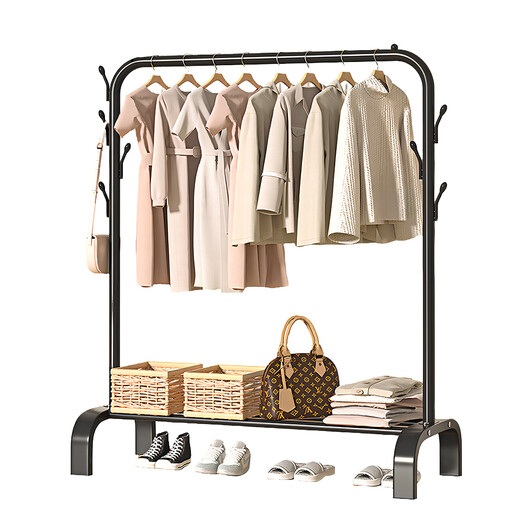
Why this model is a good fit: At 105 cm high, this compact clothes rack is suitable for individual garments, accessories, guest jackets or smaller spaces in the bedroom and hallway.
The product specifications state the material, height and assembly instructions. It should be used on a level surface and within the recommended load capacity.
Carbon steel with a black coating; lightweight construction with a stated product weight of 0.4 kg.
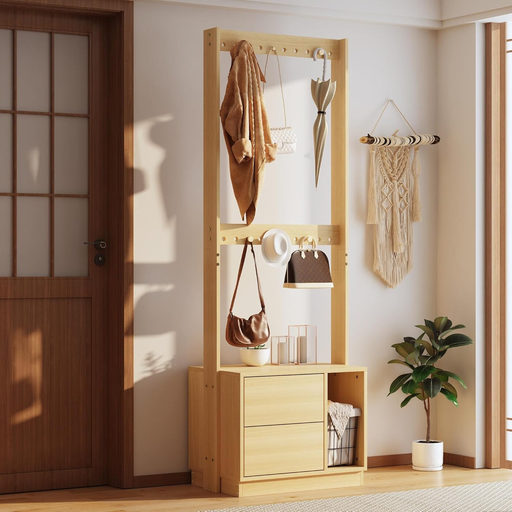
Why this model is a good fit: Measuring 60 × 40 × 175 cm, this piece of furniture combines hanging space, hooks and two drawers. It suits bedrooms, entrance areas and compact open dressing zones.
The stated maximum load capacity of 5 kg should not be exceeded. This helps prevent the furniture from being overloaded with heavy coats or boxes.
MDF panels and metal frame; two drawers, hook rail and two hanging compartments; assembly instructions included.
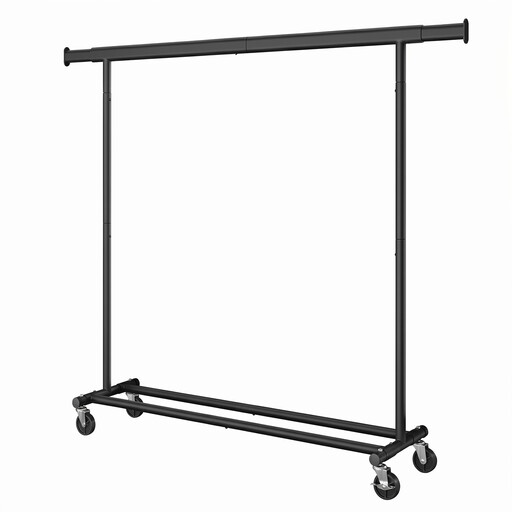
Why this model is a good fit: The extendable garment rail, adjustable from 160 to 200 cm wide, is designed for households, boutiques, offices or event organisers with changing storage requirements.
The product description specifies a maximum static load capacity of 150 kg as well as lockable swivel castors. These figures should be checked against the intended use before placing a heavy load on the rack.
Steel frame, extendable upper rail, lockable castors and lower crossbars for boxes.
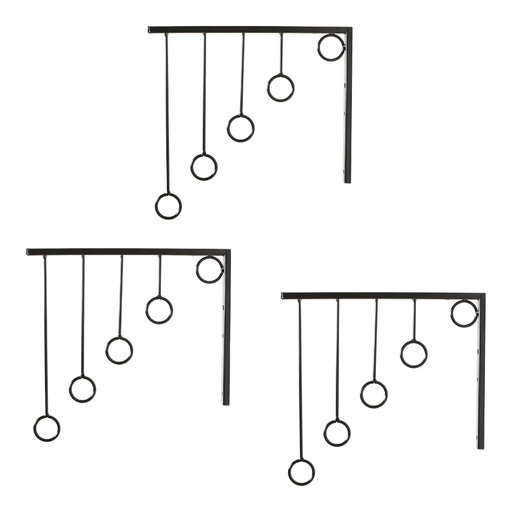
Why this model is a good fit: Three vertical, wall-mounted elements with five descending hooks each make efficient use of wall space and suit hallways, bedrooms, boutiques or dressing areas.
As mounting hardware is not included, wall installation must be planned according to the wall surface. This prevents the use of unsuitable standard fixings.
Set of three metal racks; five hooks per unit; dimensions per element: 27.9 × 29.2 × 2 cm.
For shoes, folded jumpers and storage boxes, the Jano Wood & Metal Special Garment Rack is a suitable choice, combining a metal frame with a wooden shelf and garment rail. If your priority is organising coats, bags and scarves in the entrance area, consider the kapanou freestanding coat rack with six hooks. According to the product specifications, the total load capacity is 30 kg, with a maximum of 5 kg per hook.
For decorative or smaller hanging solutions, the MyGift Industrial Brass-Tone T-Bar Clothes Rack is designed for wall mounting. It provides a hanging length of just under 20 inches, or approximately 50 cm. Here too, the appropriate mounting hardware must be planned for separately.
We have compiled a current selection of products that meet these selection criteria and take into account the safety considerations relevant to use in Germany.
Place the product on a level, solid surface and distribute heavy clothing towards the lower section wherever possible. For tall furniture or open shelving systems, anchoring the unit to the wall may be advisable. Children should not climb on the frame, hooks or garment rails.
That depends on how it will be used. Lower capacities may be sufficient for a few jackets, while coats, bags and retail stock require greater reserves. The decisive factors are the manufacturer’s stated total load capacity and any separate limits for hooks, rails and shelves. The specified load capacity must not be exceeded.
A wall-mounted solution saves floor space but requires a suitable wall and correct installation. A freestanding coat rack can be positioned without drilling and moved whenever necessary. Before buying, check that sufficient clearance remains for movement, doors and radiators.