
Lieferung heute & morgen

Qualitätsgarantie

Willkommens-Angebote freischalten: KOSTENLOSE Lieferung | Bis zu 80 % RABATT | Kostenlose 30-Tage-JoyPlus-Testphase
App herunterladen
A bulky wardrobe doesn't fit into every home or suit every interior design style. Flexible solutions are essential, especially in smaller rooms, shared flats, or when you're aiming for a minimalist aesthetic. A clothes rack offers a practical and stylish alternative for keeping your clothing organised and within easy reach.
As your Joybuy Product Recommendation Officer, my mission is to provide you with objective information and clear guidance. This guide will help you understand the different types of clothes racks and make an informed decision that perfectly suits your needs and your space.
Before you decide on a model, there are a few basic criteria to consider. The right choice depends on the amount of clothing you have, the available space, and your personal assembly requirements.
Stability is a crucial factor. A clothes rack made of metal, particularly steel, generally offers high load-bearing capacity and durability. Wooden models can provide a warmer aesthetic, but their load capacity varies depending on the type of wood and construction. Always check the maximum load capacity specified by the manufacturer, especially if you plan to hang many heavy items like winter coats. A heavy-duty clothes rack is designed for such needs and can often support 80 kg or more.
The type of installation determines its flexibility and space requirements.
Modern clothes racks are often more than just a single rail. A clothes rack with a shelf provides additional storage for shoes, folded clothes, or storage boxes. Some models function as a complete open wardrobe, featuring multiple rails, shelves, and hooks. Consider what items you want to store besides hanging clothes to select the right system for you.
Based on the criteria mentioned, we have compiled a selection of models that cater to different needs.
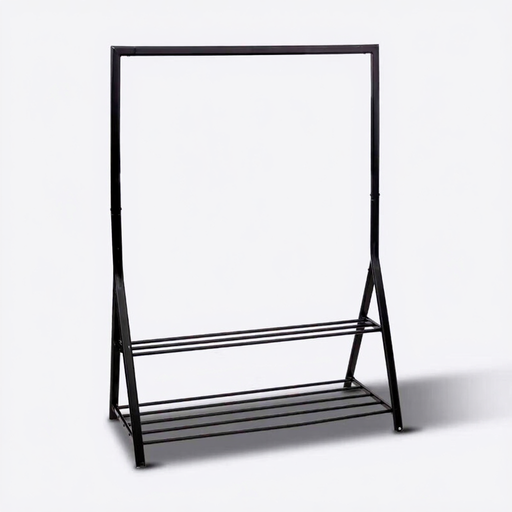
Why it stands out This model combines a high load capacity with practical storage space. The steel construction makes it a robust solution for an extensive wardrobe. The two lower shelves offer space for shoes or boxes, while the castors ensure easy mobility.
Pros
Who is it for? For those who need high load capacity and are looking for a mobile, freestanding garment rack with integrated storage for the bedroom, hallway, or basement.
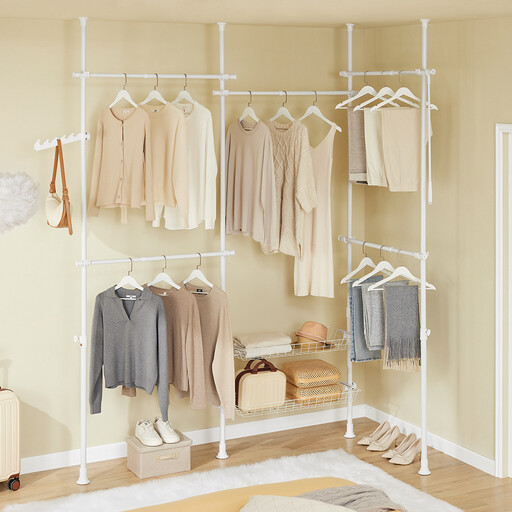
Why it stands out This no-drill clothing system is the ideal solution for rental properties or for anyone who wants maximum flexibility. It is simply tensioned between the floor and ceiling and can be adjusted in height and width to fit the space. With multiple rails and baskets, it creates a complete open wardrobe.
Pros
Who is it for? For renters and individuals looking for an adjustable solution that can be removed without a trace, perfect for a walk-in wardrobe or an alcove.
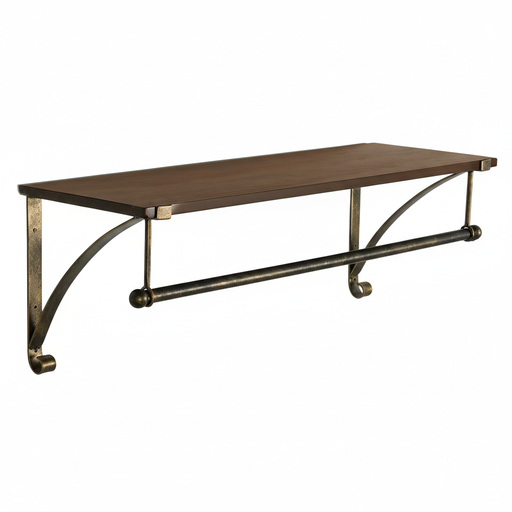
Why it stands out This model is a space-saving and decorative solution that combines a shelf and a clothes rail in one. The wall-mounted clothes rail creates floor clearance and is excellent for small entryways or as an addition to the bedroom. The combination of solid wood and metal in a rustic style adds a visual accent.
Pros
Who is it for? For anyone with very limited space who is looking for stylish storage for a curated selection of clothing or for an entryway. Note: Wall mounting hardware is not included and must be chosen to suit your wall type.
If the models featured here don't perfectly match what you're looking for, there are many other variations to discover. Every living situation is unique, and the right storage solution can make daily life significantly easier.
Browse our comprehensive selection of garment racks with shelves to find the perfect solution for your home.
The load capacity varies greatly depending on the model and material. Simple, lightweight clothes racks often hold only 10–15 kg. In contrast, robust models designated as a heavy-duty clothes rack can support 90 kg or more. Always check the maximum load capacity specified by the manufacturer to avoid overloading.
A no-drill clothing system is typically based on the telescopic principle. The vertical poles can be adjusted in length and are clamped firmly between the floor and ceiling by spring tension. This creates enough pressure to keep the system stable without needing screws or drill holes.
The terms are often used interchangeably, but there are subtle differences. A clothes rack typically features a longer, horizontal clothes rail for hanging clothes on hangers. A coat rack is often designed for a hallway and primarily has hooks for hanging jackets, coats, and hats. Many modern products combine both functions.