
Lieferung heute & morgen

Qualitätsgarantie

Willkommens-Angebote freischalten: KOSTENLOSE Lieferung | Bis zu 80 % RABATT | Kostenlose 30-Tage-JoyPlus-Testphase
App herunterladen
A suitable clothes rack can be a functional and stylish addition to any room—whether in the bedroom, hallway, or even as a flexible solution in the basement. But the selection is vast, and not every model delivers on its promise. Often, flimsy construction or unsuitable materials lead to frustration and the need to buy again.
This guide helps you avoid the common pitfalls. We'll show you which technical features truly matter so you can find a durable clothes storage solution that perfectly fits your needs.
Before you make a decision, you should be aware of the most common problems that can arise with budget-friendly or poorly described products.
To avoid a bad purchase, focus on the following objective criteria. These determine the functionality and longevity of your new piece of furniture.
The foundation of any good clothes rack is its material. Models made from metal tubes (often steel) generally offer greater stability and durability than those made purely of plastic. Pay attention to the specified maximum static load capacity. This value, given in kilograms (kg), describes the weight the structure can support when the load is evenly distributed and not in motion.
The right type depends entirely on your available space and intended use.
Measure the intended space precisely before you order: height, width, and depth. Also, consider the swing range of doors or the space you need to walk by. For special room situations like sloped ceilings or very high old-building ceilings, telescopic systems are an option worth considering. Their height and often their width can be flexibly adjusted to the room, frequently without any drilling.
Here are some product recommendations tailored to specific user profiles and room situations.
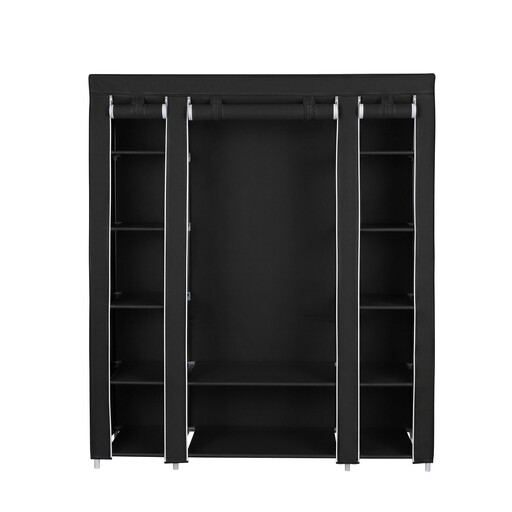
Why this model fits: Ideal for students or as a flexible storage solution in the basement or attic. This fabric wardrobe offers plenty of space with a clothes rail and 12 shelves, and its non-woven fabric cover protects contents from dust.
The metal tube construction and clear load capacity specifications (15 kg for the rail, 5 kg per shelf) counter the problem of unstable budget models. An included anti-tip kit enhances safety.
Combines hanging and folded storage in one product. According to the manufacturer, assembly is tool-free thanks to a simple click-in system.
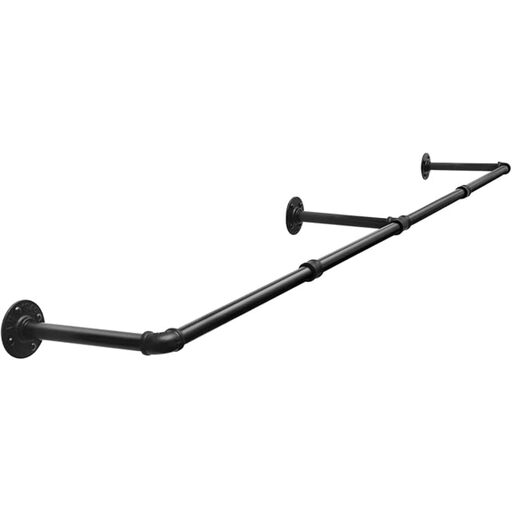
Why this model fits: Perfect for fans of urban interior design and for anyone looking to save floor space. The black metal pipe design makes a bold statement and creates an open, airy look in the bedroom or dressing area.
The robust metal pipe and stable wall mounting address the weakness of instability. According to the manufacturer, the maximum load capacity is 50 kg when mounted on a solid wall, which is sufficient for a large amount of clothing.
Maximum floor space savings. The 180 cm length provides a great deal of hanging space. The scratch-resistant surface ensures a long-lasting appearance.
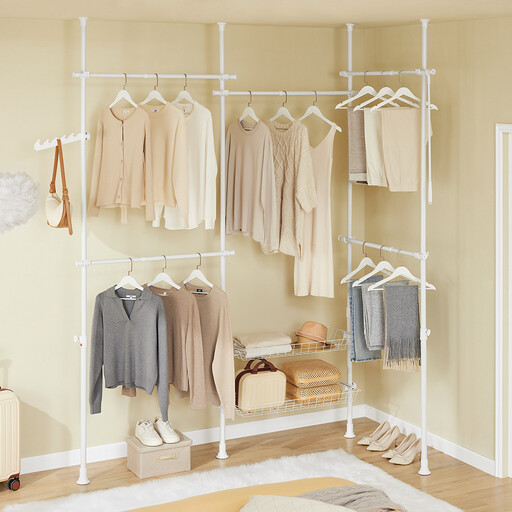
Why this model fits: The ideal solution for rental apartments where drilling is not allowed, or for rooms with unusual dimensions. The system is clamped between the floor and ceiling and is adjustable in height (200–295 cm) and width (209–311 cm).
This system bypasses the problem of mismatched dimensions through its high flexibility. The high total load capacity of up to 65 kg (according to the manufacturer) and the metal tube construction provide the necessary stability without wall mounting.
No-drill installation via a clamping mechanism. The system is fully adjustable and can be easily taken with you and reconfigured when you move.
We've compiled a complete, up-to-date list of products that fully meet these strict selection criteria and safety standards.
The load capacity varies greatly depending on the model and material. Simple, freestanding clothes racks are often designed for 15 to 25 kg. Sturdy wall-mounted clothes rails made of metal can often support 50 kg or more, according to manufacturer specifications, when properly installed on a solid wall. Always check the maximum static load capacity in the product details.
The type of wall is crucial. Use wall plugs and screws that are appropriate for your wall (e.g., for concrete, drywall, or brick). For high load capacity, mounting on a solid wall (solid brick, concrete) is recommended. For drywall, special hollow-wall anchors should be used, and the load should be kept lower.
Models with a frame made of metal tubes and clearly defined load limits are well-suited for daily use. They are a practical solution for folded clothes, bedding, and a moderate number of hanging garments. Avoid overloading the clothes rail with too many heavy winter coats to ensure long-term stability.