
Lieferung heute & morgen

Qualitätsgarantie

Willkommens-Angebote freischalten: KOSTENLOSE Lieferung | Bis zu 80 % RABATT | Kostenlose 30-Tage-JoyPlus-Testphase
App herunterladen
A clothes rack is more than just a pole on two legs. It's a flexible solution for extra storage, a design statement in the bedroom, or a practical addition to your hallway. But the market is flooded with models that, in practice, don't live up to their product photos. Before you make a decision, it's crucial to understand the common weaknesses that often only become apparent after assembly and the first load of clothes.
This guide will show you what to look for to avoid a bad purchase and find a solution that truly fits your needs. We'll focus on the three most common problems: poor stability, misleading load capacity claims, and low-quality materials.
Many buyers experience the same disappointments shortly after their purchase. These three design flaws are particularly common and can quickly render a seemingly practical piece of furniture useless.
To avoid these pitfalls, you should focus on three objective core parameters. These features determine the durability and functionality of your clothes rack.
A sturdy clothes rack starts with its materials. Pay attention to the tube diameter and wall thickness of the metal pipes. A diameter of 16 mm is a good starting point, but 19 mm or more is recommended for heavy clothing. The connectors are just as crucial: metal screw fittings are far superior to plastic parts that are simply pushed together. They ensure a permanently tight and torsion-resistant structure.
The stated maximum load capacity should be viewed with skepticism. Check whether the specification refers to the clothes rail, the shelves, or the entire system. A clothes rack with shelves not only offers more storage space, but the lower shelves can also increase overall stability by providing a wider base and additional bracing. Models with extra cross-bracing at the bottom or an L-shaped design for corners are often more stable than simple, high-legged frames.
Not everyone needs a rigid, one-size-fits-all solution. For renters, dorm rooms, or niches, flexible systems are ideal. A telescopic clothes rail, which is tension-mounted between the floor and ceiling, is an excellent form of space-saving clothes storage as it requires no drilling and can be adjusted to different room heights. Such systems make optimal use of vertical space and can be configured as a modular open wardrobe.
Instead of making a blanket recommendation, we have identified models that meet specific requirements and purposefully avoid the weaknesses mentioned above.
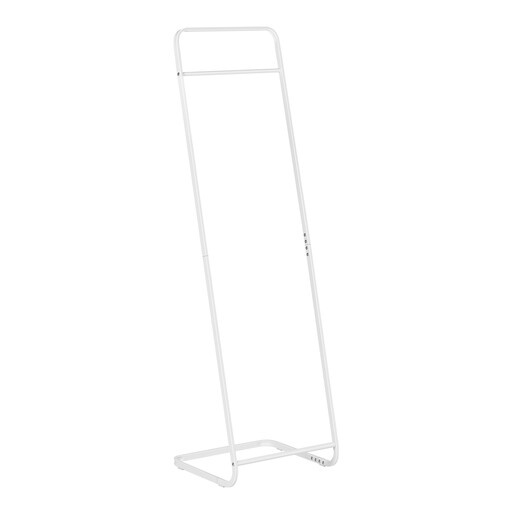
Why This Fits Their Persona: Ideal for those looking to make the most of unused corners in the hallway or bedroom of a small apartment. The slim design provides space for essential jackets and coats without cluttering the room.
The L-shaped construction with a horizontal brace at the base provides significantly more stability than simple, straight models and prevents side-to-side wobbling.
Extremely space-saving with a footprint of just 0.16 m?. The metal tubes are painted to prevent corrosion.
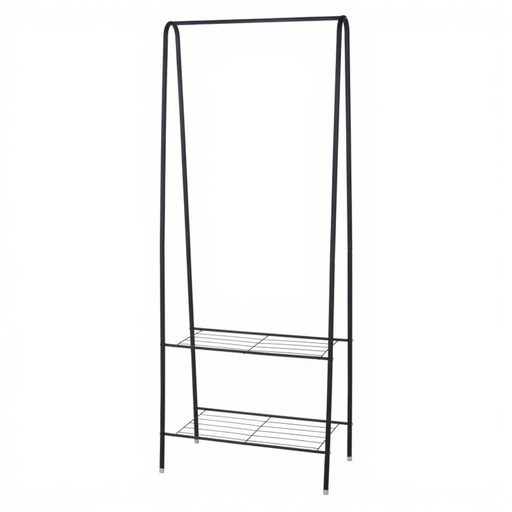
Why This Fits Their Persona: Perfect for anyone looking for an all-in-one solution. This model acts as an open wardrobe, offering space for hanging clothes, shoes, bags, and storage boxes.
The sturdy metal frame and the two wide mesh shelves distribute weight evenly and reinforce the entire structure. This prevents the rail from sagging and ensures a solid stance.
Integrated storage solution with a clothes rail and two shelves. The 16 mm tube diameter provides a solid foundation.
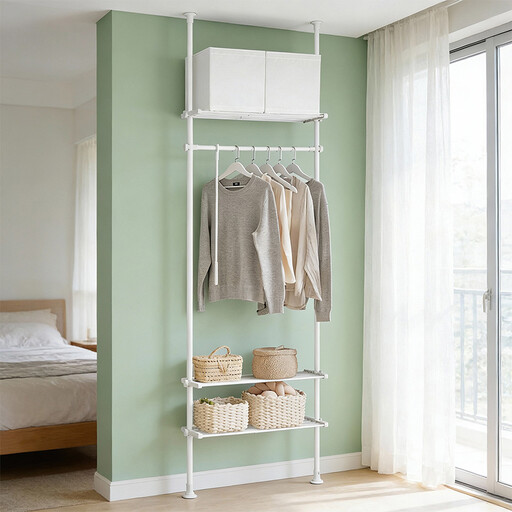
Why This Fits Their Persona: The solution for renters in older buildings with high ceilings or for anyone who wants an adjustable, no-drill wardrobe. Ideal for use in niches or as a walk-in closet.
Instead of relying on a potentially wobbly base, the system is secured by tension between the floor and ceiling. This provides excellent stability without damaging walls.
No drilling required. Flexibly adjustable in height (233–295 cm) and width (52–80 cm). The 16 kg load capacity is solid for a system of this type.
We have compiled a complete, up-to-date list of products that fully meet these strict selection criteria and safety standards.
How much weight can a clothes rack hold? The load capacity varies greatly depending on the model and construction. Always check the maximum static load capacity specified by the manufacturer. Simple models often hold only 10–15 kg, while more robust metal clothes racks with bracing can support 30 kg or more. As a rule of thumb, always distribute the weight evenly and hang heavy items like coats closer to the vertical supports.
How do I prevent my garment rack from tipping over? Stability depends on three factors: a solid construction, a level surface, and proper loading. Choose a model with a wide or heavy base. Place the rack on a firm, flat floor. When loading it, place heavy items at the bottom and lighter ones at the top. Never exceed the specified maximum load capacity.
Do I need special accessories for my clothes rack? A clothes rack is ready to use out of the box, but the right accessories can enhance its functionality. High-quality metal clothes hangers are not only durable but also space-saving. Models with non-slip coatings or clips, like the ANQI Non-slip Pants Hangers with Clips, prevent clothes from falling off. For an open wardrobe with shelves, storage boxes help keep small items and accessories neatly organized.