
Lieferung heute & morgen

Qualitätsgarantie

Willkommens-Angebote freischalten: KOSTENLOSE Lieferung | Bis zu 80 % RABATT | Kostenlose 30-Tage-JoyPlus-Testphase
App herunterladen
A clothes rack is more than just a rail for your clothes. It creates order in small apartments, serves as a flexible extension to your wardrobe, or makes a fashion statement as a design object. But the market is confusing, and not every model lives up to its promises. Many buyers get frustrated with wobbly frames, inaccurate load capacity claims, or impractical details that severely limit everyday usability.
As your Joybuy Product Recommendation Officer, I'm here to help you spot the common pitfalls. This guide will show you which technical features truly matter, so you can make an informed decision and find a durable, long-lasting solution for your clothes storage.
Before you invest, you should be aware of the three most common flaws that often only become apparent after purchase and lead to frustration.
To avoid these problems, you should carefully examine three key parameters. These determine the stability, durability, and functionality of your new clothes rack.
The true strength of a clothes rack lies in its material. A metal clothes rack, usually made of steel, is the most common choice. Pay attention to the following details:
The choice of mounting type depends on your available space and aesthetic preferences.
Practical additional features significantly increase its utility:
Here are three models tailored to different needs that meet the quality criteria mentioned above.
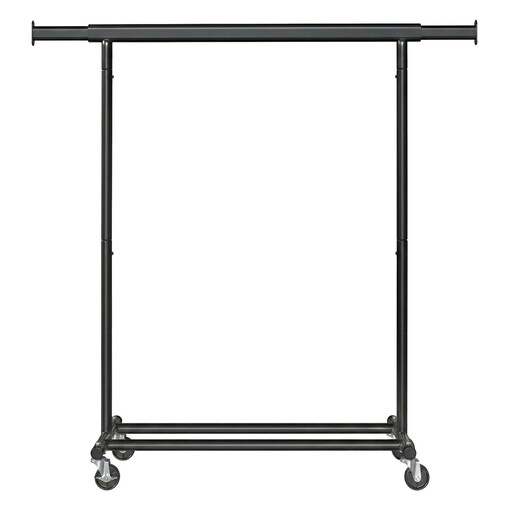
Why it's a great fit: Ideal for students or renters in city apartments. The tool-free assembly and disassembly make moving easy, while the wheels and extendable rail offer maximum flexibility for daily use.
The construction with 1 mm thick steel tubes prevents sagging. The specified 100 kg load capacity is realistic for everyday use. The robust PP casters with two brakes overcome the problem of poor mobility.
Combines a high load capacity (100 kg) with tool-free assembly and a double-sided extendable rail for extra space.
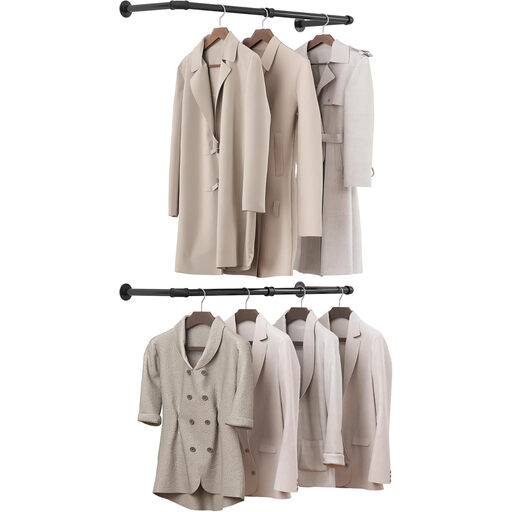
Why it's a great fit: Perfect for anyone who sees their clothing as part of their decor and wants to save space. The minimalist pipe design blends seamlessly into modern or industrial interiors, creating an open wardrobe in a hallway or bedroom.
The robust metal construction and secure wall mounting ensure high stability. When mounted on a solid wall, the static load capacity per rail is 50 kg, avoiding the pitfall of an unstable frame.
Creates ample storage without taking up floor space. The set of two rails allows for flexible arrangement and offers a clean, functional industrial design.
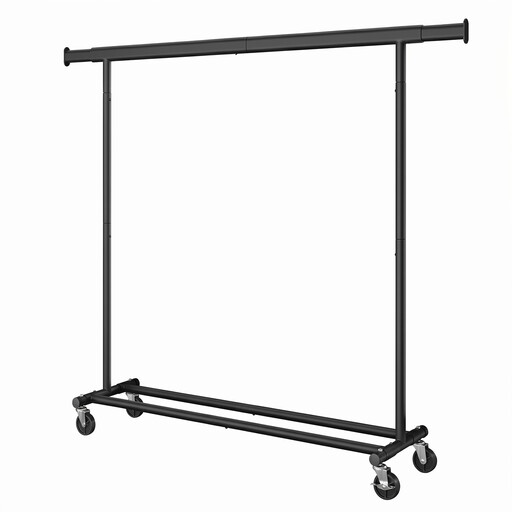
Why it's a great fit: For households with a large clothing collection or for storing heavy seasonal items like winter jackets and coats. Its extremely high load capacity makes it a reliable solution for the basement, dressing room, or guest room.
This model counters the pitfall of misleading load capacity claims with a verifiable static capacity of 150 kg. The sturdy steel frame and stable wheels ensure it remains secure even when fully loaded.
A maximum load capacity of 150 kg and a rail that extends up to 200 cm provide enormous storage space for the most demanding wardrobes.
We have compiled a complete, up-to-date list of products that fully meet these strict selection criteria and safety regulations.
1. How much weight can a clothes rack hold? The load capacity varies greatly by model. Simple, lightweight racks are often designed for only up to 10 kg, which is enough for a few shirts and blouses. Robust metal models can hold 50 kg, 100 kg, or, in the case of heavy-duty versions, even up to 150 kg. Always check the manufacturer's specified maximum static load capacity and plan for a buffer to account for dynamic, everyday use.
2. Are clothes racks on wheels stable? Stability depends on the quality of the construction. A stable clothes rack on wheels has a low centre of gravity, a sturdy frame, and high-quality casters. Look for models with at least two lockable wheels (brakes). These prevent the rack from rolling away when you're adding or removing clothes and ensure it stands securely.
3. How do I securely mount a clothes rail to the wall? For a secure installation, it's crucial to choose the right wall plugs and screws for your wall type (e.g., concrete, brick, plasterboard). Always use the mounting hardware supplied by the manufacturer or seek advice from a hardware store. It is advisable to attach the rail to load-bearing walls to ensure maximum capacity. Use a spirit level when marking the drill holes to ensure the rail hangs straight.