
Lieferung heute & morgen

Qualitätsgarantie

Willkommens-Angebote freischalten: KOSTENLOSE Lieferung | Bis zu 80 % RABATT | Kostenlose 30-Tage-JoyPlus-Testphase
App herunterladen
The right clothes rack can be an invaluable asset in apartments with limited space or as a flexible addition to your wardrobe. However, the market is flooded with models that vary widely in quality and functionality. Many buyers only realise after assembly that their chosen product doesn't meet their needs. This guide highlights the common pitfalls to avoid and the key features to look for when making your selection.
Before choosing a model, it's helpful to know the most common flaws that lead to frustration in practice.
To avoid a bad buy, you should check a few technical parameters before making a decision. These will reveal the clothes rack's true suitability for your needs.
The maximum load capacity, specified in kilograms (kg), is one of the most important indicators of stability. A basic rack with a load capacity of 10 kg is suitable for a few lightweight garments. For a complete seasonal wardrobe, including heavy coats, the load capacity should be 30 kg or more. Pay attention to the material: models made of carbon steel or thicker iron tubing are generally more stable than those made of thin aluminium or with many plastic parts. A black metal clothes rack can be sturdy, but the wall thickness of the tubes is the deciding factor.
A clothes rack with wheels, also known as a rolling garment rack, offers maximum flexibility. You can effortlessly move it from one room to another. Lockable casters are important here to ensure the rack stays securely in place. A height-adjustable rail is another useful feature for adapting the hanging height to different types of clothing. For renters or for niche spaces, a no-drill wardrobe system is an interesting alternative. These telescopic systems are clamped between the floor and ceiling, providing stable support without damaging the walls.
An open wardrobe is more than just a rail. A clothes rack with a shelf at the bottom creates valuable space for shoes, bags, or storage boxes. Some models offer additional hooks on the sides or even multiple shelves, making them a multifunctional piece of furniture.
Instead of making a one-size-fits-all recommendation, we have matched different models to various user profiles.
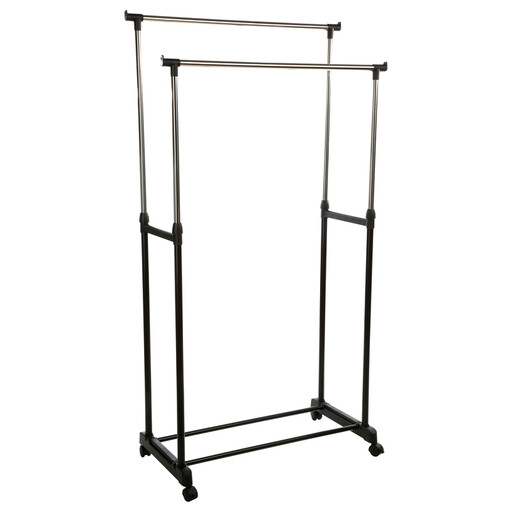
Why this model is a great fit: Ideal for those living in an apartment who need a mobile, adaptable solution. The wheels allow for easy movement, and the adjustable height accommodates different types of clothing.
The stated 50 kg load capacity and dual rails address the problem of instability. The height adjustability solves the issue of impractical dimensions for long garments.
Two hanging rails and a bottom shelf maximise storage in a small footprint. Two of the four casters are equipped with brakes.
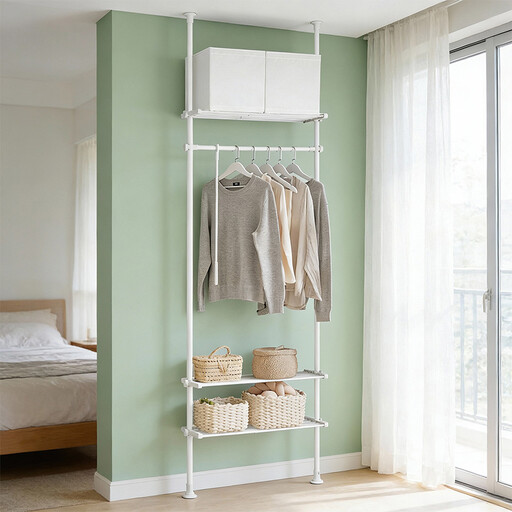
Why this model is a great fit: Perfect for renters looking for a stable, wardrobe-like solution without having to drill into walls or ceilings. The system makes optimal use of vertical space right up to the ceiling.
The tension-mount assembly between the floor and ceiling provides a high level of stability that freestanding models often lack. The metal tube construction is more durable than simple push-fit systems.
The system is telescopically adjustable in both height and width, allowing it to adapt flexibly to different room sizes. It combines hanging rails with shelves for complete organisation.
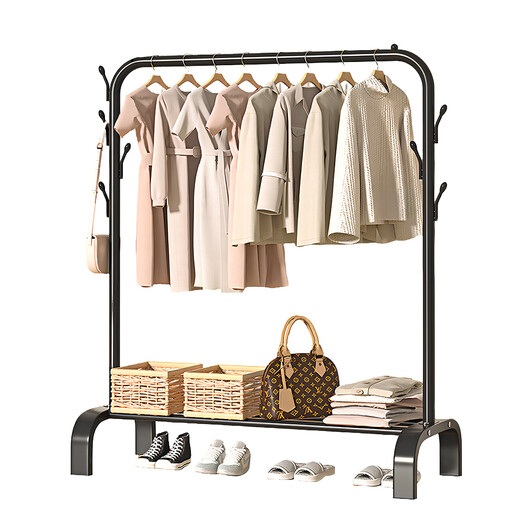
Why this model is a great fit: For anyone seeking a simple yet sturdy and visually appealing solution for an entryway, bedroom, or as an open wardrobe. The focus is on design and material quality.
Its powder-coated carbon steel construction is a clear statement against the pitfall of inferior materials. The minimalist, fixed design avoids wobbly joints.
The sleek, modern design blends well with various interior styles. Despite its low weight, the carbon steel construction offers reliable stability for everyday use.
We have compiled a complete, up-to-date list of products that fully meet these strict selection criteria and comply with current safety regulations.
The load capacity varies significantly depending on the model and construction. Simple, lightweight models often only hold up to 10 kg. More robust metal garment racks can support 20-30 kg, while heavy-duty or telescopic systems can be designed for over 50 kg. Always check the manufacturer's specified maximum load capacity and realistically estimate the weight of your clothing.
Stability depends on the quality of the frame, the width of the base, and the type of casters. High-quality models with a sturdy metal frame and lockable casters offer good stability. However, for very heavy loads or on uneven floors, a stationary rack or a telescopic system may be a safer choice.
These systems are based on a telescopic mechanism. The vertical poles can be adjusted in length and securely clamped between the floor and ceiling. The resulting tension provides a secure hold without the need for screws, wall plugs, or drilling into the wall or ceiling. This makes them an ideal solution for rental apartments.