
Lieferung heute & morgen

Qualitätsgarantie

Willkommens-Angebote freischalten: KOSTENLOSE Lieferung | Bis zu 80 % RABATT | Kostenlose 30-Tage-JoyPlus-Testphase
App herunterladen
A clothes rack can keep clothes, shoes and accessories neatly organised without the need for a built-in wardrobe. Open solutions are particularly flexible for rented homes, student accommodation and small hallways. However, clothes racks vary considerably in load capacity, stability, storage space and assembly.
A tall piece of furniture is not automatically a spacious wardrobe. What matters is how much space is actually available for clothes hangers, shoes and folded textiles. A narrow coat stand with a single clothes rail is suitable for a few jackets, but it does not replace a portable wardrobe.
Therefore, pay attention to:
A stated maximum load often applies only to individual shelves or the clothes rail. If lots of heavy coats are placed on one rail, the furniture may be loaded differently than when it is used for lighter clothing.
It is important to distinguish between:
Heavy shoes or boxes should preferably be placed on the lower levels. This keeps the centre of gravity low and can help the structure remain more stable.
Push-fit systems with plastic connectors can usually be assembled without tools, but they require a level surface and carefully secured connections. For tall open wardrobes, fixing the unit to the wall may be advisable or required according to the product information. Particularly in households with children, furniture should not be used for climbing or hanging.
Do not just measure the intended floor area. Also check the height up to the ceiling and the distance from doors. For a clothes rack for the bedroom and hallway, the width of the passage and available space for movement are also important.
A model approximately 40 to 45 cm deep can save space in many areas compared with a deep wardrobe. Wider versions, on the other hand, provide more room for hangers and shelves. A hallway wardrobe with shoe storage should be positioned so that shoes can be taken out easily without blocking the passage.
Common materials include steel, coated metal, MDF, chipboard and non-woven fabric. Metal tubes can provide a flexible solution while keeping the overall weight low. Wood-based shelves create a solid surface for boxes and shoes. With a fabric wardrobe, the tube diameter, connectors, fabric weight and load limits should all be considered together.
A coated surface should be cleaned with a soft, slightly damp cloth. According to the product description, products with fabric covers protect their contents from dust, but they require a dry location and should not be exposed to direct sunlight over long periods.
Depending on your household, a clothes rack with shelf, a clothes rack with hooks or an open wardrobe may be more practical than a simple clothes rail. Hooks can hold bags, keys or hats. Shelves are suitable for shoes and folded clothing. Removable or height-adjustable shelves make it easier to accommodate boots, storage boxes and decorations.
For portable models, you should also check the product’s own weight, how easily it can be dismantled and whether it can be fixed to the wall. The term “portable” does not automatically mean that the furniture can be safely moved while fully loaded.
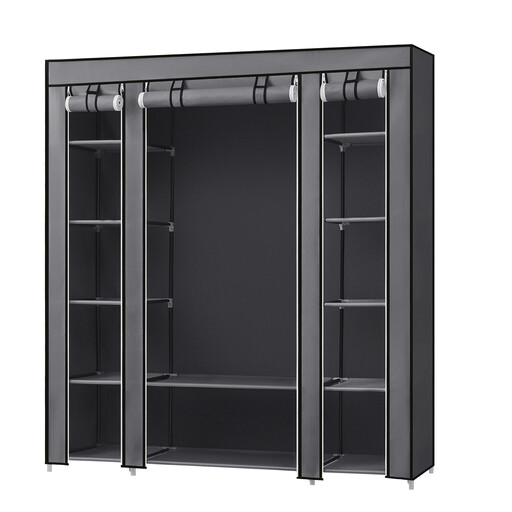
Why this product suits this profile: With 12 compartments, a clothes rail and a non-woven fabric cover, this portable wardrobe offers a straightforward solution for bedrooms, shared accommodation or temporary homes.
The product specifications state clear limits: 5 kg per shelf and 15 kg for the clothes rail. This makes it easier to plan the load than with vague capacity claims.
45 x 150 x 175 cm, metal tubes with a diameter of 16 mm and numbered assembly parts, according to the product description.
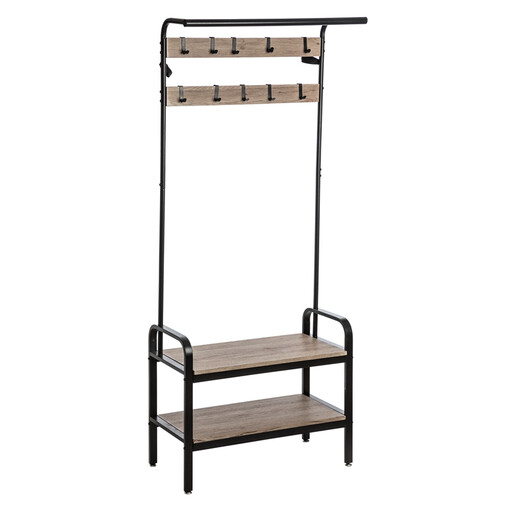
Why this product suits this profile: The combination of coated steel, wood-based shelves, ten tiers and six hooks is designed as a sturdy, open wardrobe for the bedroom, hallway or entrance area.
The specifications state a total load capacity of 50 kg and 5 kg per shelf. Wall fixing is also recommended, helping you avoid judging stability based on appearance alone.
Vertical 10-tier construction, six hooks and a reinforced hanging rail, according to the product description; the product specifications state compliance with the E1 formaldehyde emission standard.
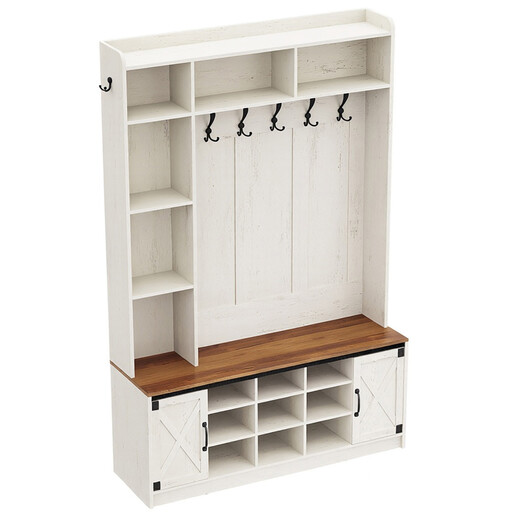
Why this product suits this profile: This combination is aimed at households looking to combine shoe storage, a bench, hooks and open compartments in one piece of furniture.
The dimensions of approximately 40.8 x 120.5 x 191.5 cm, adjustable or removable shelves and the stated bench load capacity of up to 150 kg make planning more straightforward.
15 open compartments, seven hooks, cupboard compartments, an upper shelf and integrated RGB lighting with 25 colour options, according to the product description.
We have put together a complete, regularly updated list of products that fully meet these strict selection criteria and the safety regulations applicable in the EU.
For long-lasting use, assemble the clothes rack on a level floor and check all screws or push-fit connections after assembly. For tall models, fixing the unit to the wall is recommended if a suitable fitting is included and the wall is appropriate for this purpose.
Further practical tips:
If you only want to hang a few jackets, a simple coat stand or single clothes rail may be enough. For clothes, shoes and bags, a model with shelves and hooks is generally more organised. A fabric wardrobe provides additional protection from dust, while an open wardrobe makes everything easy to access.
As well as the floor area, make sure you allow enough room to move around in front of the furniture. Also check whether doors, drawers or cupboard compartments can be opened fully. For narrow hallways, vertical models with a small depth are often more practical than wider versions.
Stability depends on the tube diameter, connectors, load and floor surface. The stated values for the clothes rail and shelves are the key factors. An anti-tip kit should be used according to the instructions. The wardrobe should not be moved while loaded with clothing unless the manufacturer specifically permits this.
A simple clothes rack normally has no ongoing electricity costs. For a model with lighting, consumption depends on the power rating, operating time and brightness level used. For an accurate assessment, the electrical specifications of the individual product are decisive.