
Lieferung heute & morgen

Qualitätsgarantie

Willkommens-Angebote freischalten: KOSTENLOSE Lieferung | Bis zu 80 % RABATT | Kostenlose 30-Tage-JoyPlus-Testphase
App herunterladen
A lack of clothing storage is a common problem, whether in a small rental apartment, a family home, or a student dorm. A well-chosen clothes rack can offer a flexible and functional solution. Unlike a bulky wardrobe, it adapts to various room layouts and helps create order. This article serves as a guide, introducing different types of clothes racks to make your selection easier. We will cover key features like load capacity, mobility, and assembly, so you can make an informed decision that suits your needs.
The range of clothing storage solutions is vast. To find the right model, you should consider a few fundamental criteria.
The most important feature of a clothes rack is its stability. Consider what type of clothing you plan to hang. For heavy winter coats, suits, or a large volume of garments, a heavy-duty clothes rack made from robust metal like powder-coated steel is the right choice. These models often offer a weight capacity ranging from 50 kg to over 150 kg. For lighter summer clothes or as a temporary wardrobe, a simpler model may suffice. Always check the manufacturer's specifications for maximum static load capacity to avoid overloading.
Flexibility plays a crucial role depending on the intended use.
Some clothes racks offer more than just a hanging rail. Models with additional shelves for shoes, boxes, or folded clothes maximize the available space. A fabric wardrobe combines a garment rail with shelves and a protective cover that shields clothing from dust. This is a great alternative to a traditional wardrobe, especially for a bedroom, basement, or attic.
Here, we present a selection of different models, each suited for various needs due to their specific features.

What makes them stand out: This set of two wall-mounted garment rails makes optimal use of vertical space, offering a highly space-saving solution. The minimalist industrial design, featuring black square tubing, blends seamlessly into modern interior concepts.
Advantages:
Who it's for: Ideal for those with limited floor space who are looking for a stable yet decorative clothing storage solution. Especially well-suited for hallways, dressing areas, or small bedrooms.

What makes it stand out: This clothes rack combines a very high load capacity with mobility. Thanks to its robust steel frame and extendable rail, it is designed to handle large and heavy amounts of clothing.
Advantages:
Who it's for: Perfect for anyone who needs an extremely robust and mobile solution. Suitable for storing seasonal clothing, as a flexible wardrobe in the laundry room, or for households with a very extensive wardrobe.
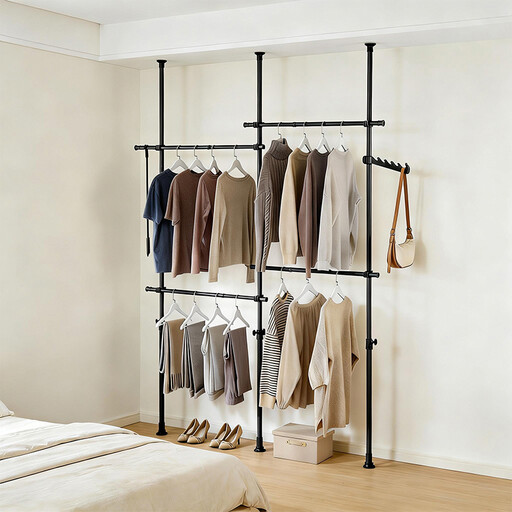
What makes it stand out: This telescopic wardrobe system can be flexibly adapted to different room heights and widths without drilling. It creates an open wardrobe solution that integrates perfectly into alcoves or unused corners.
Advantages:
Who it's for: An excellent choice for renters who are not allowed to drill holes, or for anyone looking for a custom-fit solution for an open wardrobe in a dressing room or alcove.
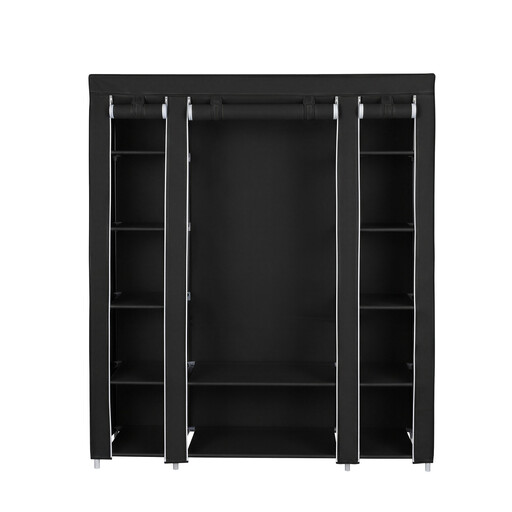
What makes it stand out: This fabric wardrobe is a complete, enclosed storage solution. It combines a garment rail with numerous shelves and protects clothing from dust and dirt with a non-woven fabric cover.
Advantages:
Who it's for: Ideal as a quick and straightforward wardrobe solution for a guest room, basement, or for students who need an affordable and functional alternative to a heavy wooden wardrobe.
The models presented here already cover a wide range of needs. However, if you are looking for other designs, materials, or specific sizes, such as a minimalist black garment rail, you can find a larger selection of clothing storage solutions in our comprehensive category.
1. How much weight can a clothes rack hold? The load capacity varies greatly depending on the model and material. Simple, lightweight clothes racks often only support 10–20 kg. Robust steel models, especially those designated as heavy-duty clothes racks, can hold 100 kg, 150 kg, or more, according to the manufacturer. Always check the manufacturer's specific details before purchasing to ensure the rack is suitable for your wardrobe.
2. What is the difference between a clothes rack and a garment rail? Although the terms are often used interchangeably, there is a technical difference. A clothes rack is typically a freestanding unit, often with feet or wheels. A garment rail (or wardrobe rail) often refers to just the bar itself, which is either part of a larger system or mounted directly to the wall.
3. How do you securely mount a garment rail to the wall? The type of wall is crucial for a secure installation. For solid concrete or brick walls, the included wall plugs and screws are usually sufficient. For drywall (plasterboard), special hollow-wall anchors should be used to ensure adequate load-bearing capacity. It is important to follow the manufacturer's installation instructions carefully and, if in doubt, seek professional advice.