
Lieferung heute & morgen

Qualitätsgarantie

Willkommens-Angebote freischalten: KOSTENLOSE Lieferung | Bis zu 80 % RABATT | Kostenlose 30-Tage-JoyPlus-Testphase
App herunterladen
A clothes rack with wheels creates additional storage space without being permanently tied to one fixed location. In small flats, bedrooms, utility rooms or dressing rooms, a wheeled clothes rack can be moved around flexibly. A mobile clothes rail can also be practical for changing rooms, boutiques and temporary clothes storage.
However, many models look very similar at first glance. If you focus only on the price or a high load rating, it is easy to overlook important details. Three typical buying issues occur particularly often:
With a sturdy clothes rack, the maximum load rating is not the only factor that matters. Winter coats, suits, leather jackets and densely hung garments put considerably more weight on the rail than lightweight summer clothing.
Pay attention to the following points:
The load limit should not be reached continuously. Heavy garments should be distributed as evenly as possible across the entire clothes rail. Boxes placed on the lower bars also raise the centre of gravity or increase the overall weight, and should be factored into your plans.
A height-adjustable clothes rack or extendable clothes rail offers greater flexibility than a fixed model. However, the exact dimensions when extended and retracted are crucial.
One example from the selection:
For larger wardrobes, there are models with a width of 160 to 200 cm. This option requires more floor space but can accommodate a larger number of garments.
Before buying, measure more than just the intended alcove. Also check whether there is enough room to move around in front of the clothes rack. When dealing with doors, drawers and narrow hallways, just a few centimetres can make all the difference.
A clothes rail with wheels should have four swivelling wheels so that it can be moved in different directions. At least two lockable wheels help secure it in place. However, the locking mechanism does not automatically prevent all wobbling. A level surface and evenly distributed load remain important.
Assembly also affects everyday usability:
A metal clothes rack with a powder-coated surface may be suitable for indoor use and, depending on the manufacturer’s specifications, for sheltered outdoor areas too. Nevertheless, for permanent outdoor use, you should take moisture, direct exposure to the elements and possible corrosion into account.
The following models differ mainly in load capacity, width and colour. The information is based on the respective product specifications.
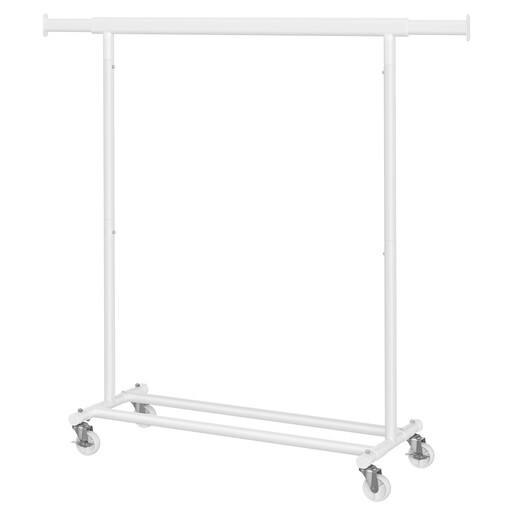
Why this product suits this profile: The width can be adjusted from 92 to 132 cm. With a depth of 45 cm and a height of 161.5 cm, this clothes rack is suitable for bedrooms, utility rooms and smaller flats.
The product data specifies a maximum static total load of 100 kg and four wheels, two of which have locking brakes. This makes it easier to assess the product than models with unclear marketing claims.
Steel tubes, extendable upper rail, two lower storage bars and tool-free assembly.
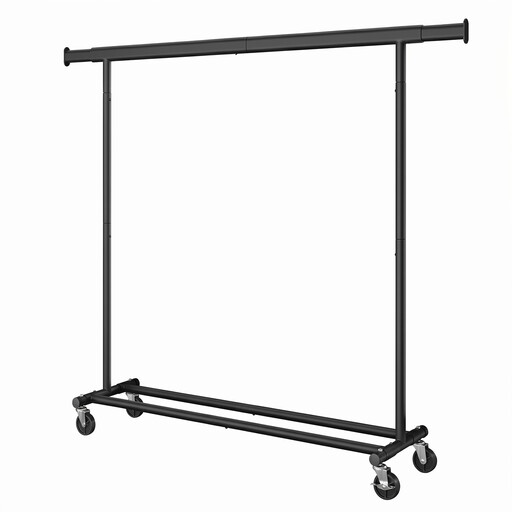
Why this product suits this profile: This version is appealing to users looking for a wider solution with a higher load capacity. The adjustment range extends from 160 to 200 cm.
The 150 kg load rating is specified as the maximum static total load. Combined with the greater width, this makes it easier to assess its suitability for large wardrobes.
Steel frame, four wheels with locking brakes, width of 160–200 cm and lower bars for boxes.
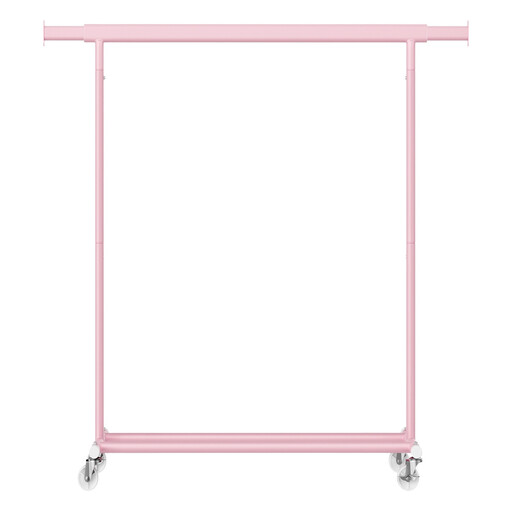
Why this product suits this profile: This colour option may be appealing for temporary clothes storage, dressing rooms or spaces where functionality is combined with a distinctive colour scheme.
The product description highlights an extendable rail, lower storage bars and lockable wheels. This directly addresses the most common considerations regarding mobility and storage space.
45 × 92–132 × 161.5 cm, steel tubes, 100 kg maximum static load and tool-free assembly.
We have put together a complete, regularly updated list of products that fully meet these strict selection criteria and the safety regulations applicable in the EU.
Place the clothes rack on a level floor wherever possible and lock the wheels before hanging clothes on it. Distribute heavy items across the entire length. This puts less strain on one side of the frame.
Check the following at regular intervals:
An extendable clothes rail should not be loaded beyond its intended range. If the side extensions are being used, place bags, hats and scarves on them only in a way that prevents the clothes rack from tipping over.
That depends on the model. The selection includes versions with a 100 kg and 150 kg maximum static total load. These figures apply when the rack is stationary and should not be equated with a guaranteed load capacity when moving it over uneven floors.
Load the rail evenly, place heavier garments towards the centre and use the locking brakes. The surface should also be level. With particularly wide or heavily loaded models, it is advisable to leave enough clearance around doors and walkways.
Yes, provided that its dimensions suit the room. Lower bars can hold storage boxes, creating additional storage space. Before buying, check the width, depth, height and the amount of room needed to move around the rack.