
Lieferung heute & morgen

Qualitätsgarantie

Willkommens-Angebote freischalten: KOSTENLOSE Lieferung | Bis zu 80 % RABATT | Kostenlose 30-Tage-JoyPlus-Testphase
App herunterladen
A clothes rail can be a practical addition to a closed wardrobe in the bedroom, hallway, dressing room or utility room. It keeps clothing visible, can be moved depending on the model and often takes up less space than a traditional wardrobe. At the same time, unclear load ratings, unsuitable dimensions or unstable construction can quickly lead to disappointing purchases.
This buying guide explains which technical details matter before you buy and which clothes rail is best suited to different living spaces and uses.
A high maximum load capacity may sound convincing at first. However, what matters is how the load is distributed and whether the floor is level. Heavy winter coats place more stress on one area than several lightweight garments. Castors, joints and plastic components can also affect the actual stability.
You should therefore check:
An extendable or height-adjustable clothes rail is flexible, but requires more room at its maximum width. If the extended rail is positioned directly against a wall, door or piece of furniture, garments may knock against it or restrict movement.
Measure the available space before buying. As well as the width and depth, take into account the castors’ movement area and the height needed for long dresses, coats or suits.
With a clothes rail with castors, the size and swivelling ability of the castors, as well as the presence of locking brakes, are important. Small castors can be difficult to move over carpets or door thresholds. Without brakes, a mobile clothes rail may shift when you take garments off.
For regular repositioning, four swivel castors, ideally with at least two featuring locking brakes, are a useful specification. Moving the rail is generally easier on smooth floors than on deep-pile carpets.
Compact dimensions are essential for a bedroom or narrow hallway. A mobile clothes rail should not only fit in the room, but also be easy to push through doorways and past other furniture.
In particular, check:
A clothes rail for bedrooms with an additional shelf or lower rail can hold boxes, shoes or bags. However, these surfaces do not automatically replace a sturdy shelf. Look for a specific load rating if you intend to store items there.
Steel or carbon steel tubes can form a sturdy basic construction. The coating protects the surface against everyday signs of use, but does not provide unlimited protection against moisture. Models designed for indoor use should be kept dry and cleaned with a soft cloth.
For a sturdy clothes rail, the tube thickness is not the only important factor. Connectors, the width of the base and the centre of gravity also matter. A tall, narrow design may be more likely to tip when loaded on one side than a wide frame.
Some models can be assembled without tools, while others require self-assembly according to the instructions. Check all push-fit and screw connections before use. Tall or telescopic constructions must stand securely on a level surface.
A children’s clothes rail should be chosen with particular care. The model must be secured against tipping, must not be used for climbing or hanging, and should not be loaded beyond its stated total capacity.
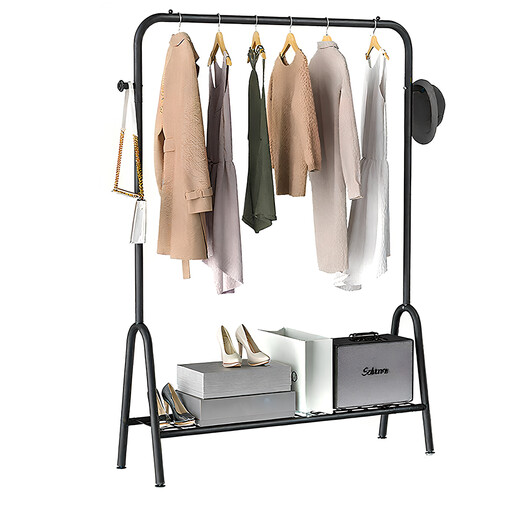
Why this product suits this profile: The single 100 cm-wide clothes rail is designed for simple storage, seasonal clothing or rooms with limited floor space.
The compact design reduces the risk of buying a construction that is too large for a small room. Check the permitted load before buying.
100 cm width, a simple single-rail design and a smaller footprint than multi-rail clothes rails.
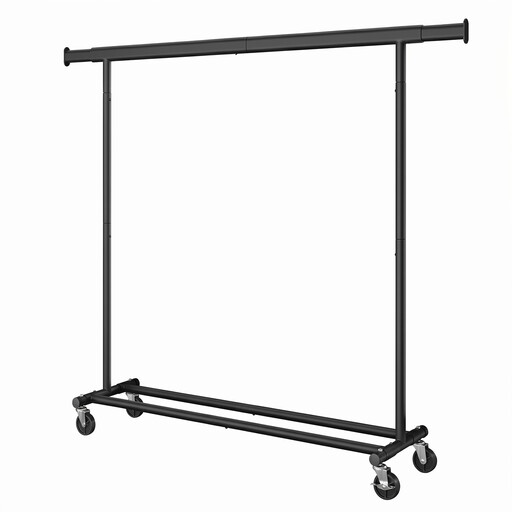
Why this product suits this profile: This mobile clothes rail offers an extendable width of 160 to 200 cm, a height of 161.5 cm and a stated static load capacity of up to 150 kg.
The width, material and load capacity are clearly specified. Two lockable castors help with positioning, although the load should still be distributed evenly.
Steel construction, four swivel castors, an extendable upper rail and two lower rails for storage boxes.
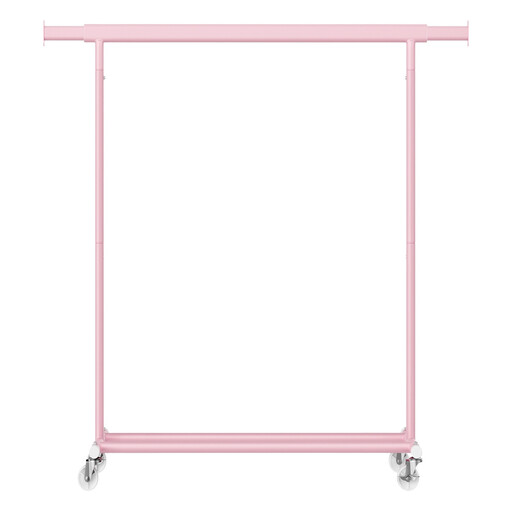
Why this product suits this profile: With an extendable width of 92 to 132 cm, a height of 161.5 cm and a stated static load capacity of 100 kg, this model is suitable for changing locations and additional clothing.
The product details specify the dimensions, weight, material and load capacity. When retracting the telescopic rail, press only from the end of the rail to avoid pinching injuries.
Tool-free assembly, swivel castors with locking brakes and lower rails for boxes or folded textiles.
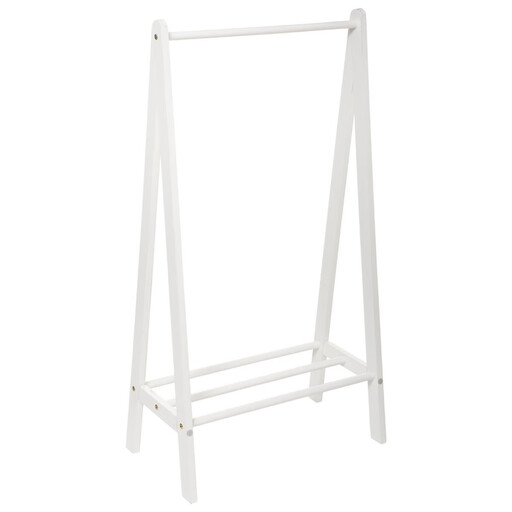
Why this product suits this profile: This 115 cm-high MDF model is designed for children’s rooms and smaller garments. The manufacturer states a maximum total load of 10 kg.
The clear load limit helps prevent the furniture from being overloaded with adult clothing. It must stand on a level surface and be secured to the wall with an anti-tip fitting.
Compact dimensions of 58 × 30 × 115 cm, a low product weight of 4.5 kg and a height suitable for children’s clothing.
An open wardrobe with several rails and storage areas is suitable if clothing is to remain visible and organised permanently. For rented homes, changing room layouts or seasonal use, however, a mobile clothes rail offers greater flexibility.
A simple clothes rail is sufficient if you only need to hang a few jackets, shirts or costumes. For boutiques, events or extensive wardrobes, extendable models with castors and a higher stated load capacity are more practical. For commercial use, you should also consider the amount of daily movement, the condition of the floor and safe storage outside opening hours.
We have put together a complete, regularly updated list of products that fully meet these strict selection criteria and the safety regulations applicable in the EU.
That depends on how you intend to use it. A lower load capacity is often sufficient for lightweight clothing. Coats, suits or several full clothes hangers require a higher stated load capacity. The key is to distribute the load evenly and not exceed the manufacturer’s specification.
Place it on a level, stable surface and avoid loading it on one side only. An anti-tip fitting is particularly important for tall telescopic models or a children’s clothes rail. The castors should be locked when hanging clothes.
Its lifespan depends on the material, load, assembly and surroundings. Regularly check screws and push-fit connections, remove dust and moisture, and do not use an indoor clothes rail outdoors permanently unless the manufacturer specifically allows it.