
Lieferung heute & morgen

Qualitätsgarantie

Willkommens-Angebote freischalten: KOSTENLOSE Lieferung | Bis zu 80 % RABATT | Kostenlose 30-Tage-JoyPlus-Testphase
App herunterladen
A clothes rail can provide extra storage in a rented home, a small bedroom or a narrow hallway. But product photos and big promises don’t always lead to the right buying decision. What matters is the actual size, weight capacity and how you plan to use it.
A model can look narrower in a product photo than it really is in your room. As well as the width, consider its depth, height and the space you need to move around it. If you’re choosing a coat stand for your hallway or bedroom, make sure doors, radiators, light switches and walkways remain unobstructed.
An L-shaped clothes rail can work well in an alcove. It makes use of a corner, but you’ll still need enough room for hangers and to open wardrobe or room doors.
Having several shelves doesn’t automatically mean every level can hold heavy items. Check the maximum static load separately for the clothes rail, hooks, shoe shelf and shelves. Unevenly distributed weight can affect stability.
A freestanding clothes rail should be placed on a level floor. Anti-slip feet can help keep it in place and protect the floor, but they don’t replace even weight distribution.
An open coat stand is practical because your clothes are easy to reach. However, unlike a closed wardrobe, it won’t protect textiles from dust. For metal tubing, tube dimensions, surface coating and connectors are all worth checking. If the shelves are made from chipboard, follow the care instructions, particularly when it comes to protecting them from prolonged exposure to moisture.
Freestanding options are often more straightforward in rented homes, as they don’t require drilling. A wall-mounted clothes airer, on the other hand, needs a suitable wall and secure fixings. Before installing it, check that the wall material is compatible with the fixings supplied.
Measure the area you have in mind at several points. In a narrow hallway, compact dimensions and a shallow depth are important. A model with a bench also needs extra room for sitting down and standing up.
When choosing a space-saving coat stand, check:
The weight capacity should suit how you plan to use the rail. Coats and full bags put more strain on hooks and rails than lightweight jackets. A product with a maximum load of 10 kg is different from a clothes rail with shelves where the capacity of each shelf is listed separately.
Several hooks and shoe compartments can be useful for families. Singles or couples with fewer clothes may not need a large combination of a bench, cupboard and shelves.
A freestanding coat stand can usually be moved around, making it a good choice if your room layout changes. In a narrow corner, the size of its base may be an important deciding factor.
A wall-mounted clothes airer, by contrast, uses wall space instead of floor space. When choosing one, consider the line length, maximum load, tensioning mechanism and whether it folds flat against the wall. This makes it a useful option for bathrooms, balconies, kitchens or utility rooms, provided there’s a suitable surface for installation.
The recommendations below group the models according to different requirements. The details are based on the product information provided. Before use, check the load limits again in the relevant product description and assembly instructions.
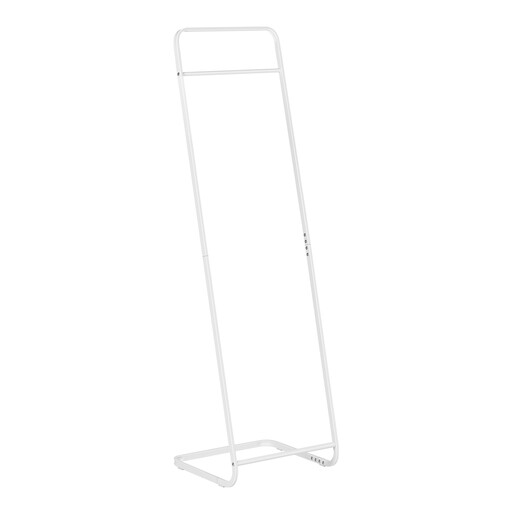
Why this product suits your needs: Measuring 40 x 40 x 140 cm, this freestanding clothes rail fits neatly into a corner of the hallway, bedroom or dressing room. There’s space underneath for shoes or storage boxes.
The clearly stated footprint and maximum load of 10 kg make it easier to plan realistically. A horizontal support bar at the base is designed to reduce wobbling.
L-shaped design, metal tubing and no need for permanent wall fixings.
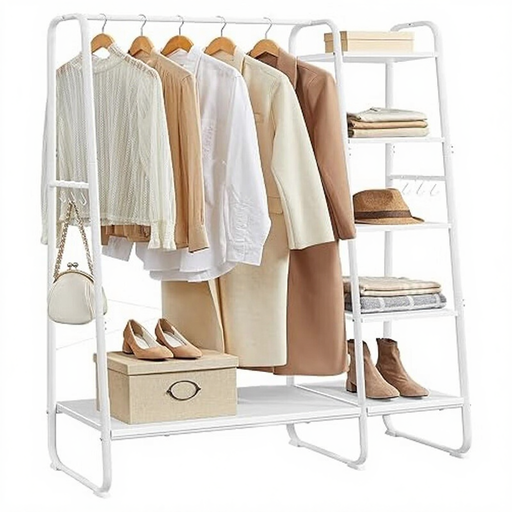
Why this product suits your needs: With a clothes rail, five shelves and six hooks, this model is ideal if you want to organise clothes, shoes and accessories in one place.
The product details list separate load limits: 40 kg for the clothes rail, 4 kg per hook and different limits for the shelves.
120 cm wide and 160 cm high, with a steel frame, chipboard components and non-slip feet.
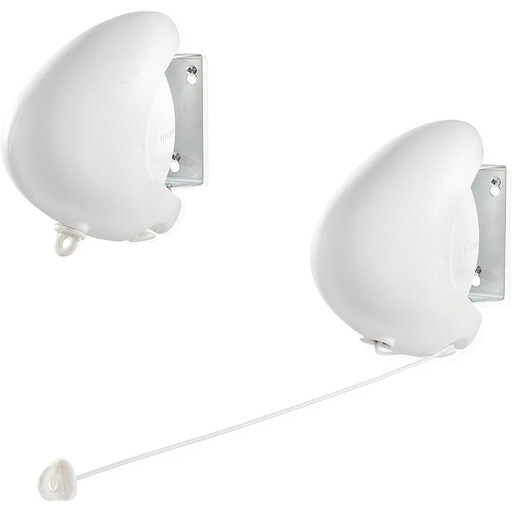
Why this product suits your needs: If you don’t have floor space for a conventional clothes airer, you can use this extendable washing line in the bathroom, on the balcony or in another suitable room.
The line extends to a usable length of up to 8 m and can hold a maximum load of 5 kg. Once retracted, the casing folds flat against the wall.
Swivelling casing, retracting and re-tensioning mechanism, and suitable for indoor and outdoor use.
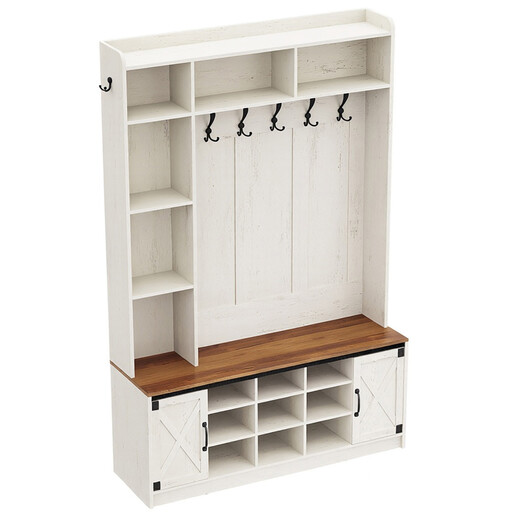
Why this product suits your needs: With a bench, seven hooks, 15 open compartments, cupboard units and overhead storage, this combination is designed for households with several people.
At 40.8 x 120.5 x 191.5 cm, this model should be measured carefully before you buy. The product details also state that the bench can hold up to 150 kg.
Adjustable, removable shelves and a dismantlable design that’s convenient when moving home.
We’ve put together a complete, regularly updated list of products that meet these strict selection criteria and fully comply with the safety regulations applicable in the EU.
It depends on how you plan to use it. A lower load capacity may be enough for a few jackets and shirts. For coats, bags and shoes, check the limit for each component separately. The total load matters, but so does distributing the weight evenly.
A clothes rail with a shoe shelf can combine several functions and help you avoid needing extra furniture. However, measure its depth and allow enough room to walk past it. In a very narrow hallway, a slim corner model or a wall-mounted option may be more practical.
Before installation, check the type of wall, fixing points and distance between the walls. Observe the maximum load and don’t extend the line beyond its intended limit. If you’re renting, also check whether drilling is permitted.