
Lieferung heute & morgen

Qualitätsgarantie

Willkommens-Angebote freischalten: KOSTENLOSE Lieferung | Bis zu 80 % RABATT | Kostenlose 30-Tage-JoyPlus-Testphase
App herunterladen
A clothes rail can provide extra storage in your hallway, bedroom, dressing room or child’s room. Boutiques and retailers can also use one to display clothes neatly. However, designs vary considerably in how they are assembled, how much weight they can hold, how much floor space they take up and how practical they are for everyday use.
A model may look narrow, yet take up more room than expected because of an awkward base or coat hangers that stick out. So check the overall dimensions, including the frame, base and clearance from the wall. For narrow hallways, a wall-mounted clothes rail may be a better choice than a freestanding one.
A rail for a few blouses has different requirements from a coat stand for winter coats. If the maximum weight capacity isn’t given, it’s hard to know whether the product is suitable for how you plan to use it. Where the capacity is stated, distribute the weight evenly. For example, the WOLTU model has a stated maximum load of 10 kg.
With a wall-mounted coat rack, safety depends largely on the wall surface and the right fixings. According to the product details, the two MyGift wall-mounted options are supplied without mounting hardware. You’ll need suitable wall plugs and screws for concrete, brick, plasterboard or wood. Don’t put any weight on a wall-mounted rack until all the fixing points are secure.
Before buying, measure the available space in three places:
Vertical or wall-mounted options work well in small rooms. A wall shelf with a clothes rail also gives you somewhere to keep accessories, bags or folded clothes.
Wood, metal or a combination of the two affects the look, care and stability of a clothes rail. Metal frames can be cleaned with a dry cloth and often suit a pared-back interior. Solid wood has a different finish, but should be protected from moisture and harsh cleaning products.
Also look for:
An open clothes rail gives you quick access to the clothes you wear most often. In a bedroom, it can provide extra clothes storage alongside a closed wardrobe. In retail, multiple hanging levels, rings or a clearly visible display area can be useful. A children’s clothes rail should be positioned securely to prevent it tipping. Taller freestanding furniture should also be fixed to the wall.
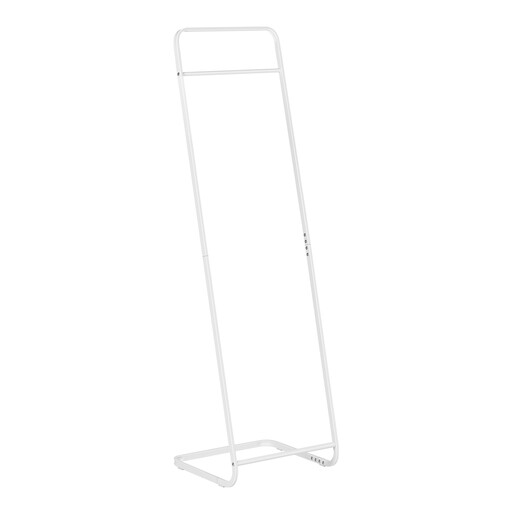
Why it suits this profile: This freestanding clothes rail is designed for corners in the bedroom, hallway or dressing room, and doesn’t need permanent wall fixings.
The product details give dimensions of 40 × 140 × 40 cm and a maximum load of 10 kg. This makes it easier to judge the space it will take up and how you can use it.
L-shaped design, metal frame and space underneath for shoes or storage boxes.
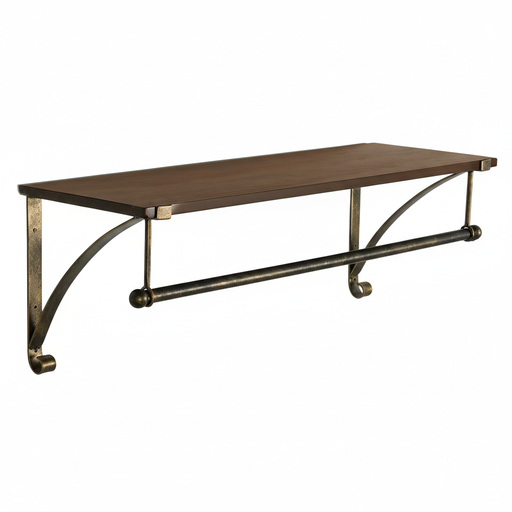
Why it suits this profile: This wall-mounted design combines a shelf with a clothes rail. It’s designed for hallways, bedrooms, wardrobe areas or boutique spaces.
The overall dimensions are clearly stated: 90 cm wide, 30 cm deep and 30 cm high. You’ll need to choose mounting hardware separately to suit your wall.
A shelf and hanging rail in one; a combination of solid wood and metal with bronze-coloured accents.
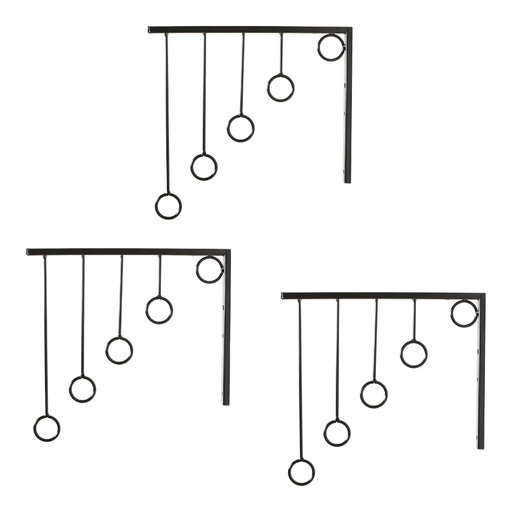
Why it suits this profile: These three separate wall-mounted racks are ideal for different areas of the home or for displaying clothes neatly in a boutique or shop.
Each rack has five rings arranged vertically. The dimensions of each one are 27.9 × 29.2 × 2 cm, and the weight of 0.5 kg per piece is also stated.
Set of three in black metal; the vertical layout keeps clothes and accessories visible and neatly separated.
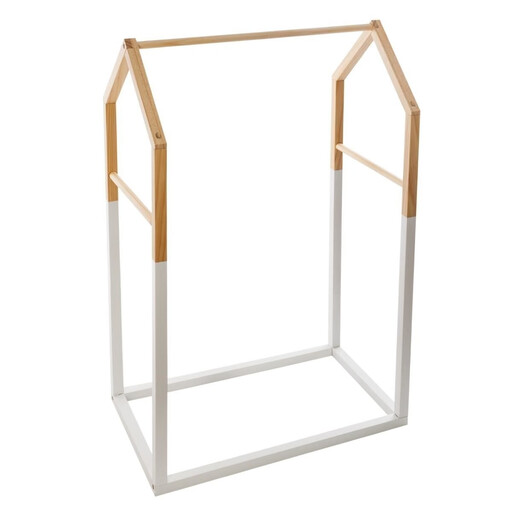
Why it suits this profile: This children’s clothes rail is designed for a child’s room and offers compact, open storage, measuring 60 × 37 × 100 cm.
The safety information highlights the need to secure it to the wall and the risk of tipping. Children should not climb on or hang from the furniture.
Pine wood construction, open design and house-shaped frame; product details state that mounting hardware and instructions are included.
We’ve put together a complete, regularly updated list of products that meet these strict selection criteria and fully comply with the safety regulations in force in the EU.
Before installing a wall-mounted coat rack, check the wall for cables and pipes, solid fixing points and suitable areas for mounting. In rented homes, a freestanding clothes rail may be the more practical choice, as long as there’s enough floor space.
To help it last longer:
It depends on the design and the clothes you plan to hang. A compact corner model may fit in a 40 × 40 cm floor space. For a wall-mounted option, consider not only its width but also the clearance from the wall and walkway. Leave a few extra centimetres so coat hangers can move freely.
There’s no one-size-fits-all answer. It depends on the design, fixing points, wall material and how the weight is distributed. A wall-mounted option saves floor space, but needs suitable wall plugs and screws. You can set up a freestanding model without drilling, but it needs to be positioned securely and not overloaded.
Its lifespan depends on the materials, assembly, load and care. Checking the screws and joints regularly can help you spot wear early. For wall-mounted models, you should also check that the fixings are still secure.