
Lieferung heute & morgen

Qualitätsgarantie

Willkommens-Angebote freischalten: KOSTENLOSE Lieferung | Bis zu 80 % RABATT | Kostenlose 30-Tage-JoyPlus-Testphase
App herunterladen
A clothes rail might seem like a simple purchase. But anyone who has experienced an overloaded rail giving way or a wobbly rack scratching the floor knows that the right choice is crucial. Many models overpromise and underdeliver, leading to frustration and unnecessary expense. This guide will help you navigate the common pitfalls and find a solution that truly fits your space and your needs.
Before you make a decision, it's important to be aware of the most common issues found in low-quality products.
To avoid these problems, you should check three core parameters. These will determine the durability, functionality, and safety of your new clothes storage solution.
The maximum load capacity, specified in kilograms (kg), is the most important indicator of stability. A standard clothes rail often only supports 15–20 kg, which is enough for a few shirts and light jackets. For a full wardrobe, including coats and suits, a heavy-duty clothes rail made of robust metal with a capacity of 50 kg or more is necessary. Pay attention to the tube diameter and material thickness. Powder-coated steel is an excellent choice as it is resistant to scratches and rust.
The mounting method determines how and where you can use the clothes rail.
Beyond pure functionality, aesthetics also play a role. A white clothes rail blends discreetly into bright, Scandinavian-inspired interiors, while black models in an industrial style create striking accents. Additional hooks for bags or integrated shelving units maximise storage space and turn the clothes rail into a multifunctional piece of furniture.
Here are some recommendations tailored to specific living situations and needs.
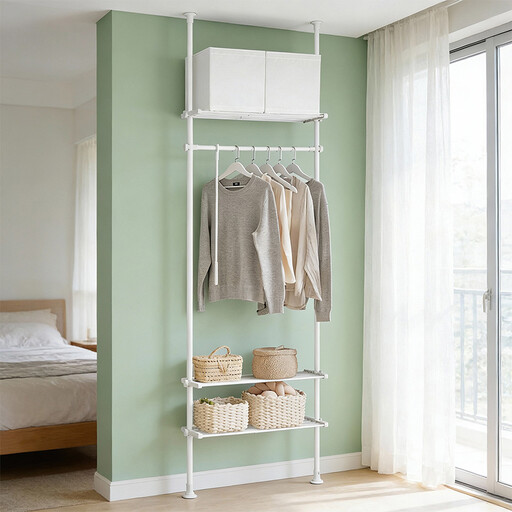
Why This Fits Their Persona: Ideal for renters who are not allowed to drill or need an adaptable solution for alcoves or rooms with variable ceiling heights. The system makes optimal use of vertical space.
It bypasses the "incorrect dimensions" trap. Thanks to the telescopic rods, which are adjustable in height (233–295 cm) and width (52–80 cm), it adapts precisely to the available space.
No-drill installation via a tension system; protects walls and ceilings. Integrated shelves provide additional storage for folded clothes or accessories.
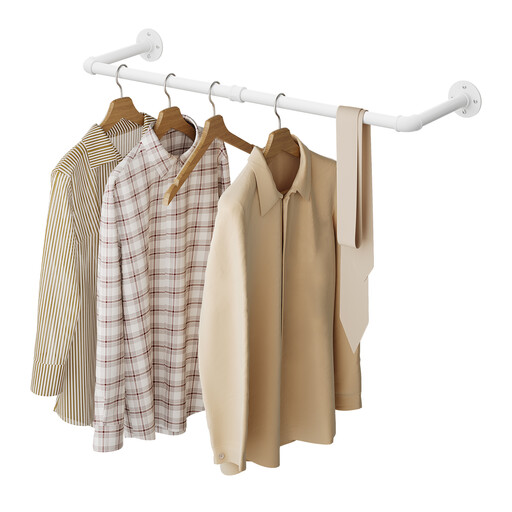
Why This Fits Their Persona: Perfect for anyone looking for functional storage that also makes a clear design statement. The simple, white pipe aesthetic is an ideal match for minimalist or industrial interior styles.
It avoids the "unstable construction" trap. The robust metal construction and secure wall mounting ensure a high load capacity of up to 50 kg without wobbling or sagging.
Extremely space-saving as no floor space is required. The scratch-resistant finish and solid workmanship ensure a long service life.
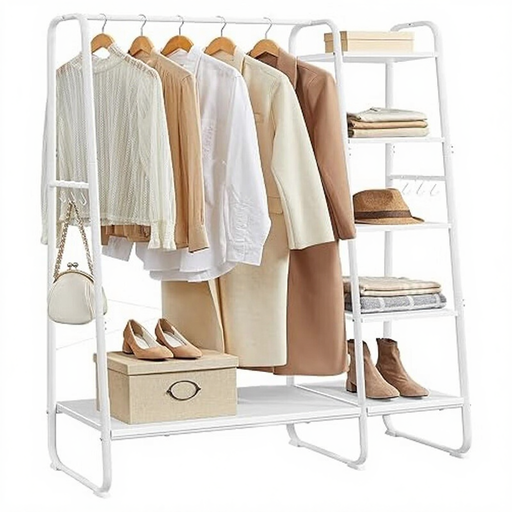
Why This Fits Their Persona: This solution functions as a complete open wardrobe. It is ideal for families or individuals with a large wardrobe who want to organise clothes, shoes, and accessories all in one place.
Solves the problem of insufficient capacity and stability. The sturdy steel frame and particleboard construction offer a total static load capacity of up to 220 kg, distributed across the rail, hooks, and shelves.
Maximum organisation through the combination of a 120 cm wide clothes rail, 6 hooks, and 5 sturdy shelves. Non-slip feet protect the floor from scratches.
We have compiled a complete, up-to-date list of products that fully meet these strict selection criteria and all relevant safety regulations.
The load capacity varies greatly depending on the model and material. Simple, freestanding racks often only hold 15–20 kg. Wall-mounted systems made of metal or heavy-duty clothes racks can support 50 kg, 100 kg, or even more, depending on the construction and wall condition. Always check the manufacturer's specified maximum load capacity and compare it with your needs.
A no-drill clothes rail usually works as a telescopic system. The rods are tension-mounted between the floor and ceiling or between two walls. Pressure is created via a spring mechanism or by twisting the rods, which holds the system securely in place. Installation is typically tool-free and leaves no marks on walls or ceilings, making it ideal for rental properties.
For maximum durability and stability, metal, particularly steel, is the most common choice. A powder coating or a high-quality paint finish protects the metal from rust and scratches. For telescopic systems, the connectors should also be made of robust plastic (e.g., ABS) rather than brittle, cheap plastic to ensure a long service life.