
Lieferung heute & morgen

Qualitätsgarantie

Willkommens-Angebote freischalten: KOSTENLOSE Lieferung | Bis zu 80 % RABATT | Kostenlose 30-Tage-JoyPlus-Testphase
App herunterladen
A clothes rail can provide extra storage in small flats, rented rooms or bedrooms. To ensure it works well in everyday use, however, you should look beyond the design. The key factors are dimensions, load capacity, stability and how you intend to use it.
Many disappointing purchases result from three typical pitfalls:
Check whether the stated capacity applies to the entire structure or only to the clothes rail. For a clothes rail with wheels, you should also check whether the load rating applies when stationary or when moving the rail.
Depending on the model, a sturdy clothes rail may be made from steel, solid wood, MDF, chipboard or a combination of these materials. However, the material alone is not a sufficient indicator of quality. Tube thickness, connection points, feet and workmanship all affect how well the rail performs in everyday use.
Measure the available space before buying. Pay attention to:
A model with a shelf can hold shoes, boxes or bags. A clothes rail with shelf requires more floor space, but may eliminate the need for an additional shoe rack. For narrow entrance areas, a vertical coat stand with hooks may be more suitable.
Wheels increase flexibility, but are not automatically an advantage. Check whether at least some of the wheels can be locked. This keeps the clothes rail in its intended position. Plastic wheels may be suitable for hard floors; on delicate flooring, it is advisable to check the design and the manufacturer's instructions.
A height-adjustable clothes rail or one with an extendable rail can be adapted to different garments and rooms. Telescopic rails should be adjusted slowly and in accordance with the instructions. For models with hooks, the individual load capacity is important, as bags hung from a single hook create a concentrated load.
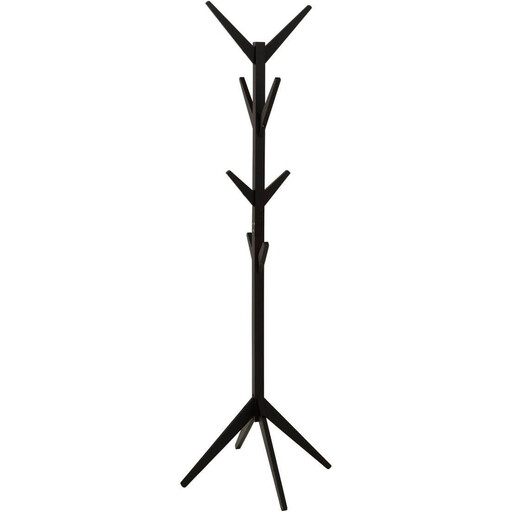
Why this product suits the profile: This freestanding coat stand requires no wall mounting and offers a simple solution for jackets, scarves and bags in the hallway or bedroom, with 8 hooks.
The stated maximum total load is 5 kg. This makes it clear that the rail is intended for lighter clothing and accessories, rather than being mistaken for a heavy-duty storage solution.
8 hooks, a height of 173 cm and a footprint of 62 × 62 cm; assembly required.
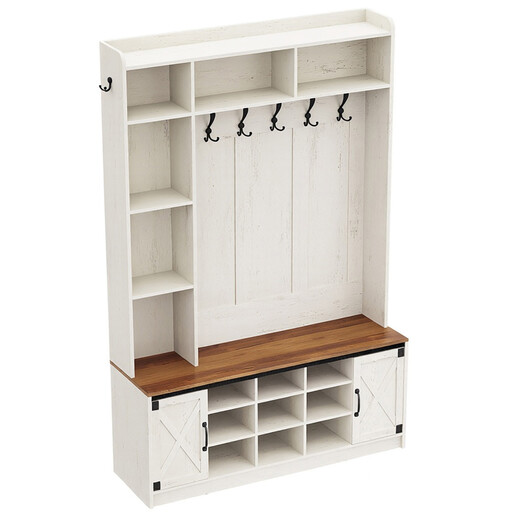
Why this product suits the profile: The combination of a clothes rail, 7 hooks, open compartments, a cupboard section and a bench is ideal for households looking to combine several storage functions in one piece of furniture.
The design features 15 open compartments, 7 hooks and adjustable or removable shelves. Before buying, compare the dimensions of approximately 40,8 × 120,5 × 191,5 cm with the available space.
Bench with a stated load capacity of 150 kg; steel and chipboard construction; RGB lighting with 25 colour options according to the product description.
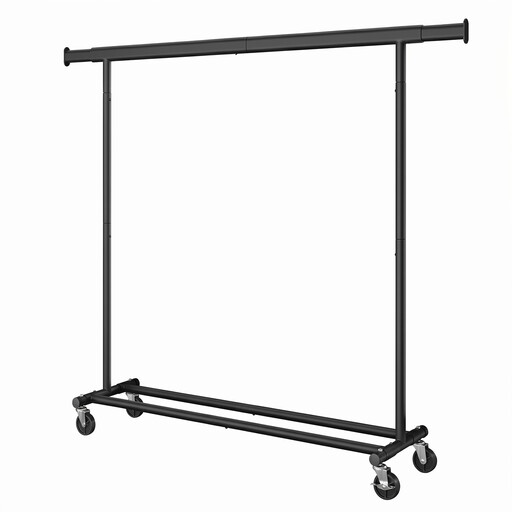
Why this product suits the profile: As a mobile clothes rail with an extendable rail, this model is suitable for bedrooms, utility rooms, dressing rooms or spaces where the rail needs to be moved regularly.
Four swivel castors, two of which can be locked, make the rail easy to move and position. The width can be extended from 160 to 200 cm; the telescopic rail should be adjusted in accordance with the instructions.
Steel frame, 45 cm depth, 161,5 cm height and a stated static total load of 150 kg; tool-free assembly according to the product description.
We have put together a complete, regularly updated list of products that fully meet these strict selection criteria and the safety regulations applicable in the EU.
Place the furniture on a level, stable surface. Heavy garments should be hung as low as possible or towards the centre of the clothes rail. With a coat stand with hooks, bags and rucksacks should not all be hung on one side.
After assembly, check all screw connections and tighten them if necessary. If the rail has wheels, engage the wheel brakes before hanging heavy clothing. Coated metal surfaces can generally be cleaned with a soft, slightly damp cloth. Avoid abrasive cleaning products, as they can damage the surfaces.
This depends on the construction and the manufacturer's stated capacity. Lightweight models may, for example, be designed to hold just a few kilograms, while certain steel models specify a considerably higher static total load. It is important to consider the load ratings for the clothes rail, hooks, shelves and complete unit separately.
Yes, provided the wheels are suitable for the intended flooring and can be locked. Four swivel castors are practical if you need to move the rail frequently. At its final position, at least two wheels should be locked to prevent the clothes rail from rolling away unintentionally.
There is no single answer. Its lifespan depends on the material, assembly, load, moisture and how often it is moved. Regularly checking the connections and distributing the weight evenly can help maintain its usability. For your purchase decision, specific details about the material, load limits and guarantee are more useful than general advertising claims.