
Lieferung heute & morgen

Qualitätsgarantie

Willkommens-Angebote freischalten: KOSTENLOSE Lieferung | Bis zu 80 % RABATT | Kostenlose 30-Tage-JoyPlus-Testphase
App herunterladen
Clothes, towels and bathroom accessories do not necessarily require a lot of storage space. What matters is whether clothes rails and towel rails are suitable for the size of the room, the intended load and the installation method. In small flats, dressing rooms, offices or bathrooms, freestanding and wall-mounted solutions can help keep things tidy without adding extra cupboards.
However, buying the wrong product can often lead to unnecessary costs. Products may look appealing but prove impractical in everyday use. You should therefore check these three common pitfalls before placing your order:
Steel, stainless steel, aluminium, wood or combinations of these materials are commonly used for clothes and towels. Steel constructions can offer a high load capacity, but require suitable corrosion protection in the bathroom. Stainless steel and aluminium are often described as rust-resistant in product specifications. Nevertheless, their suitability depends on the workmanship, coating and prolonged exposure to moisture.
With a metal clothes hanger, the shape and coating are also important. A non-slip surface can help prevent clothes from sliding off the hanger. In damp rooms, you should follow the care instructions and keep water away from untreated wooden surfaces.
Pay attention to the overall load capacity and – for hooks or individual rails – the load capacity per element. A product with several hooks is not automatically designed to hold many heavy items. Coats, bags and wet towels place significantly more weight on the construction than lightweight shirts.
According to the product specifications, the 5five double clothes rail has two hanging rails, dimensions of 98 × 43 × 145 cm and a maximum load of 49 kg. This limit should not be exceeded. With wall-mounted models, the load-bearing capacity of the mounting surface is also crucial.
A freestanding clothes rail can be positioned flexibly and is suitable for rented flats, bedrooms or entrance areas. However, it requires a stable floor surface and sufficient room to move around it. A wall-mounted clothes rail saves floor space, but requires a suitable wall and secure fixing.
Several options are available for the bathroom:
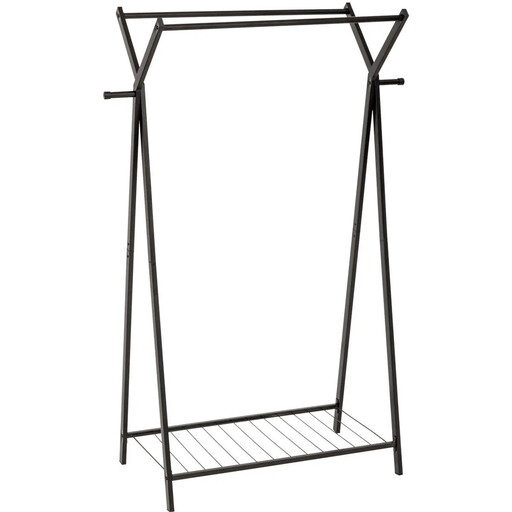
Why this product suits this profile: The double clothes rail has two hanging rails and provides additional space for clothing in the bedroom, loft or a small dressing area.
The product specifications provide specific dimensions, two rails and a maximum load of 49 kg. This makes it easier to compare the space required with the available room in advance.
Steel construction, two hanging rails and a freestanding design; according to the specifications, self-assembly is intended for one person.
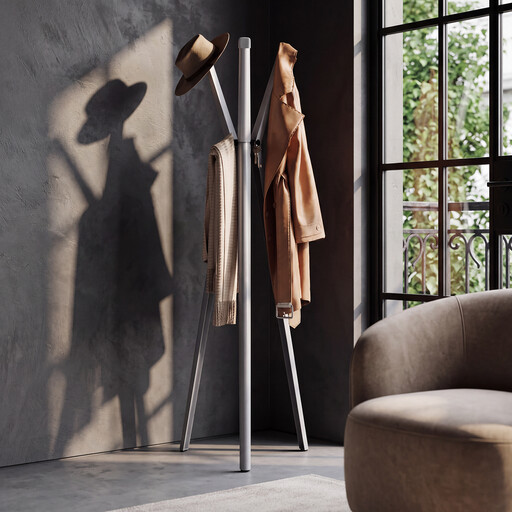
Why this product suits this profile: The tree-shaped design with six hooks fits into hallways, bedrooms, offices and entrance areas when you want jackets, bags, scarves and hats close at hand.
The specifications state an overall load capacity of up to 30 kg and up to 5 kg per hook. This makes it easier to plan how the product can be used.
Aluminium alloy, non-slip feet and tool-free assembly according to the product description.
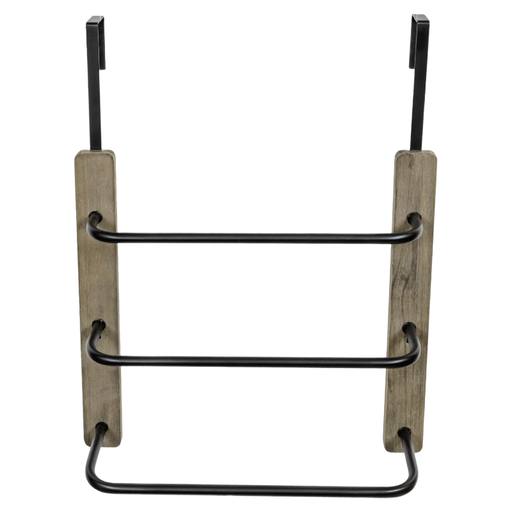
Why this product suits this profile: The over-the-door towel rail makes use of otherwise unused space and provides three metal bars arranged one above the other for towels or dressing gowns.
The maximum door thickness of up to 4.4 cm is specified. Before buying, compare this with your own door and door rebate.
Three bars, dimensions of 56.9 × 45.2 × 19.6 cm and tool-free installation according to the product description.
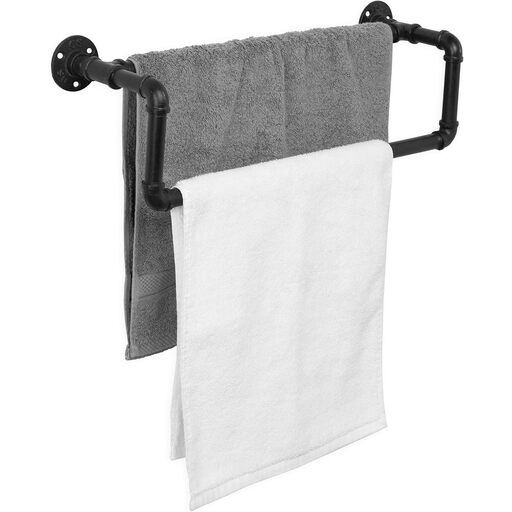
Why this product suits this profile: The two-tier towel rail is suitable for busy bathrooms, utility rooms or areas where towels and lightweight clothing need to be hung separately.
According to the specifications, the construction has two separate bars. This reduces the need to install several holders in different places.
Wall-mounted design, matt black metal finish and dimensions of 55.1 × 13.5 × 14.7 cm according to the product description.
We have put together a complete, regularly updated list of products that fully meet these strict selection criteria and the safety regulations applicable in the EU.
This depends on the model’s width and depth, as well as the clothing being hung. In addition to the product dimensions, you should allow extra room so that jackets and hangers do not hit furniture or doors. For narrow hallways, wall-mounted models or an over-the-door towel rail may be more suitable.
They can provide space-saving storage if the bars extend upwards rather than far into the room. However, check how far the rail projects and leave sufficient clearance from the shower, washbasin and door. Several wet towels should also not be hung so closely together that air circulation is restricted.
The type of wall, suitable wall plugs and the installation instructions for the particular product are all crucial. With tiled walls, you should avoid drilling into the grout wherever possible; pipes may run behind the surface. If installation materials are not supplied, screws and wall plugs must be selected separately to suit the wall surface.