
Lieferung heute & morgen

Qualitätsgarantie

Willkommens-Angebote freischalten: KOSTENLOSE Lieferung | Bis zu 80 % RABATT | Kostenlose 30-Tage-JoyPlus-Testphase
App herunterladen
Organising clothes in urban living spaces presents a unique challenge. Limited space demands solutions that are both functional and space-efficient. The choice of a suitable wardrobe storage system depends on factors such as available floor space, wall structure, and individual organisational needs. This guide analyses various types of storage systems and presents a selection of products based on their technical specifications and practical utility.
Before making a decision, an analysis of fundamental parameters is necessary. The choice between freestanding and wall-mounted systems is of central importance.
Freestanding Systems (Garment Racks, Open Wardrobes): These models offer high flexibility, as they can be positioned without wall mounting and moved as needed. They are ideal for renters who cannot or do not wish to make structural modifications. A coat rack in the hallway or an open wardrobe in the bedroom can serve as a complete storage unit. Pay close attention to stability and dimensions to ensure the unit is sturdy and does not obstruct walkways.
Wall-Mounted Systems (Wall Racks, Wall-Mounted Clothing Rails): These solutions utilise vertical space, making them extremely space-efficient. A wall-mounted coat rack or a wall-mounted clothing rail is ideal for narrow hallways or small rooms where every square inch of floor space counts. A load-bearing wall is a prerequisite. For plasterboard walls, special hollow-wall anchors are required to ensure a secure installation and support the specified load capacity.
The choice of material directly influences the product's durability and stability.
The following products have been selected for their specific design features and functional properties.
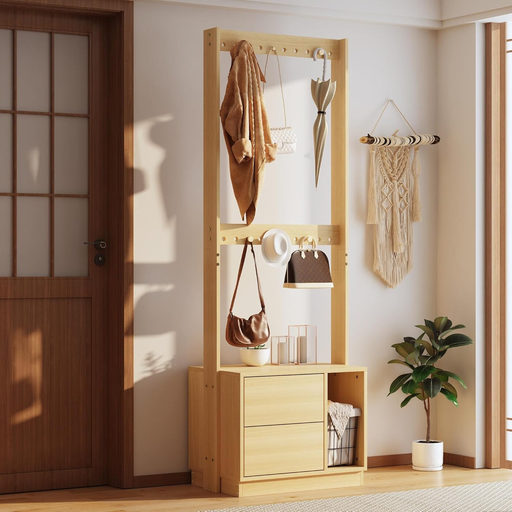
Why we're featuring this product: This model combines multiple functions in a compact, freestanding unit. With dimensions of 60 cm in width and 40 cm in depth, it is designed for areas needing a complete yet space-saving hallway wardrobe or a supplementary unit in the bedroom. The integration of drawers, hooks, and hanging sections provides a structured organisational solution.
Pros:
Who it's for: Individuals looking for a ready-to-use, all-in-one solution for bedroom wardrobe storage or hallways, who value a mix of open and enclosed storage space.
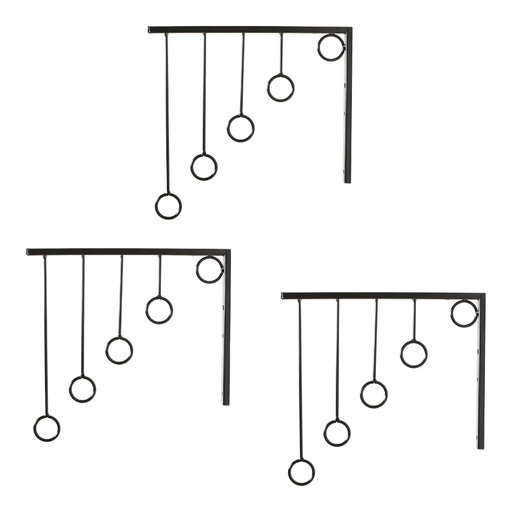
Why we're featuring this product: This set of three wall-mounted brackets uses a vertical design principle to organise clothing in a space-saving manner. Each bracket features five cascading rings that keep garments separate and visible. This system is particularly suitable for displaying clothing in boutiques or for organising outfits in a walk-in wardrobe.
Pros:
Who it's for: Users with very limited space, owners of small boutiques, or individuals seeking a minimalist, display-oriented solution for organising select items of clothing.

Why we're featuring this product: This industrial-style wall rack is distinguished by its high load capacity and 3-in-1 functionality. It combines a wide top shelf, a sturdy clothing rail, and five movable hooks. According to the manufacturer, the top shelf supports up to 25 kg and the clothing rail up to 20 kg, qualifying it for storing heavy jackets and coats.
Pros:
Who it's for: Users who need a heavy-duty, wall-mounted solution for an entryway or dressing room and prefer the functional, rugged character of industrial design.
Once the functional organisation of the space is established, smaller decorative elements can also contribute to the overall atmosphere. For accents that can be both visual and auditory, a selection of hanging bells can add a personal touch to a room.
1. What is the difference between a garment rack and a coat rack? Technically, the terms are often used interchangeably. A garment rack typically refers to a simple rail on a frame for hanging clothes. A coat rack is often more multifunctional and may include additional elements like hooks for coats, a shelf for hats, or an umbrella stand. It is more commonly found in an entryway (the "garderobe" or cloakroom area).
2. How much weight can a wall-mounted clothing rail support? The load capacity depends on three factors: the material and construction of the rail itself, the type of wall (solid vs. hollow), and the quality of the mounting hardware used (screws and anchors). Manufacturer specifications, such as the 20 kg for the Woltu model, typically refer to installation on a solid brick or concrete wall.
3. How can I store clothes in a small flat without a wardrobe? An open wardrobe or a sturdy garment rack is a common solution. It creates hanging space and can be supplemented with boxes or baskets on lower shelves. For very narrow spaces, wall-mounted systems like a wall-mounted clothing rail or vertical hanging systems are ideal as they do not take up any floor space.
Authored by: Joybuy Product Recommendation Officer