
Lieferung heute & morgen

Qualitätsgarantie
App herunterladen
Kategorien
Structured and accessible clothing storage is the foundation of an organized home and an efficient daily routine. The choice of the right system depends on specific requirements: available space, the type of items to be stored, and the frequency of access. Whether for seasonal storage of bedding, daily organization in the wardrobe, or utilizing under-bed space—the right tools optimize existing space and protect textiles.
This guide analyzes the technical criteria for selecting storage solutions and presents various models based on their material properties and design features.
The decision for a storage system should be based on an analysis of material, capacity, and functional details.
The material determines the durability, breathability, and ease of care of a storage solution.
Precisely measure the intended storage space—be it a shelf, the space under the bed, or the upper area of a wardrobe. Compare these measurements with the product dimensions. The volume, often indicated in liters (L), provides a quantitative measure of capacity. For instance, a 90-liter bag is suitable for bulky items like winter duvets or multiple pillows. Smaller collapsible bins of 20 to 30 liters are ideal as wardrobe organizers for accessories, T-shirts, or underwear.
Certain design elements significantly enhance practical usability.
Based on the criteria mentioned above, we present a selection of products that stand out for their specific technical features and areas of application.
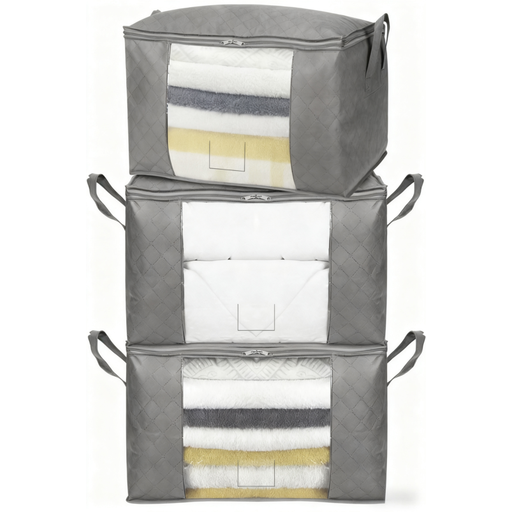
Why We Recommend This Product: This storage bag set combines several functional features. The clear window on the front facilitates organization, as the contents are immediately visible. The dimensions of 48 x 35 x 20 cm per bag are suitable for most standard wardrobe shelves. The 3-pack allows for a uniform and scalable organization system.
Pros:
Who It's For: Individuals who want to store clothes, accessories, or light bedding in closets or on shelves while maintaining a clear overview. Ideal for seasonal wardrobe rotation.
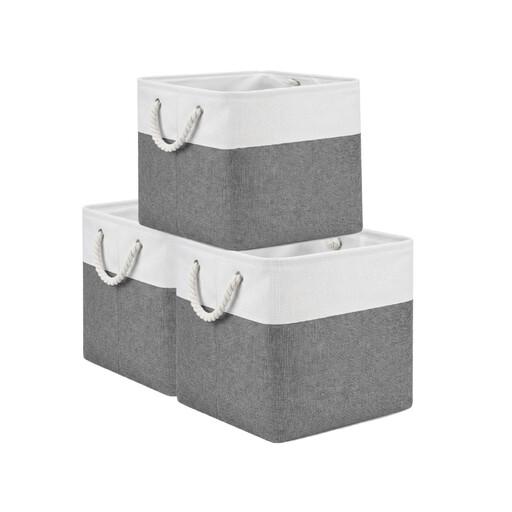
Why We Recommend This Product: These fabric storage boxes focus on a combination of functionality and aesthetics. The open cubes, measuring 28x28 cm, fit into many common shelving units (e.g., Kallax). The thick rope handles are not only a design element but are also robust and comfortable for transport.
Pros:
Who It's For: Users looking for open and easily accessible storage for shelves who also value a decorative appearance. Well-suited for living areas, offices, or children's rooms.
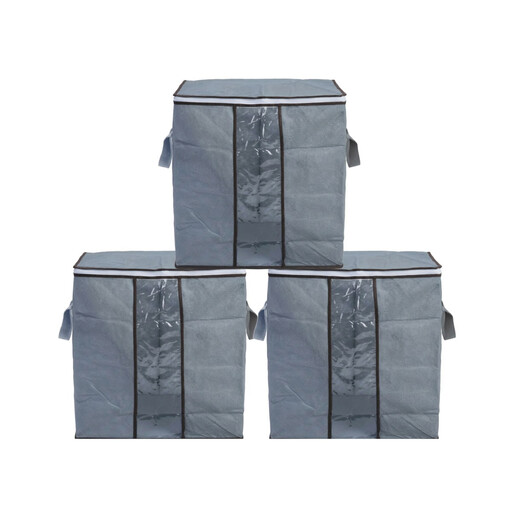
Why We Recommend This Product: The main feature of this product is its high capacity. At 90 liters per bag, it offers maximum storage space for very bulky items. According to the manufacturer, the handles are reinforced with two additional layers of thick fabric, which increases the load-bearing capacity and makes them ideal for heavy contents like duvets or winter coats.
Pros:
Who It's For: Households with a high demand for storage space for bulky textiles. Particularly useful for storing seasonal items in the basement, attic, or under the bed.
The products presented cover specific use cases. For users seeking modular, customizable, or other space-saving solutions, a wide range of organizational aids exists. These include hanging organizers, vacuum bags, or stackable box systems. You can find an overview of other innovative products for home organization in our category for klappbares haus.
1. What is the best way to store clothes to save space? To maximize space, the vertical folding technique (e.g., the KonMari method) is recommended, where clothes are folded into small, standing packets. This provides a better overview in drawers and boxes. For bulky textiles like winter jackets or duvets, vacuum bags can significantly reduce volume.
2. What material is suitable for clothing storage boxes? Breathable materials such as cotton canvas, linen, or polyester-based fabrics are advantageous for long-term clothing storage. They allow air to circulate and help prevent moisture buildup and musty odors. For short-term storage or protection from water, plastic boxes are also an option, but textiles should be completely dry when stored inside.
3. How do I protect clothes in storage bags from moths? Only store clean clothes, as sweat and dirt residues attract moths. Use storage bags with well-sealing zippers to make access difficult for pests. As an additional measure, natural repellents like sachets of lavender flowers or cedar wood discs can be placed inside the bags.
Authored by: Joybuy Product Recommendation Officer