
Lieferung heute & morgen

Qualitätsgarantie

Willkommens-Angebote freischalten: KOSTENLOSE Lieferung | Bis zu 80 % RABATT | Kostenlose 30-Tage-JoyPlus-Testphase
App herunterladen
Storing clothing sounds straightforward at first: choose a wardrobe, chest of drawers or coat rack, assemble it and put everything away. In practice, however, unsuitable dimensions, overstated load capacity and missing safety precautions often lead to poor purchases. Especially in small homes and rental properties, it is not just the design that matters, but also how the furniture performs in everyday use.
This buying guide from the Joybuy Product Recommendation Officer explains what to look for when choosing clothing storage furniture. The selection ranges from fabric wardrobes and drawer chests to sliding-door wardrobes and hallway coat racks with shoe benches.
A tall or wide exterior does not automatically mean that clothing can be stored neatly. Without a clothes rail, compartments or drawers, piles and unused areas quickly appear. Therefore, consider which types of clothing you want to store:
For a fabric wardrobe or textile chest of drawers, the stated load limits are crucial. Fabric drawers are not automatically suitable for heavy books, shoes or full laundry baskets. For example, the JOYFURNOS fabric wardrobe has a maximum static load of 5 kg per compartment and 15 kg for the clothes rail. These limits should not be exceeded.
Even a sturdy metal frame is no substitute for wall anchoring. Tall furniture such as wardrobes, storage cabinets and coat stands should be secured against tipping in accordance with the instructions.
A sliding-door wardrobe does not require a swing area in front of the unit. This saves space compared with a wardrobe with hinged doors. Nevertheless, you still need to check the wall width, ceiling height, skirting boards and access route for delivery. A 200 cm-wide wardrobe may be suitable for a small bedroom, but it will not be practical for every rental property or staircase.
First, measure the available width, height and depth. Also take the following into account:
For a narrow hallway, vertical furniture with hooks and storage shelves can be a smart choice. A coat rack with a shoe bench combines seating, shoe storage and jacket hanging in a relatively compact footprint.
A metal frame can provide a clear underlying structure for lightweight textile furniture. Larger wardrobes are often made from coated chipboard, MDF or other engineered wood products. Pay attention to:
For textile drawers, damp cleaning is generally possible only to a limited extent. According to the product information, the JOYFURNOS 7-drawer fabric wardrobe should be cleaned with a damp cloth; the fabric drawers are not washable.
A wardrobe with a mirror can provide both storage and a full-length reflective surface. However, check whether the internal layout suits your clothing. According to the product information, the BASTER II model offers nine compartments and one clothes rail. The CAMARO II provides six adjustable compartments and one clothes rail.
For families or extensive wardrobes, additional drawers, multiple storage levels and a sturdy clothes rail are also important. The manufacturer’s stated maximum static load applies to all furniture. Whenever possible, heavy items should be placed in the lower sections.
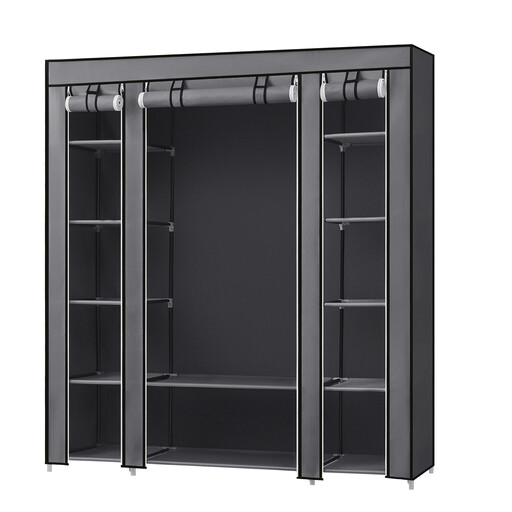
Why it is a good fit: Measuring 45 x 150 x 175 cm, this model is suitable for bedrooms, guest rooms or rental properties where flexible furniture is a priority.
The specifications list 12 storage compartments, a load capacity of 5 kg per compartment and 15 kg for the clothes rail. This makes it easier to plan how the wardrobe will be used in practice.
Metal tubes, a non-woven fabric cover, numbered parts and a specified clothes rail make this unit suitable for lightweight clothing and straightforward assembly.
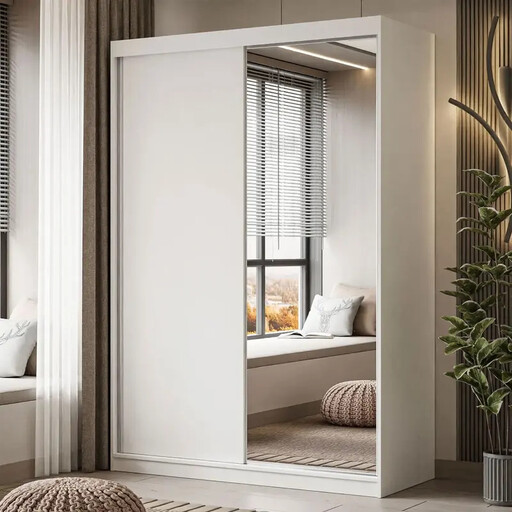
Why it is a good fit: At 150 cm wide and fitted with two sliding doors, this wardrobe is well suited to rooms where hinged doors would take up too much clearance.
The interior is clearly specified as having six adjustable compartments and one clothes rail. This makes it easier to plan storage for both folded and hanging garments.
Sliding-door system, integrated mirror, 16 mm laminated chipboard and aluminium guide rail. This is a self-assembly product and, according to the specifications, should be assembled by two people.
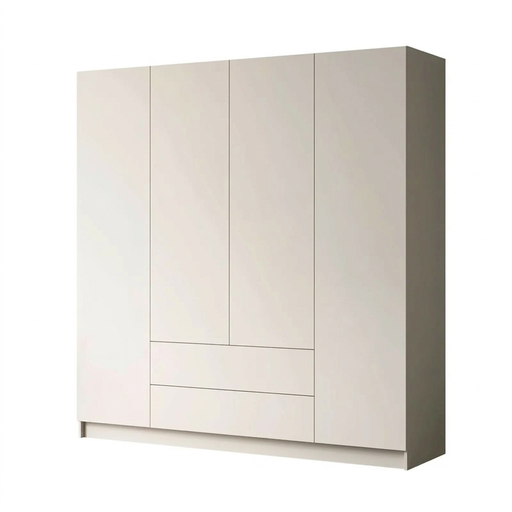
Why it is a good fit: With a width of 200 cm, twelve compartments, one clothes rail and two drawers, this wardrobe is designed for households with extensive clothing collections.
The layout of compartments, clothes rail and drawers is clearly apparent before purchase. This prevents the unit from being judged solely by its external dimensions.
Four doors, two drawers, 12 compartments and push-to-open fittings. The stated depth is 57 cm; two people are recommended for assembly and wall anchoring.
Read the assembly instructions in full before fastening any parts together. For tall furniture, anchoring it to the wall with the included anti-tip protection is a key safety step. This is particularly important in households with children. Heavy items should be stored in the lower compartments, and the furniture should stand on a level surface.
Fabric surfaces can generally be cleaned with a slightly damp cloth. Coated wood-based panels should not be treated with abrasive cleaners or solvents. For a wardrobe with a mirror, glass cleaner and a soft cloth are more suitable than rough sponges. Before first use, airing out textile furniture in a well-ventilated room may be advisable.
We have put together a current selection of furniture for bedrooms and hallways, so you can compare dimensions, features and design based on your requirements.
A fabric wardrobe or slim storage cabinet can be positioned flexibly. Where space is particularly limited, sliding doors are practical because they do not require additional swing clearance. Before buying, check the width, depth and clearance needed for comfortable movement.
Their service life depends on the frame, connections, load, and care. Fabric models are primarily intended for lightweight to medium-weight clothing. Staying within the stated load limits and checking the connections regularly can help prevent unnecessary wear.
Tall and heavy furniture should be secured to the wall in accordance with the manufacturer’s instructions. Anti-tip protection reduces the risk of the unit falling over, but it does not replace proper assembly on a suitable surface. This step should never be skipped, particularly in households with children.