
Lieferung heute & morgen

Qualitätsgarantie

Willkommens-Angebote freischalten: KOSTENLOSE Lieferung | Bis zu 80 % RABATT | Kostenlose 30-Tage-JoyPlus-Testphase
App herunterladen
A home where everything has its place not only looks tidier but also feels more spacious. Yet, in many households, storage space is in short supply. A storage bench is a smart solution that combines two functions in one piece of furniture: comfortable seating and a discreet hiding spot for blankets, toys, or shoes.
However, the market is flooded with models whose quality is difficult to assess at first glance. Certain weak points often render the furniture useless after just a few months. This guide will show you the three typical pitfalls to be aware of and which features truly matter.
Many products overpromise and underdeliver. Pay close attention to these three points to avoid making a rash decision:
To avoid these problems, it helps to focus on a few crucial technical specifications.
The core material of a sturdy storage chest is often MDF (Medium-Density Fibreboard). Look for the E1 standard, which indicates a low-formaldehyde version that is safer for your home's indoor air quality.
Even more important is the maximum static load capacity. This value specifies how much weight the furniture can support when at rest and evenly distributed.
Instead of just looking at the external dimensions (length x width x height), the internal volume in litres is a more precise indicator of the actual storage space. A large ottoman with storage can hold over 100 litres, which is enough to store several cushions and blankets.
Also, consider how you plan to use the storage space. For shoes or small items, a hallway bench with storage that features separate drawers or baskets is more suitable than a single large compartment. A foldable upholstered stool offers maximum flexibility, as it can be easily stored away when not in use.
The upholstery significantly contributes to the look and comfort. Linen-effect fabrics are generally durable and breathable. Velvet looks elegant but requires more care. A sufficiently thick foam padding in the lid is essential to ensure the seat is comfortable.
Here are some recommendations tailored to different needs and living situations.
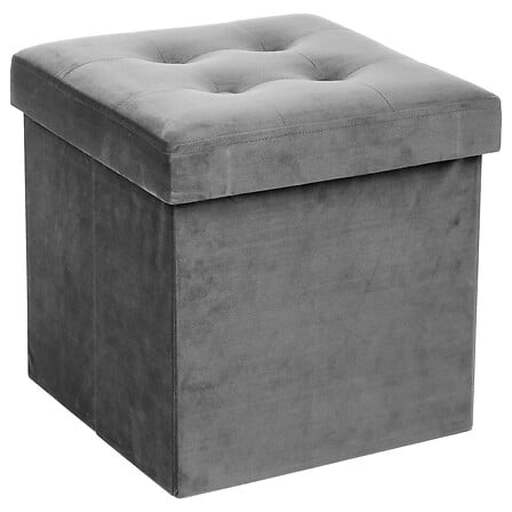
Why it's a good fit: Ideal for student flats or small rooms where a flexible solution is needed. It serves as a compact stool, footrest, or side table and can be folded flat when not in use.
The construction from E1-grade MDF boards provides a solid base, avoiding the pitfall of flimsy, cheap materials. Its simple yet proven folding design minimises mechanical weak points.
Extremely space-saving thanks to its foldable design; versatile as a seat, storage footstool, or tray table.
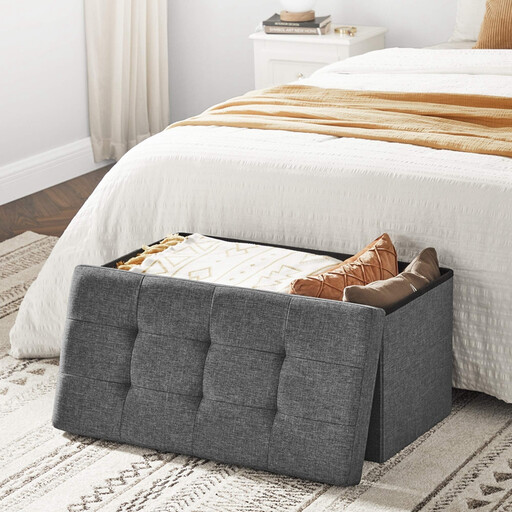
Why it's a good fit: Perfect for the living room to quickly hide away toys, blankets, or magazines. As a two-seater, it provides extra seating for guests or the family.
Its high static load capacity of 300 kg, supported by a sturdy E1-standard MDF frame, directly counters the problem of unstable constructions that can't withstand family life.
A generous 80-litre storage volume combined with a very high load capacity, making it a practical and durable end-of-bed bench or living room bench.
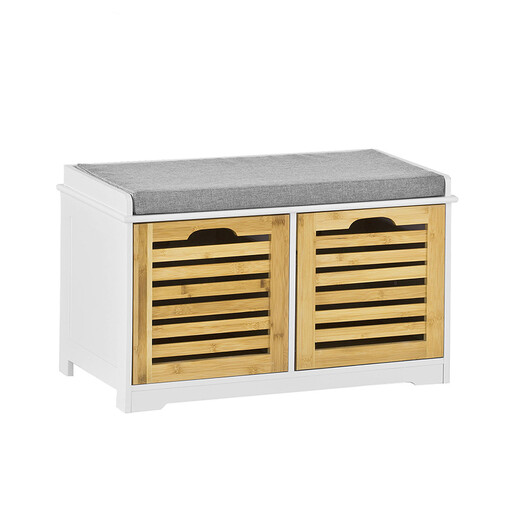
Why it's a good fit: Specifically designed as a hallway bench with storage to keep the entryway tidy. The baskets are ideal for shoes, scarves, or hats, and its solid design feels like a permanent piece of furniture.
This model bypasses the pitfall of "unorganised chaos" inside a large chest. The two separate baskets allow for targeted and tidy storage, which is especially practical in a hallway.
Solid furniture construction from MDF and bamboo with removable baskets for clear organisation. The seat cushion provides comfort when putting on shoes.
We have compiled a complete, up-to-date list of products that fully meet these strict selection criteria and safety standards.
The load capacity depends heavily on the model. Pay attention to the maximum static load capacity specified by the manufacturer. This value describes the weight the bench can support when at rest. For a single ottoman stool, 110–150 kg is a good benchmark. For longer benches designed for two people, you should look for models with a load capacity of 200–300 kg to ensure sufficient stability.
Yes, high-quality foldable models are designed for daily use as seating. The key is material quality. Models with sturdy MDF walls (ideally E1 standard) and a solid base plate offer reliable stability. They are designed for sitting, but not for standing or jumping on.
The cleaning method depends on the material. Linen-effect or polyester covers can often be wiped with a slightly damp cloth and mild soapy water. For velvet or other delicate fabrics, vacuuming with an upholstery attachment or gentle brushing is the better choice. Always follow the manufacturer's care instructions to avoid damaging the fabric.