If daylight falls on the screen during the screening, clubs should assess the anti-reflective properties and brightness at the planned location. Mini LED LCD and anti-reflective OLED models may be worth considering, depending on the lighting conditions. Also check the view from the back and sides of the room, and test the actual film file, including its sound. For a public film screening, the club must also check that it has the necessary rights.
Who is this selection for?
Clubs with a bright event space
If daylight streams through tall windows while you show an anniversary film, assess reflections and visibility from the planned screen position. HIFI.DE highlights brightness and anti-reflective properties as important considerations for bright rooms, while audiovision discusses the anti-reflective screen on the Samsung GQ65QN90F in an independent test.
Clubs with lots of seats
When there are many seats, clubs need to plan screen size, positioning and viewing angles together. The German Environment Agency points out that larger screens can use more electricity; the right set-up also depends on the room and seating arrangement.
Clubs showing a film they have put together themselves
If you’re showing your own film file, test the picture and sound on the TV or player you plan to use. Sony Germany explains that unsupported codecs can prevent playback; supported file formats depend on the model and player.
What should you look for when buying?
For a club film, first check the lighting at the intended location, then the seating arrangement, and finally playback of the actual file.
| Consideration |
What to check before buying |
Who it matters most to |
| Reflections in daylight |
Assess the anti-reflective properties of the specific model and the lighting at the planned screen position. |
If I’m showing the film in daylight, I want to know how distracting reflections will be at the intended location. Around 36% of consumers put reflections and daylight visibility first. |
| Viewing from the back and sides of the room |
Check viewing distances and side seats; make sure the screen dimensions and positioning suit the room. |
If guests are sitting far back or to the side, I want to assess the picture and subtitles from their actual seats. Around 29% of consumers prioritise visibility for the audience. |
| Film file and sound |
Check the file system and video and audio codecs against the model and player; test the entire file in advance. |
If the film has been put together in-house, I want to be sure the picture and sound will work through the planned playback set-up. Around 21% of consumers prioritise reliable film playback, including sound. |
| Running costs |
Compare energy labels and screen sizes; plan for the necessary connections and playback devices. |
If the TV will be used regularly for events, I want to weigh up its size and running costs together. Around 14% of consumers prioritise suitable features and running costs. |
Common buying and screening mistakes
-
Assuming peak HDR brightness means a reflection-free screening
A peak brightness figure doesn’t show how much tall windows will reflect on the screen. Measurements can also vary depending on the picture mode.
Assess anti-reflective properties and lighting at the planned location separately from HDR figures.
-
Assuming every film file will play from a USB drive
Whether a film will play depends, among other things, on the file system, codecs and player. Sony Germany notes that content using unsupported codecs may not play.
Test the complete file, including sound, on the device you plan to use and via the intended playback set-up well in advance.
If playback doesn’t work, you may need an additional player or time to create a compatible export file.
-
Choosing the biggest TV simply because there will be lots of guests
A larger screen won’t solve reflections or poor positioning, and it can increase electricity consumption. The German Environment Agency recommends considering electricity use when buying and using a TV.
Check the seating and available space, and compare the energy labels of the specific models.
-
Assuming free entry means you can screen a film publicly without permission
Under § 52(3) of the German Copyright Act (UrhG), public screenings of a film are only permitted with the rights holder’s consent. The club must check whether a particular event counts as public and what rights apply to the film, third-party material and music.
Check the rights before the screening. GEMA sets out a separate tariff for music from its repertoire used in screenings of films with sound.
Checking rights and paying any applicable music fees can involve extra organisation.
Key brands to consider
Samsung
Worth considering when comparing Mini LED LCD models such as the GQ65QN90F with OLED models such as the GQ65S99HATXZG or GQ77S95FATXZG.
- In an independent test, audiovision discusses the anti-reflective screen on the GQ65QN90F. Samsung lists Glare Free as a feature on the S99H and S95F OLED variants mentioned here.
- The test result for the GQ65QN90F and the Glare Free feature listed for the OLED models cannot be assumed to apply to all Samsung TVs.
TCL
QD or SQD Mini LED models such as the 75X11L can be included when comparing screen size and technical specifications.
- TCL Germany lists peak HDR brightness and local dimming as features of the 75X11L.
- Manufacturer claims about HDR and dimming don’t prove how clearly a club film will be visible in daylight or with window reflections at your particular venue.
Sony
Models such as the K-65XR95M2 provide a reference point for comparing published picture measurements and model-specific connections.
- CHIP includes the K-65XR95M2 in a general TV test list and in a selection of bright TVs.
- USB format information for the K-65XR70 doesn’t automatically apply to the K-65XR95M2. Check file formats and codecs for the exact model.
LG
OLED evo models such as the OLED65G56LS are an OLED option where contrast and lighting at the venue should be considered together.
- LG Germany lists Brightness Booster Ultimate as a feature of the OLED65G56LS.
- This manufacturer claim doesn’t confirm how well the screen handles reflections at your venue. Check reflections on the specific TV in its planned location.
Philips
The 65MLED910/12 is another 65-inch model to consider when checking screen size and positioning.
- Philips Germany lists QD Mini LED and Ambilight as features of this model.
- A manufacturer claim about performance in different lighting conditions is no substitute for checking window reflections in your club room.
Joybuy TVs for club films
The Joybuy TVs listed here use Mini LED technology and come in a range of screen sizes. Choose a size to suit your seating arrangement and available space, and check reflections and playback of your actual film file in advance.
 No image available
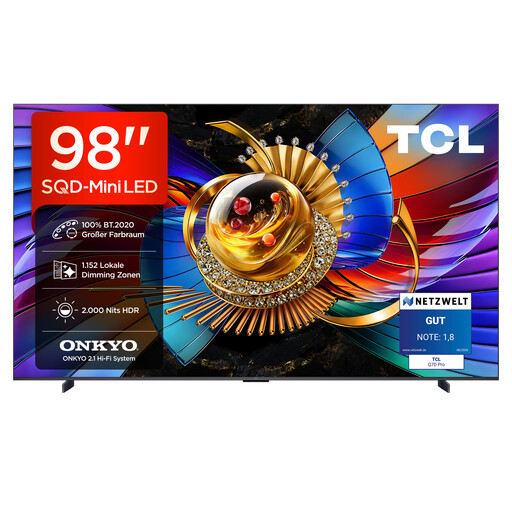
TCL 98Q7D PRO, 98-inch 4K SQD Mini LED TV
The large screen may suit a room with lots of seats, provided there’s enough space and the TV can be positioned appropriately.
The product title describes an anti-reflection display; this isn’t independent proof of how visible the screen will be at your venue. The product specifications also list 1,152 local dimming zones and peak HDR brightness of 2,000 Nits.
Make sure there’s enough space and a suitable mount for positioning or wall mounting. At least two people are recommended to move and install the TV.
View at Joybuy
 No image available
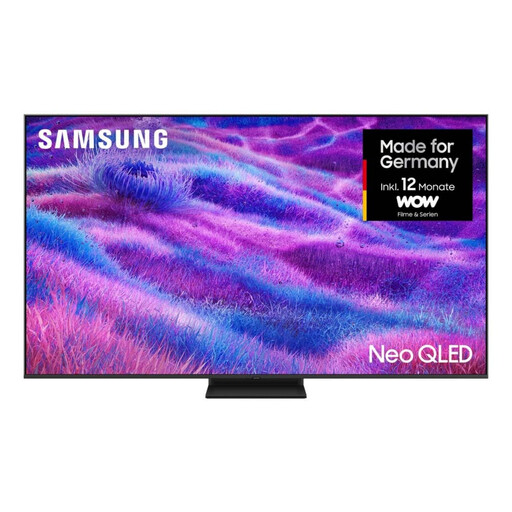
Samsung Neo QLED 4K QN80F, 85-inch Mini LED TV
The 85-inch version may be worth considering for a large audience, as long as the screen size and positioning suit the room.
The product specifications list 4K, four HDMI ports, two USB 3.0 ports and an integrated 5.1-channel audio system. The product title lists an F energy efficiency rating.
Test playback of your actual film file and its sound before the event.
View at Joybuy
 No image available
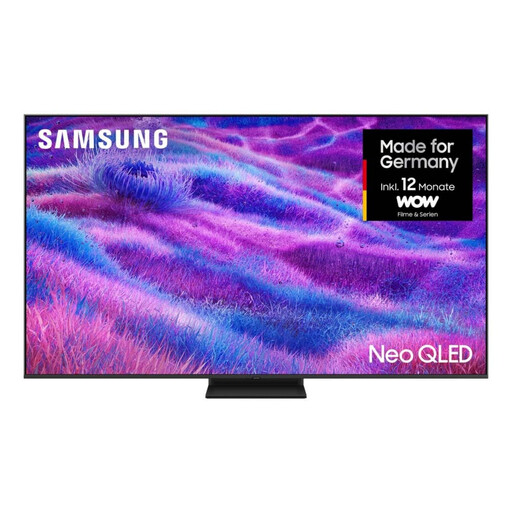
Samsung Neo QLED 4K QN80F, 75-inch Mini LED TV
The 75-inch version may be a good fit if you need a larger screen for the group and the room can accommodate it.
The product specifications list 4K, four HDMI ports, two USB 3.0 ports and an integrated 5.1-channel audio system. The product title lists an F energy efficiency rating.
Test the film file, including sound, through the connection you plan to use before your guests arrive.
View at Joybuy
 No image available
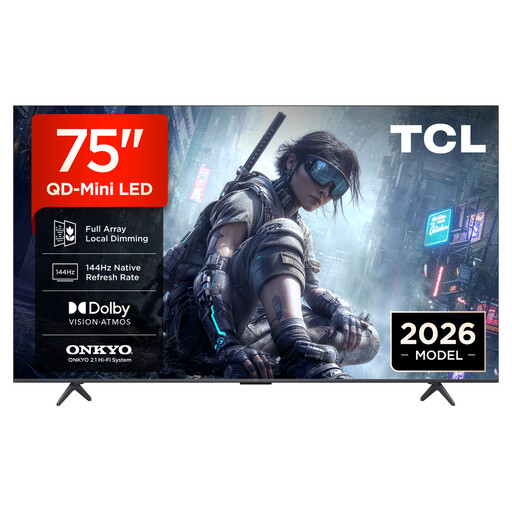
TCL 75T8D, 75-inch QLED TV with QD Mini LED
The 75-inch screen may suit a larger group, provided it fits the seating arrangement and planned location.
The product specifications list 4K, Dolby Vision, HDR10+ and HDMI and USB ports. The product title also lists Dolby Atmos and an Onkyo 2.1 sound system.
Check that your actual film file will play through the connection you plan to use.
View at Joybuy
 No image available
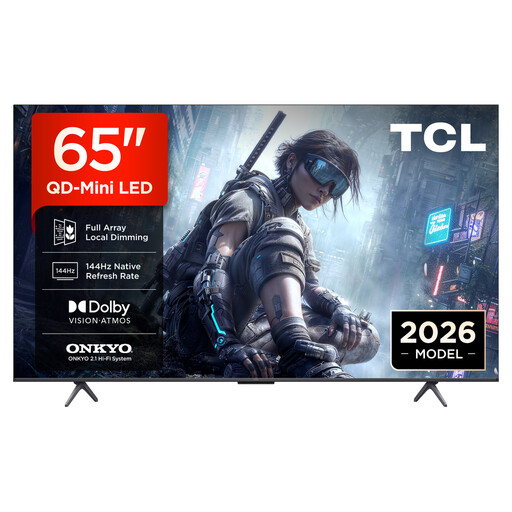
TCL 65T8D, 65-inch QLED TV with QD Mini LED
The 65-inch version may be suitable if the screen size works with the available space and planned seating.
The product specifications list 4K, Dolby Vision, HDR10+ and HDMI and USB ports. The product title lists an integrated Onkyo 2.1 sound system with Dolby Atmos.
Play the complete film file in advance using the connection you plan to use.
View at Joybuy
Frequently asked questions
Will a high HDR nit rating overcome tall windows?
No. A high HDR figure on its own doesn’t tell you how much the windows will reflect on the screen. Also check the anti-reflective properties of the specific model and the planned screen position. CHIP distinguishes between its measurements in the brightest mode and cinema mode; the figures reflect different conditions.
Can the club simply play its anniversary film from a USB drive?
Only if the TV or player supports the file system and the video and audio codecs used. Test the complete file in good time using the connection you plan to use; an external player may be a useful back-up.
What should clubs consider if the TV will be used often or develops a fault?
Compare the energy label for the specific TV; larger screens can use more electricity. For consumer purchases, your statutory rights against the seller and a voluntary guarantee are not the same thing. If the club is making the purchase itself, check the terms that apply to that contract.
Can a club show a film to the public if entry is free?
Free entry doesn’t automatically give you permission to screen a film publicly. Under § 52(3) of the German Copyright Act (UrhG), public screenings of a film are only permitted with the rights holder’s consent. Check whether your particular event counts as public and what rights apply to the film, third-party material and music. GEMA sets out a separate tariff for music from its repertoire used in screenings of films with sound.


