What to look for when buying
Directional handheld microphone
A good fit if: one person speaks at a time and you can hold the microphone close to whoever is speaking.
Bear in mind: you’ll need to move the microphone when the speaker changes. An XLR model also requires a compatible recording option.
Two lapel microphones with a mobile receiver
A good fit if: questions and answers matter equally, or both people are moving around.
Bear in mind: the receiver, connections and ability to record both voices need to work with your mobile device. Clothing may rub against the microphone.
Lapel microphone with a dedicated recorder
A good fit if: the person telling the story is moving around and you want to record independently of a smartphone.
Bear in mind: you’ll need enough recording channels for two people. Test the recorder, power supply and attachment before the interview.
Omnidirectional handheld microphone
A good fit if: the microphone will be passed around frequently and a less precise direction of use is more practical.
Bear in mind: an omnidirectional microphone picks up sound from every direction, so positioning needs particular care if a fan is creating background noise.
The percentages refer to consumers planning this kind of club interview; each figure reflects their main buying priority.
| Priority |
What to check before buying |
Who is most concerned |
| Clear speech despite fan noise |
Can you position the microphone close to the person telling the story? Listen back to a test recording with the fan running. |
If I mainly want one person’s memories to come across clearly, keeping the microphone close to their voice is essential. Around 36% of consumers put this first. |
| Two people speaking |
Test the number of microphones and recording channels, as well as the files or channels being recorded. |
If I want both questions and answers to be clearly audible, I’ll make sure each person can be miked up at close range. Around 29% of consumers prioritise two clear voices. |
| Recording on the move |
Check the attachment, power supply and protection against accidental stopping. Make a test recording before the interview. |
If I’m recording in different locations or the person telling the story is moving around, I need a secure attachment that won’t get in the way and a reliable recording option. Around 21% of consumers put mobile use first. |
| Connections and setup |
Check whether the available inputs match XLR, USB-C or Lightning, and find out which parts are needed for recording. |
If my existing device isn’t compatible with the microphone or receiver, setup becomes unnecessarily complicated. Around 14% of consumers prioritise connectivity and easy setup. |
Joybuy products
The models below include mobile microphone sets for one or two voices, as well as a dynamic USB/XLR microphone for recording one voice at close range. Before buying, check that the connections and recording option are right for your device and conversation.
 No image available
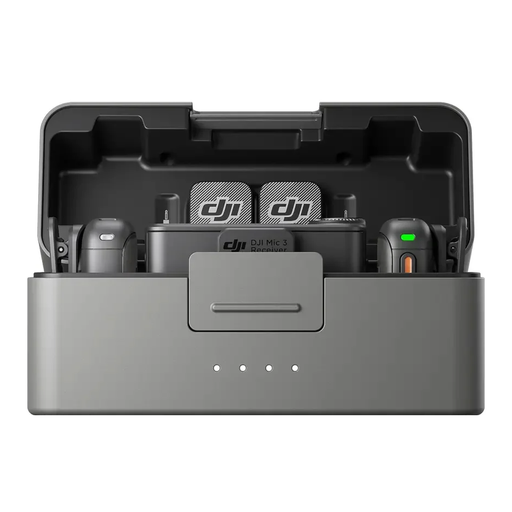
DJI Mic 3, 2 TX + 1 RX with Charging Case
With two transmitters, this set is suitable for recordings where questions and answers matter equally.
Specifications include internal storage on each transmitter, as well as USB-C, Lightning and 3.5 mm TRS connections. Check which connection is right for your recording device.
View at Joybuy
 No image available
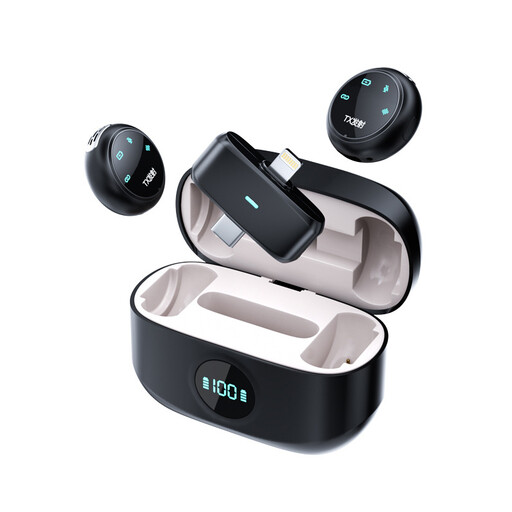
Verbex K31Pro-Black Dual Microphone Set
The product details list two clip-on microphones for conversations where you want to record both speakers.
Compatibility with iOS and Type-C interfaces is specified, along with a stated battery life of 3–6 hours. Check the connection with your specific device.
View at Joybuy
 No image available
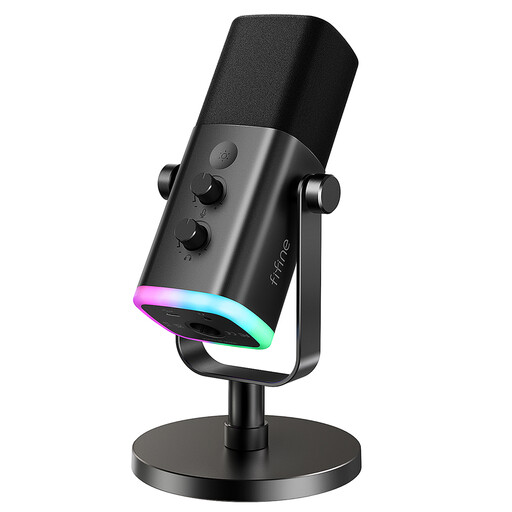
FIFINE AM8 USB/XLR Dynamic Microphone
The specified cardioid pickup pattern and recommended close positioning make it suitable for recordings where one voice takes centre stage.
This dynamic microphone is described as having USB and XLR connections. A separate XLR cable is required for XLR use. The recommended distance from the sound source is 2 to 6 inches.
View at Joybuy
 No image available
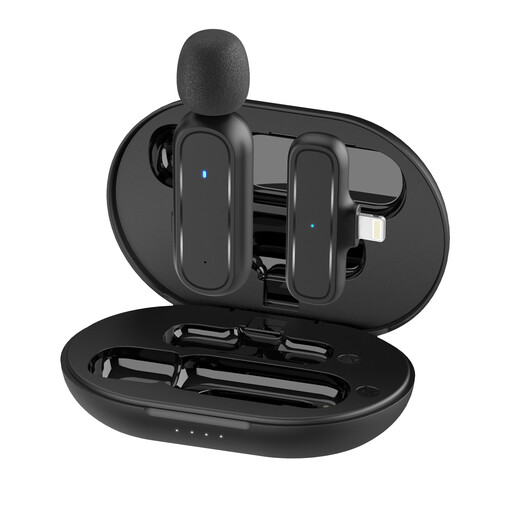
Moman MC1(A) Wireless Lavalier Microphone, Lightning, 1 TX + 1 RX
With one transmitter and one receiver, this set is described for one main speaker using a compatible iPhone or iPad. It isn’t a two-microphone set.
The title specifies a Lightning connection. The description mentions three noise-reduction modes, but that doesn’t mean fan noise will disappear.
View at Joybuy
 No image available
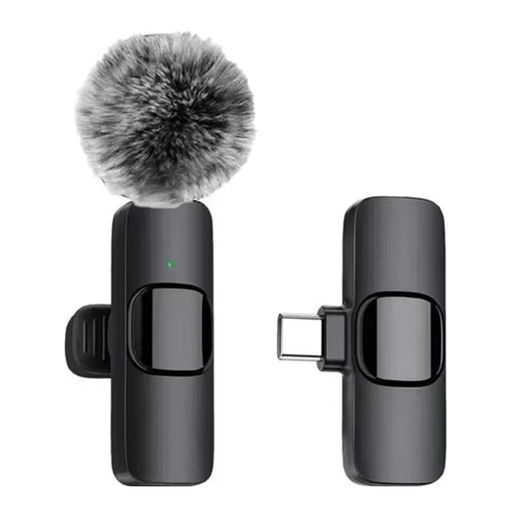
Verbex K9-Black Wireless Lavalier Microphone, Type-C
This model is described as a one-to-one lavalier microphone with a Type-C interface for a compatible device. It doesn’t specify a second microphone channel for two equally important voices.
The stated battery life is 3–6 hours. Before recording, check that your device supports the Type-C receiver.
View at Joybuy
Frequently asked questions
Will a windscreen remove the sound of a fan?
No, you can’t assume it will. A windscreen helps with air movement directly around the microphone capsule. If the fan is audible, microphone distance, direction and a listening test at the recording location are still important.
How should I attach and check a lapel microphone before an interview?
Attach it around the lapel area and make sure clothing or cables aren’t rubbing against it. Listen to a short test recording at the planned location, check the battery level and, if you’re using two microphones, test both voices.
Do I need extra equipment for an XLR handheld microphone?
Yes. You’ll need a suitable XLR recording option, as a handheld microphone such as the Sennheiser MD 46 doesn’t record audio itself. Before buying, check that your recorder or interface input matches the microphone connection.
Can I record or share a private club conversation without permission?
No. Section 201 of the German Criminal Code (StGB) covers recording another person’s privately spoken words without permission, as well as using or making available a recording made in this way. Check that you have permission to record in advance. The club should also check that it has an appropriate legal basis under data protection law for processing personal data. This does not, in itself, determine whether or how the recording may later be published.


