For individual stories, a directional microphone that can be positioned close to the speaker is a sensible choice. A quick test recording at the location matters more than any promise of noise cancellation. If several people will speak at once, or you want to record without a computer, a recorder with separate microphone inputs may suit your setup better, although it takes longer to set up. None of these microphone types will completely eliminate fan noise in every situation.
Which setup is right for you?
Collectors of individual club stories
If members are speaking one at a time, you can position a directional microphone close to each speaker in turn. Shure and Audio-Technica describe cardioid microphones as suitable for this kind of speech recording, but positioning is still crucial.
People recording group discussions
If you want to record several people at once, consider whether separate microphones and recording channels are worth the extra setup. Zoom lists two XLR/TRS inputs for the H4essential, while the Library of Congress recommends choosing a suitable location for interviews.
Mobile club historians
For recording at different locations, a portable setup is useful, provided you can find a suitable position before the conversation starts. Zoom describes the H1essential as suitable for interviews on the move; here too, it’s worth listening to a test recording at the actual location.
What should you look for when buying?
When recording club interviews with a fan running, your choice mainly depends on whether you’ll be recording one voice or several people, whether you need a mobile setup, or whether you want a straightforward connection to a computer.
Directional XLR handheld microphone
A good fit if: people are telling their stories one at a time and you have a suitable XLR input or recorder.
Bear in mind: an XLR connection won’t record anything by itself; passing the microphone around can cause handling noise or inconsistent distances.
USB or USB/XLR microphone
A good fit if: one person will mainly be speaking at a compatible computer and the microphone can be positioned appropriately in front of them.
Bear in mind: a fixed microphone will only stay close to the speaker’s voice if they sit in front of it.
Recorder with separate XLR microphones
A good fit if: several people will speak at once, or you want to record without a computer.
Bear in mind: extra microphones, inputs and cables need more planning and setup.
Compact recorder with built-in microphones
A good fit if: a quick, portable setup is your priority and you can position the recorder close enough to the speaker.
Bear in mind: at a greater distance, more background noise may be audible relative to the voice; listen to a test recording on location.
| Priority |
What to check when buying |
Who it matters most to |
| Clarity of a single voice |
Polar pattern and positioning close to the speaker; headphone monitoring for your test recording. |
If I’m recording an individual club story, I want the voice to sound close and clear despite the fan. Around 40% of consumers put capturing a single voice clearly first. |
| Several people in conversation |
Check whether people will speak at the same time, and make sure there are enough suitable inputs and separately recordable tracks. |
When recording a conversation with several people speaking at once, I want to capture their voices separately rather than move one microphone between them. Around 30% of consumers put capturing several clear voices first. |
| Recording at different locations |
Check the power supply, storage medium and headphones for the specific device; test a suitable position in advance. |
If I’m visiting club members in different places, I need a setup I can check easily before each conversation. Around 20% of consumers put mobile recording first. |
| Simple computer connection |
Check computer compatibility, the USB or XLR signal path, and what’s included with the specific model. |
For an interview at a computer, I want to keep the connection simple and be able to monitor the audio before recording. Around 10% of consumers put a simple computer connection first. |
Common misconceptions
-
Noise cancellation doesn’t mean the room will sound silent
A microphone’s polar pattern and software features are no substitute for getting close to the voice or checking how the fan sounds in the actual room.
If possible, make the recording location quieter first, then listen to a short test recording with the microphone in the position you plan to use.
-
A desktop microphone won’t automatically pick up several people equally clearly
At a greater distance, more background noise may be audible relative to the voice. Separate microphones also need suitable inputs.
Before buying, decide whether people will speak one at a time or simultaneously, then choose the number of inputs accordingly.
-
An XLR connection on its own isn’t a complete recording setup
An XLR microphone needs a suitable microphone input, such as one on a recorder or audio interface. Audio-Technica describes the ATR2100x-USB’s XLR connection as suitable for connecting to a compatible input.
Check the whole signal path, from the microphone through the input and monitoring to the saved recording.
Key brands at a glance
Audio-Technica
The ATR2100x-USB is worth considering for one-to-one interviews if you want both a computer connection and an XLR option.
- Audio-Technica lists USB-C, XLR, headphone monitoring, cables and a desktop tripod for this dynamic cardioid microphone.
- Its polar pattern is no substitute for suitable positioning or a test recording with the fan running.
Shure
The SM58 is a directional XLR handheld microphone for interviews conducted one at a time. The MV7+ is a different, more stationary USB-C/XLR setup.
- Shure lists a cardioid pattern, an integrated pop filter and internal shock isolation for the SM58.
- The MV7+’s digital processing features are claims made by the manufacturer; they don’t prove that fan noise in a club room will disappear completely.
Zoom
The H1essential is a compact recorder with built-in microphones, while the H4essential adds two XLR/TRS inputs for external microphones.
- According to Zoom, the H4essential’s separate inputs make it a useful option for conversations recorded with several microphones.
- Built-in microphones don’t solve the problem of distance by themselves; listen to a test recording at the actual location.
Sennheiser
The e 835-S is a cardioid XLR option if you already have a suitable recording setup.
- Sennheiser’s datasheet lists a dynamic capsule, a cardioid pattern and an XLR-3 connection.
- These specifications don’t indicate a USB connection or prove measured superiority when it comes to fan noise.
Logitech G
The Yeti GX is a stationary USB model for one person seated in the right position in front of the microphone.
- Logitech lists a dynamic supercardioid capsule, along with a limiter and expander.
- The advertised noise reduction refers to the manufacturer’s claims for streaming and doesn’t prove a particular result with a fan in an interview room.
Joybuy product selection
The products below include USB and USB/XLR microphones, as well as a portable voice recorder for computer-based interviews or on-location recording. The key is to choose a model whose connection, positioning and suitability match the conversation.
 No image available
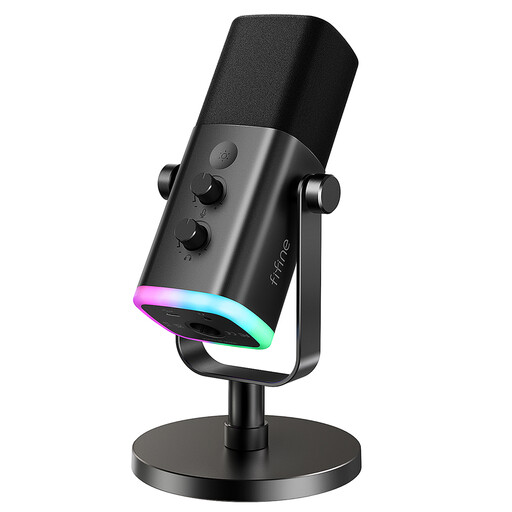
FIFINE AM8 USB/XLR microphone
For a one-to-one computer interview when you want the microphone close to the speaker and to monitor the audio directly.
USB and XLR connections, a cardioid pattern, mute function and headphone socket; the microphone’s listed features are active in USB mode.
View at Joybuy
 No image available
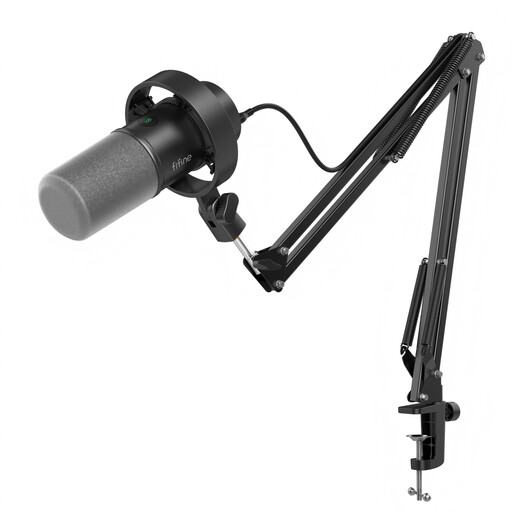
FIFINE K688CT podcast microphone kit
For a one-to-one computer interview with the microphone positioned nearby, when mute, level control and headphone monitoring are important.
Dynamic USB/XLR microphone with a cardioid pattern, mute function, gain control and headphone socket in USB mode. According to the description, a separate XLR cable is required for an XLR connection.
View at Joybuy
 No image available
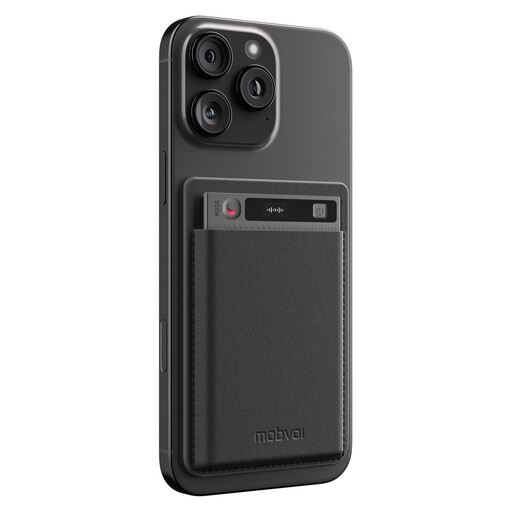
Mobvoi TicNote Lite AI Voice Recorder
A portable voice recorder for in-person conversations when you want to transcribe and summarise the recording afterwards.
The product description lists 4 GB of storage, a four-microphone array recording mode for indoor use, transcription and summaries. This doesn’t prove that voices will be clear when there’s fan noise.
View at Joybuy
 No image available
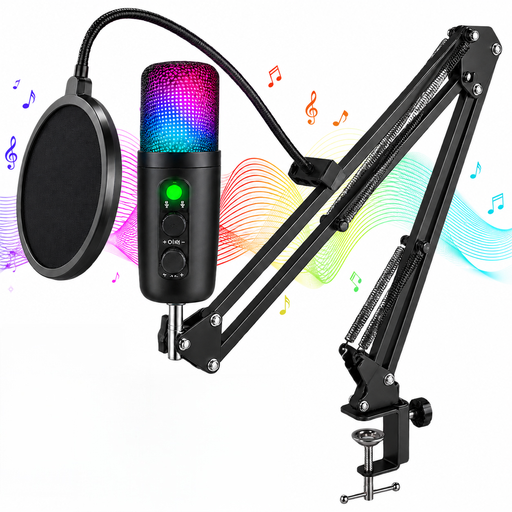
USB gaming microphone with RGB lighting
For voice recording on a PC when you want a USB setup with a mute function and headphone monitoring.
The product title describes a condenser microphone, a Type-C adapter and a seven-piece set. An advertised noise-reduction feature doesn’t prove a particular result with fan noise.
View at Joybuy
 No image available
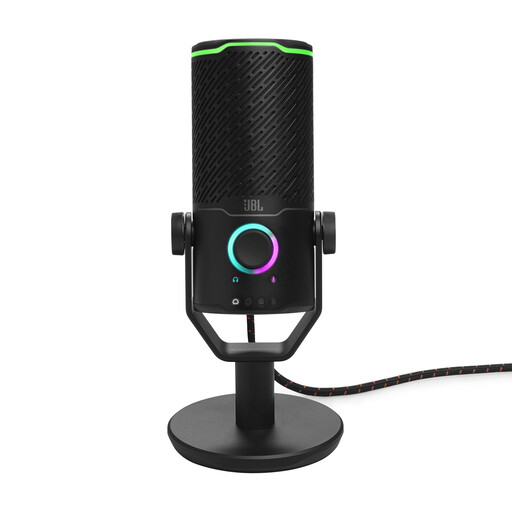
JBL Quantum Stream Studio USB-C
For computer-based interviews when you want to choose different pickup patterns to suit the conversation.
USB-C condenser microphone with four selectable pickup patterns, including cardioid, bidirectional and omnidirectional; the description also lists monitoring and a mute function. A particular pickup pattern won’t guarantee that fan noise is eliminated completely.
View at Joybuy
Frequently asked questions
Will a supercardioid microphone or software filtering definitely reduce fan noise?
No, there’s no guarantee. The direction of the fan in relation to the microphone, the distance from the voice and the volume of the noise all matter. Logitech describes the Yeti GX as having an expander; listen to a test recording at the actual recording location.
What should I test before my first club interview?
Test the recording device in the planned position with the fan running, then listen to both quiet and loud sections of the conversation through headphones. The Library of Congress also recommends choosing a suitable recording location and providing context for the interview; these are not legal requirements in Germany.
What else do I need for an XLR microphone?
You’ll need a suitable XLR microphone input, such as one on a recorder or audio interface. Check the cables and headphones you’ll need for your specific setup too. Audio-Technica lists an XLR cable and desktop tripod as included with the ATR2100x-USB; this doesn’t automatically apply to other models.
Can club interviews be recorded without the participants knowing?
Do not record privately spoken words without authorisation: Section 201 of the German Criminal Code (StGB) prohibits unauthorised audio recording. The club also needs an appropriate legal basis under the GDPR to process personal data. If consent is used, guidance from the German Data Protection Conference says it must be freely given, relate to the specific situation and be informed. Whether and how a particular interview may be published depends on its purpose and the individual circumstances.


