
Lieferung heute & morgen

Qualitätsgarantie

Willkommens-Angebote freischalten: KOSTENLOSE Lieferung | Bis zu 80 % RABATT | Kostenlose 30-Tage-JoyPlus-Testphase
App herunterladen
The selection of cat litter is vast, and manufacturers' claims are often bold. But not every product lives up to its promise. As a cat owner, you want a solution that is hygienic, clean, and comfortable for your cat. Making the wrong choice can lead not only to messes and odours but can also negatively affect your cat's well-being.
Many cat owners fall into common traps when choosing a litter. These include products advertised as "low-dust" that still leave a fine cloud of dust in the room, or clumps that fall apart during cleaning and contaminate the litter box. Another issue is heavily perfumed litters that merely mask odours but are perceived as irritating by sensitive feline noses.
This guide will help you avoid these pitfalls and make an informed decision that meets the needs of both your household and your cat.
To make the right choice, it's helpful to understand the fundamental properties of cat litter. Three factors are particularly crucial: the material, its odour control capability, and dust levels.
The base material of the litter largely determines its function and handling. Each material has specific advantages and disadvantages.
Bentonite Cat Litter: This is the classic choice among clumping litters. Bentonite is a natural clay that swells significantly on contact with liquid, forming firm, stable clumps. These are easy to remove with a scoop, which greatly simplifies daily cleaning. Its absorbency is typically very high. Disadvantages can include its heavier weight and potential dust issues with budget-friendly products. Disposal is via household waste.
Plant-Based Eco Cat Litter: These alternatives are made from renewable resources such as wood fibres, corn, grain, or plant starch. They are significantly lighter than bentonite litter, making transport and filling the litter box easier. Many types of eco cat litter are biodegradable and some are even compostable. Some manufacturers state that individual clumps can be flushed down the toilet; however, it is essential to follow local disposal regulations. Clump firmness can vary depending on the product.
Silica Litter: This litter consists of silica gel, a material with extremely high absorbency. It traps liquid and odours inside the crystals instead of forming solid clumps. As a result, the litter needs to be completely changed less frequently. Solid waste is removed daily as usual. Not all cats like the coarse texture of the crystals under their paws. Since it is mostly a non-clumping litter, it is less suitable for fans of clumping litter.
An effective odour-control cat litter neutralises unpleasant smells rather than just masking them with perfume. High-quality products use materials like activated charcoal, which physically binds odour molecules, or natural fibres that trap odours. A fragrance-free option is often the better choice for sensitive cats.
At the same time, a low-dust cat litter is crucial for the health of both humans and pets. Fine dust can irritate the respiratory tract and spread throughout the home. Look for products explicitly labelled as low-dust or multi-dedusted.
Every cat household has different requirements. Here are some recommendations tailored to various needs.
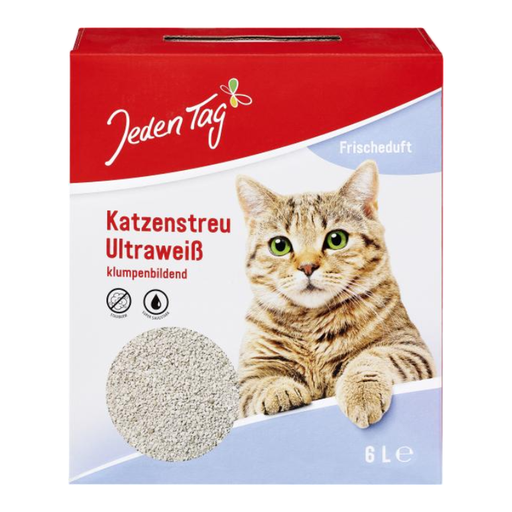
Why this product is a good fit: Offers solid core functionality for daily use. It's a straightforward and accessible option for cat owners looking for a reliable clumping litter without the high cost.
Its rapid clumping action ensures that clumps remain stable during removal and don't fall apart, improving hygiene compared to lower-quality products.
The ultra-white colour makes it easy to visually check for cleanliness, and the low-dust formula contributes to a cleaner environment.
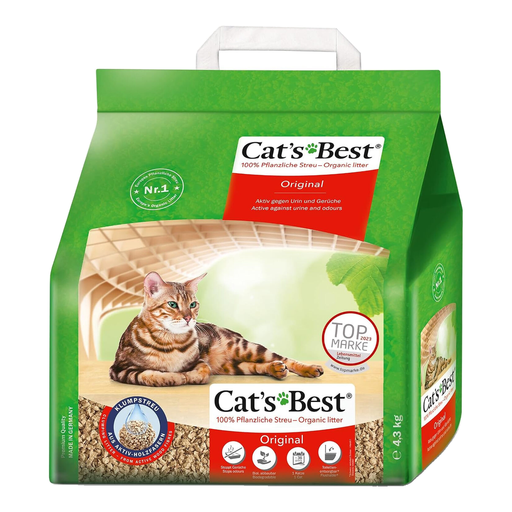
Why this product is a good fit: Ideal for anyone seeking a sustainable, lightweight, and biodegradable alternative to mineral litter. It combines eco-friendliness with excellent functionality.
It provides effective odour control using natural plant fibre technology, completely free of artificial fragrances that could irritate sensitive cats.
Made from 100% pure plant fibres, this litter is compostable and biodegradable. It is also very economical and lightweight.
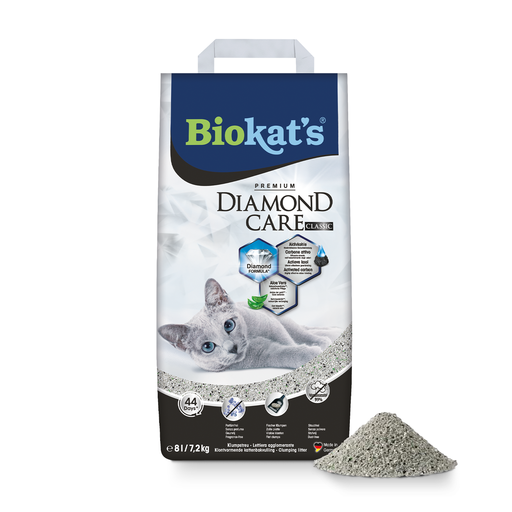
Why this product is a good fit: Specifically for households with sensitive cats or people who react to dust and fragrances. The formula is designed for maximum compatibility.
The formula, claimed by the manufacturer to be 99% dust-free, and the complete absence of fragrances directly address the common problems of dust exposure and irritation from perfume.
Combines activated charcoal for highly effective odour control with aloe vera for gentle care. The fine granulation is also pleasant for cat paws.
We have compiled a comprehensive, up-to-date list of products that fully meet these strict selection criteria and local safety regulations.
Even with daily removal of clumps and solid waste, the litter box should be completely cleaned regularly. As a rule of thumb, a complete litter change is recommended every 2 to 4 weeks. This prevents the build-up of bacteria and ensures consistently high levels of hygiene.
No, bentonite cat litter must never be disposed of in the toilet. The material swells significantly on contact with water and can cause severe blockages in plumbing. It must always be disposed of in the household waste. Only a few plant-based litters are declared as flushable, and even then, only in small quantities and in accordance with local regulations.
Cats are creatures of habit and often react sceptically to change. To get your cat accustomed to a new litter, you should proceed gradually. Start by mixing a small amount of the new litter with the familiar one. Slowly increase the proportion of the new litter over a period of one to two weeks until the old litter is completely replaced.