
Lieferung heute & morgen

Qualitätsgarantie

Willkommens-Angebote freischalten: KOSTENLOSE Lieferung | Bis zu 80 % RABATT | Kostenlose 30-Tage-JoyPlus-Testphase
App herunterladen
The arrival of a newborn brings many changes, especially to the whole family's sleep schedule. Many parents want to keep their baby close, safe, and secure during the first few months to make nighttime nursing, feeding, or comforting easier. A bedside crib, also known as a co-sleeper, is a practical solution that makes this possible. It attaches directly to the parents' bed, creating a safe sleeping environment for the child without encroaching on the parents' own sleeping space.
This article serves as your guide. We'll explain which features to look for when making your choice and present a selection of different models to help simplify your decision.
Choosing the right model depends on your individual needs, your living situation, and your bedroom setup. The following points will help you evaluate the most important criteria.
Safety is the top priority. Ensure the crib complies with the current European safety standard EN 1130:2019. This standard sets requirements for the stability, materials, and construction of cribs and cradles. A crucial safety feature is the attachment system. The co-sleeper must be connected securely and without any gaps to the parental bed to prevent it from shifting or creating a space between the two.
This is especially important for a co-sleeper for a box spring bed, as these beds often have a greater mattress height. Check whether the model has a sufficiently long strap system and the right height adjustment options to ensure a secure attachment.
A good bedside crib is more than just a crib for a newborn. Many models offer additional features that make daily life easier:
The materials used should be breathable and free from harmful substances. Mesh windows on the sides ensure good air circulation and allow you to keep an eye on your baby at all times. Removable and washable covers are a major advantage, as little mishaps are an inevitable part of life with a baby. Models with wheels offer extra mobility, allowing the crib to be easily moved from the bedroom to the living room during the day.
Based on the criteria mentioned, we have compiled a selection of models that stand out for their unique features and versatility.
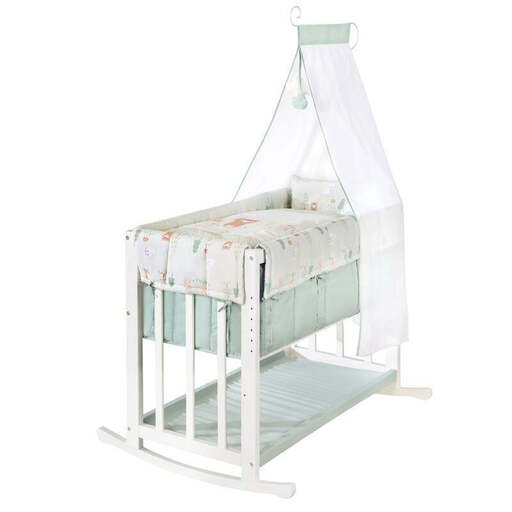
Why It Stands Out The roba 4-in-1 Bassinet is a comprehensive solution that grows with your child. It combines four functions in one product: a co-sleeper, a cradle (with rockers), a bassinet (with wheels), and later even a bench for toddlers. The bed is delivered as a complete set, including a mattress, bedding, bumper, and canopy.
Pros
Who It's For Parents looking for a durable and versatile starter set that already includes all the necessary components and flexibly adapts to different needs.
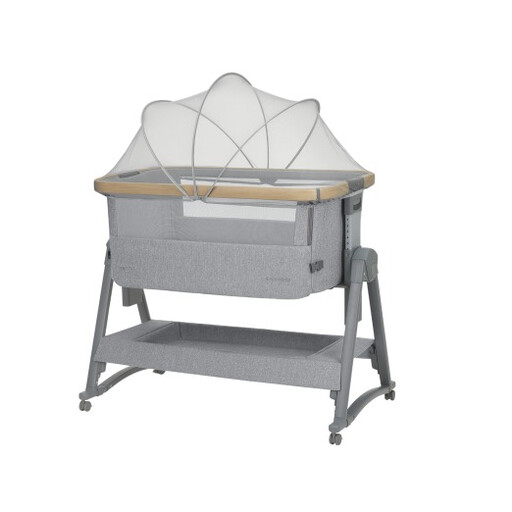
Why It Stands Out The Kikka boo Nanna 2 combines modern design with thoughtful comfort features. Its lightweight, wood-effect aluminium frame is both stable and stylish. Special features like the lockable rocking function and the anti-reflux position set it apart from other models.
Pros
Who It's For Parents who value modern design, mobility, and special comfort features like the rocking and anti-reflux options.
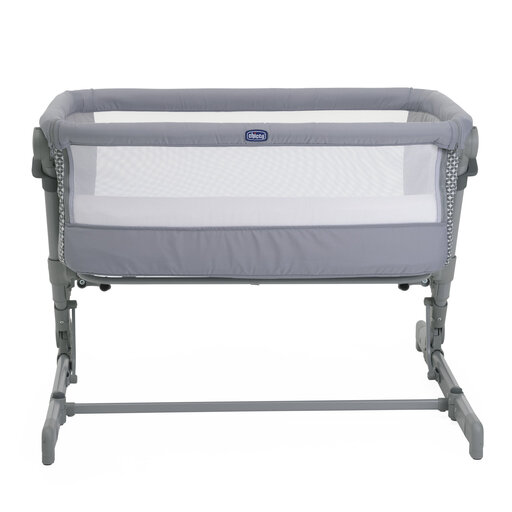
Why It Stands Out The Chicco Next2Me Go is designed for maximum ease of use and portability. Its standout feature is the rapid folding mechanism, which, according to the manufacturer, allows the crib to be collapsed in just three seconds without dismantling any parts.
Pros
Who It's For For active families who travel frequently or need a hassle-free sleep solution for their baby that is quick to set up and take down.
The models featured here provide a good overview of the various functions available. But the world of baby furniture is vast. If you want to compare more designs, materials, or specific features, you're sure to find the right product in our wider selection.
Explore our full range of baby cribs and find the perfect sleep solution for your family.
1. How long can a co-sleeper be used? A co-sleeper is generally designed for the first few months of life, typically from birth to about 6 months of age. The exact duration of use depends on the manufacturer's recommendation, the maximum weight limit (often 9 kg), and your child's development. As soon as your child begins to sit up, kneel, or pull themselves up independently, they should be moved to a standard crib for safety reasons.
2. Is a co-sleeper suitable for box spring beds? Yes, many modern co-sleepers are suitable for box spring beds. Two factors are crucial: a sufficient maximum height setting to align the sleeping surface flush with the high mattress of the box spring, and a long, secure strap system to attach it to the bed frame. Before purchasing, check the product specifications for the maximum adjustment height.
3. What is the difference between a co-sleeper and a bassinet? The main difference lies in their design and function. A co-sleeper has one side that can be lowered or opened to attach it directly and securely to the parents' bed. A bassinet is a small, freestanding basket or crib that is enclosed on all four sides and often has wheels for mobility. Some models, like the featured roba 4-in-1, combine both functions.