
Lieferung heute & morgen

Qualitätsgarantie

Willkommens-Angebote freischalten: KOSTENLOSE Lieferung | Bis zu 80 % RABATT | Kostenlose 30-Tage-JoyPlus-Testphase
App herunterladen
The first few months with a newborn are a special time when closeness and security play a central role. A co-sleeper, also known as a bedside crib or bedside sleeper, allows your baby to sleep safely right next to you. This not only makes nighttime feeding and soothing easier but also strengthens the parent-child bond. However, the market is crowded, and not every model delivers on its promises. Before you make a decision, you should be aware of the most common pitfalls that can lead to frustration and unnecessary expenses.
To avoid these problems, it's crucial to focus on objective criteria rather than being swayed by marketing promises.
A well-informed purchasing decision is based on verifiable facts. Three core aspects are decisive for selecting a safe and practical co-sleeper.
Your child's safety is the top priority. Ensure that the bed meets the current European safety standard EN 1130:2019. This standard sets requirements for stability, materials, and construction to minimise risks such as tipping or entrapment.
A key safety aspect is the gap-free connection to the parent's bed. The crib must be securely fastened to the frame of the parent's bed with sturdy straps or hooks so that no gap is created. A breathable mattress and side mesh panels also promote air circulation and prevent overheating.
A height-adjustable co-sleeper is essential to align it perfectly with the height of your mattress. Measure the height of your mattress surface (including any topper) and compare it with the co-sleeper's adjustment range. Models with multiple levels offer more flexibility here, especially for high box spring beds.
Additional features enhance practical use in everyday life. Lockable castors can transform the bedside sleeper into a mobile bassinet when needed, which you can easily move from the bedroom to the living room.
To avoid a short lifespan, multifunctional models are an option worth considering. A convertible crib can be transformed into a standalone cot, a child's sofa, or a bench after the co-sleeping phase. Such 3-in-1 or 4-in-1 solutions represent a sustainable investment that will accompany your child for several years. A co-sleeper bundle, which already includes a mattress, bumper, and sometimes even bedding, often offers good value for money and saves you the search for matching accessories.
Based on the criteria mentioned, we have identified several models that are suitable for different requirements and lifestyles.

Why This Fits Their Persona: This model offers a 3-in-1 solution (co-sleeper, bassinet, bench) and comes with a breathable mattress and safety barrier. It's an economical starter kit with no hidden extra costs.
As a complete set, it bypasses the Cost Trap. Its compliance with the EN 1130:2019 standard and included safety straps directly address safety concerns.
7-level height adjustment for excellent adaptability; patented design with a mesh barrier for air circulation; later use as a bench for up to 65 kg.
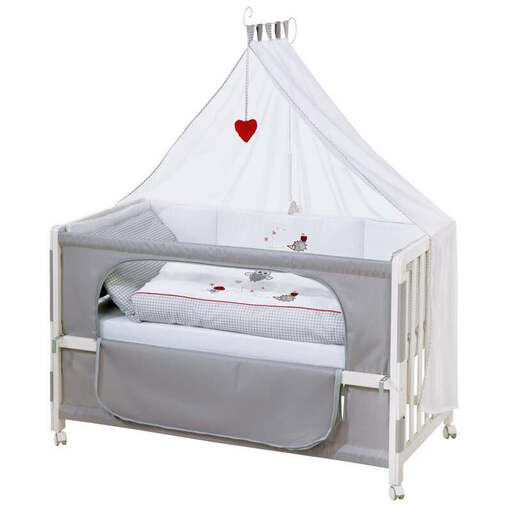
Why This Fits Their Persona: For parents seeking a long-term, high-quality solution. This wooden bed grows with the child and, according to the manufacturer, can be used up to the age of about 4.
It solves the short-lifespan problem with its 4-in-1 functionality (co-sleeper, cradle, cot, junior bed). As a complete package, it also avoids hidden costs.
Comprehensive all-in-one set including mattress, bedding, and canopy; long-term usability; fabric side with a zip for easy access to the baby.
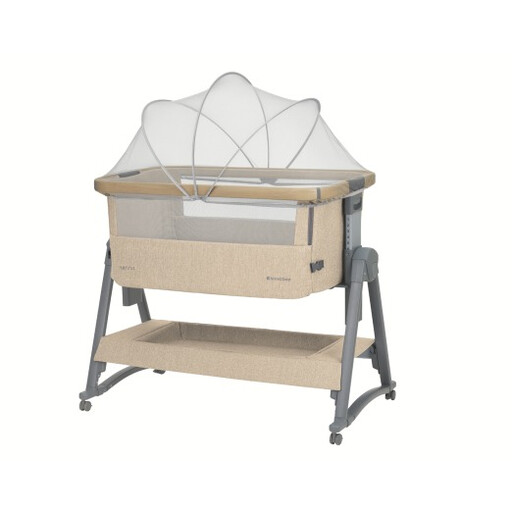
Why This Fits Their Persona: Ideal for parents who value flexibility, modern design, and mobility. The lightweight aluminium frame, included carrying bag, and additional features like the rocking function suit a dynamic lifestyle.
The 7-level height adjustment and safety strap minimise the risk of the Compatibility Trap, as the bed can be adapted to many different parent beds.
Lightweight aluminium frame with a wood-look finish; lockable rocking function; anti-reflux position to incline the sleeping surface; includes mosquito net and carrying bag.
We've compiled a complete, up-to-date list of products that fully meet these strict selection criteria and German safety regulations.
The sleeping surface of the co-sleeper should be exactly level with the top of the parent's mattress. There must be no step or gap. A multi-level height-adjustable co-sleeper is therefore essential for safe use. Measure the height of your bed before buying.
Most standard co-sleepers are designed for newborns from birth to about 6 to 9 months of age, or until the child starts to sit up or pull themselves up independently. Convertible cribs with larger sleeping surfaces (e.g., 60x120 cm) can often be used into the toddler or even preschool years. Always observe the manufacturer's weight and age recommendations.
A co-sleeper bundle is often a practical and cost-effective choice. It ensures that all components, such as the mattress, bumper, and attachment hardware, are perfectly matched and safe. This saves you the separate search for suitable accessories and prevents you from using an ill-fitting or unsafe mattress.